Homeitat
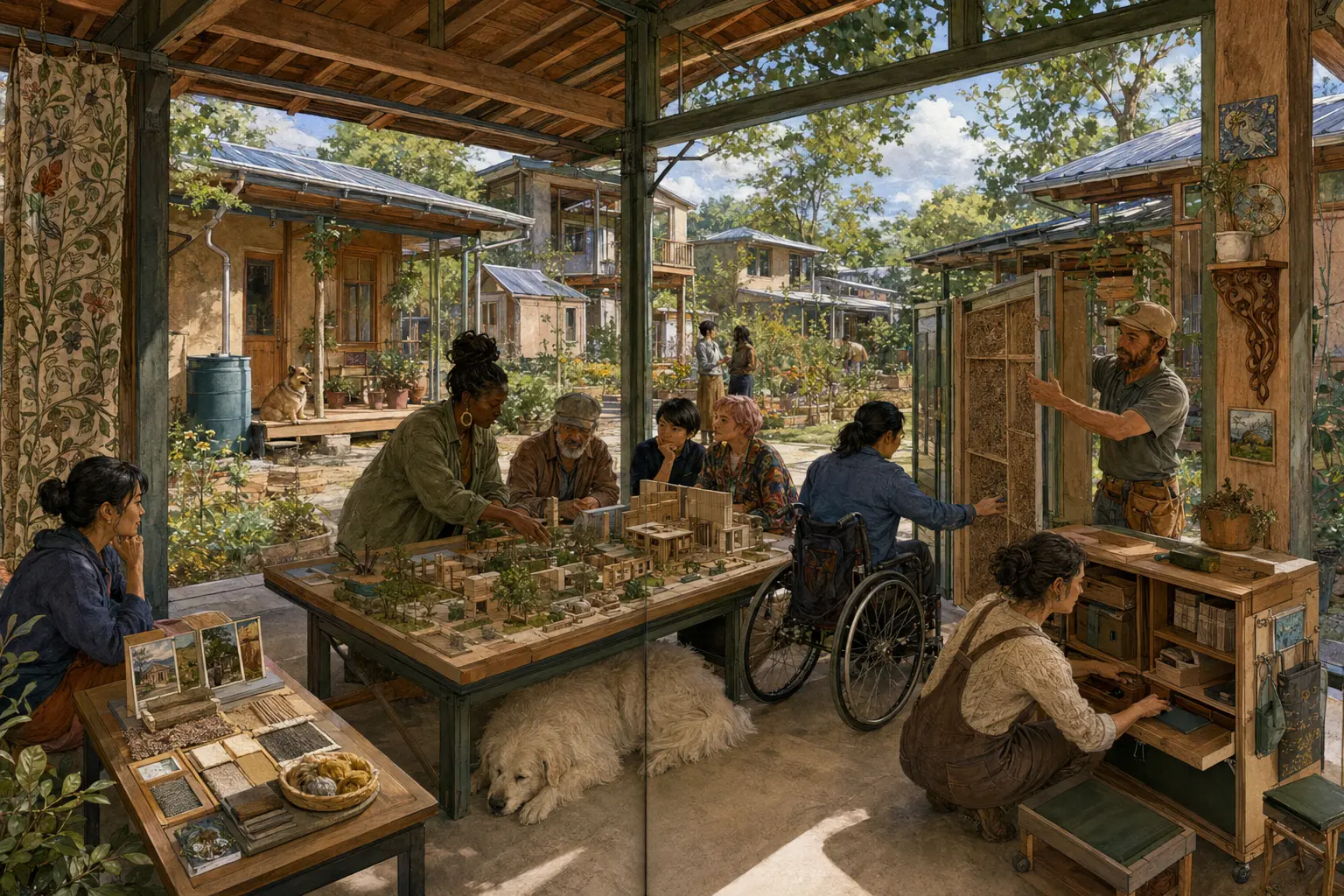
A playable civic-design method that makes a shared place tangible enough to touch, question, revise, and carry toward one responsible real-world move.
Enter HomeitatThis portfolio begins with three signature works, then opens into the wider ecology. Every page names what is developed, what is active, and what still requires permission, review, partnership, or proof.
Signature work
Homeitat makes complex choices playable. Möbius Refuge gathers them into a place proposition. AACDI helps a real community examine what can be made and cared for together.
A playable civic-design method that makes a shared place tangible enough to touch, question, revise, and carry toward one responsible real-world move.
Enter Homeitat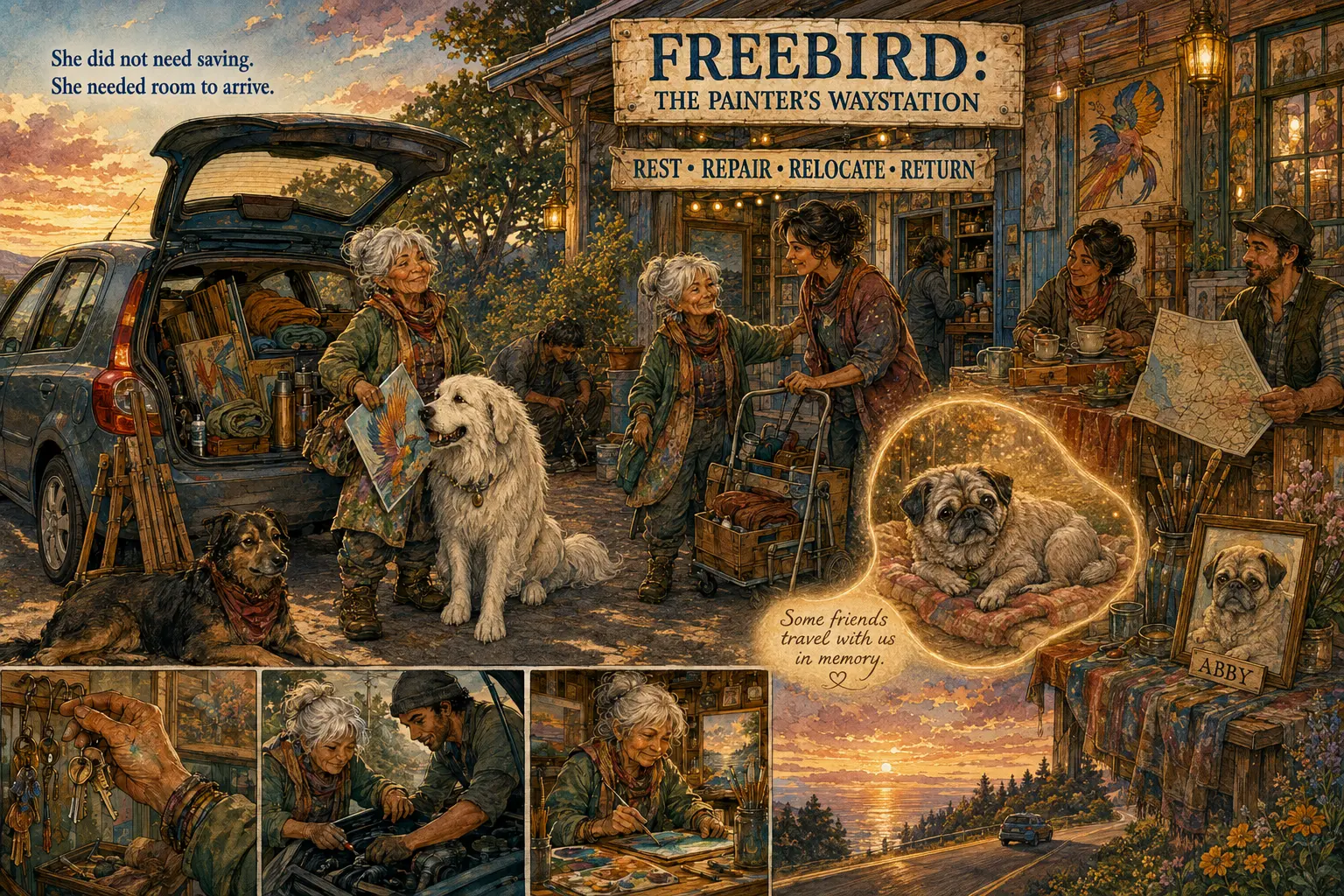
A future refuge and waystation ecology connecting human rhythm, productive land, built form, hospitality, public learning, and long-term stewardship.
Follow the refuge route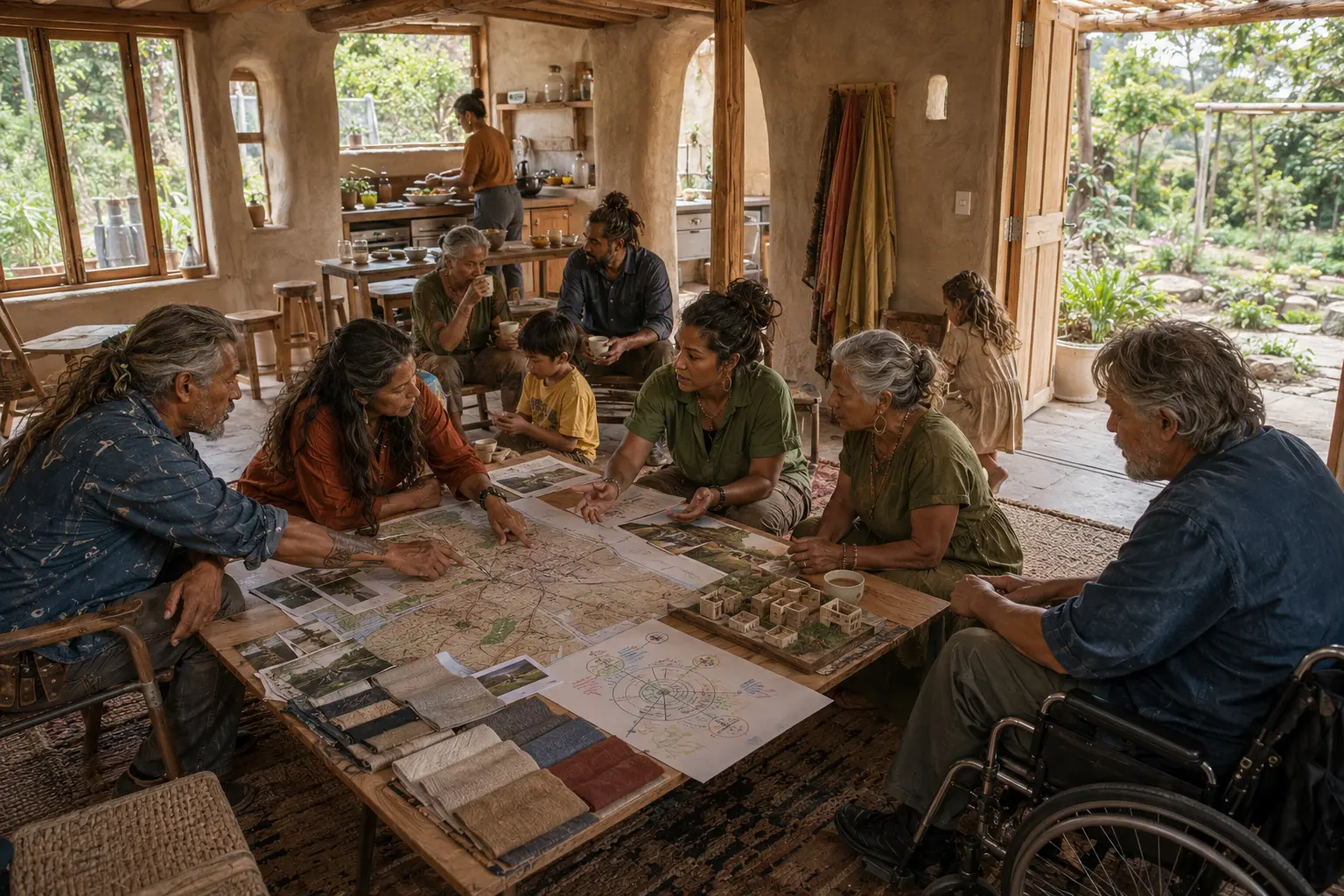
A co-design practice bringing art, architecture, archive, access, craft, local knowledge, and responsibility to the same table.
Enter the AACDI roomCurrent development
Exploratory concept · Seeking development
A place-based concept linking shelter, gardens, shared learning, mobility, and ecological stewardship. Site, operating arrangements, funding, and partnerships remain to be developed.
Explore the Commons Concepts contextAccepted workshop · Method in development
A 75-minute participatory session accepted by Imagining America 2026: read a living situation, clarify intentions and differences, arrange tasks and resources, and return to what is learned.
Explore the workshopActive practice · Documentation in progress
Orientation, role clarity, shared-space care, and participatory learning informed by ongoing cooperative work. Selected public descriptions accompany private working records.
See current experienceFor editable instruments or sensitive project material, request a scoped studio conversation. Public field notes are available in the writing archive.
How to read the portfolio
Some projects have usable tools or active practice. Others are curriculum architectures, portable methods, or partner-seeking propositions. Conservative status language protects the difference.
Shared foundationsLIVING holds the public body of work. Oiko Ways supports development. Lunisolar practice gives work a rhythm. Braid Commons structures participation and exchange.
Different front doorsA person may enter through art, land, food, cooperative learning, sanctuary, civic inquiry, design, or a specific place-based need— without having to understand the whole system first.
Wider project rooms
These connected projects deepen the human, ecological, civic, cooperative, educational, and experimental parts of the practice.
Human + relational resources
Human and relational development
People build belonging through music, movement, rest, culture, care, and honest relationship.
Build self. Build home. A human and relational development stream building outward from inside.
Environmental + material resources
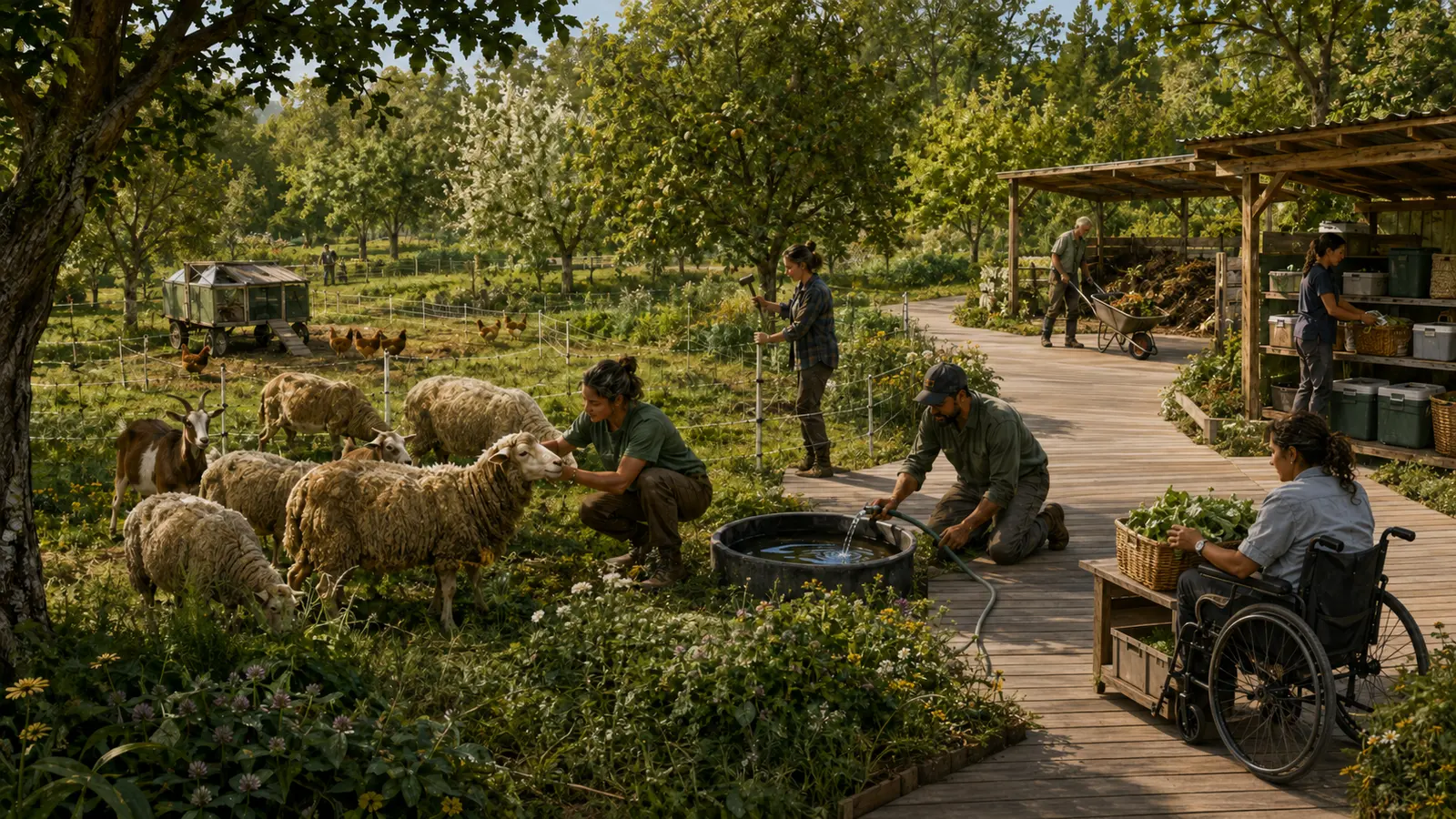
Agriculture · material life · productive ecology
People listen to the land, grow food and habitat, share tools, and return the harvest fairly.
Cultivate place. Cultivate society. An agricultural and material development stream connecting land, food, water, habitat, maintenance, trades, and ecological operations.
Ecological orientation
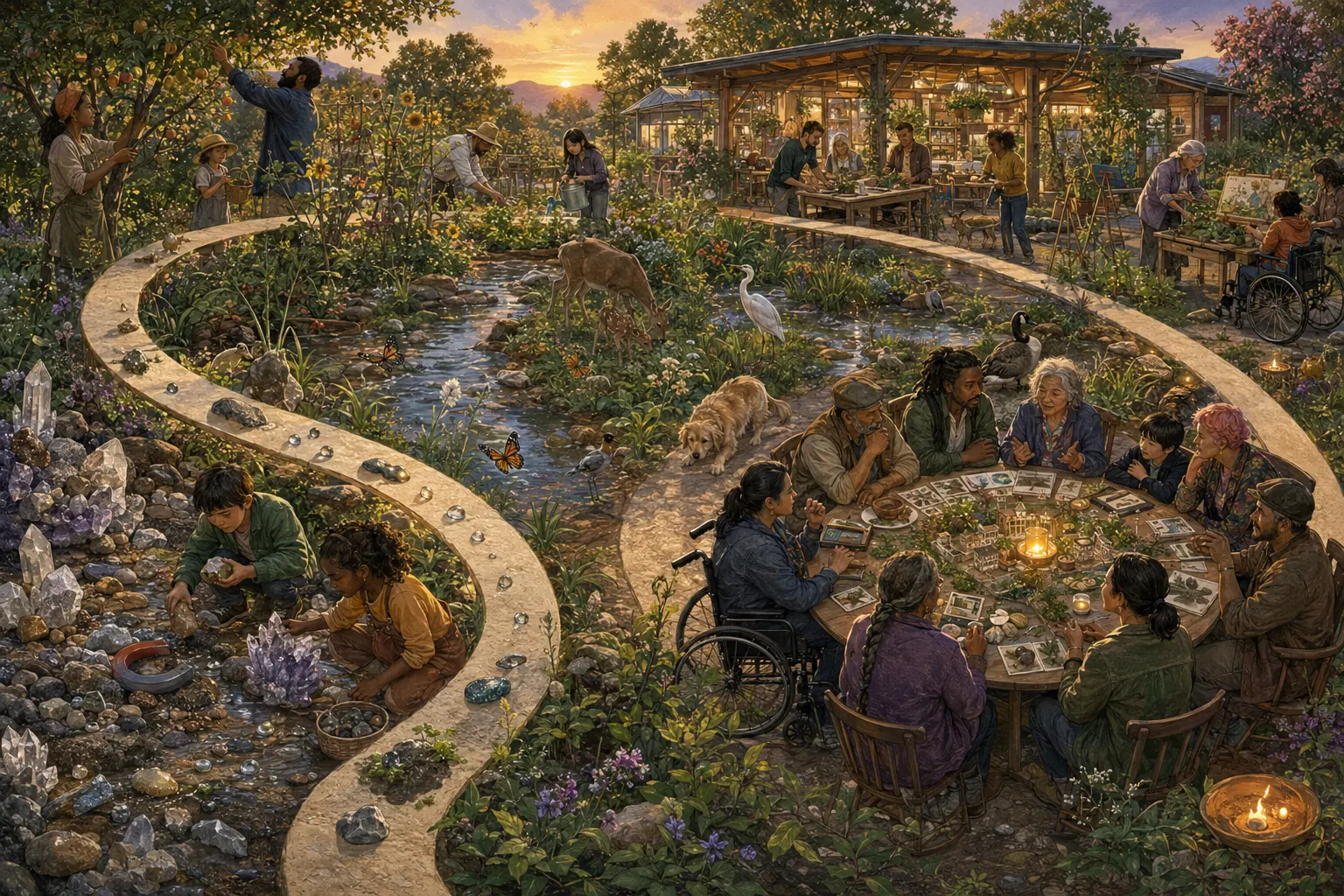
Ecological observation · landscape systems
Water flows. Wood grows. Fire warms and reveals. Earth holds. Metal gives shape and boundary.
An original framework for reading water, soil, light, circulation, living communities, labor, materials, maintenance, relationship, and restoration potential.
Learning + governance
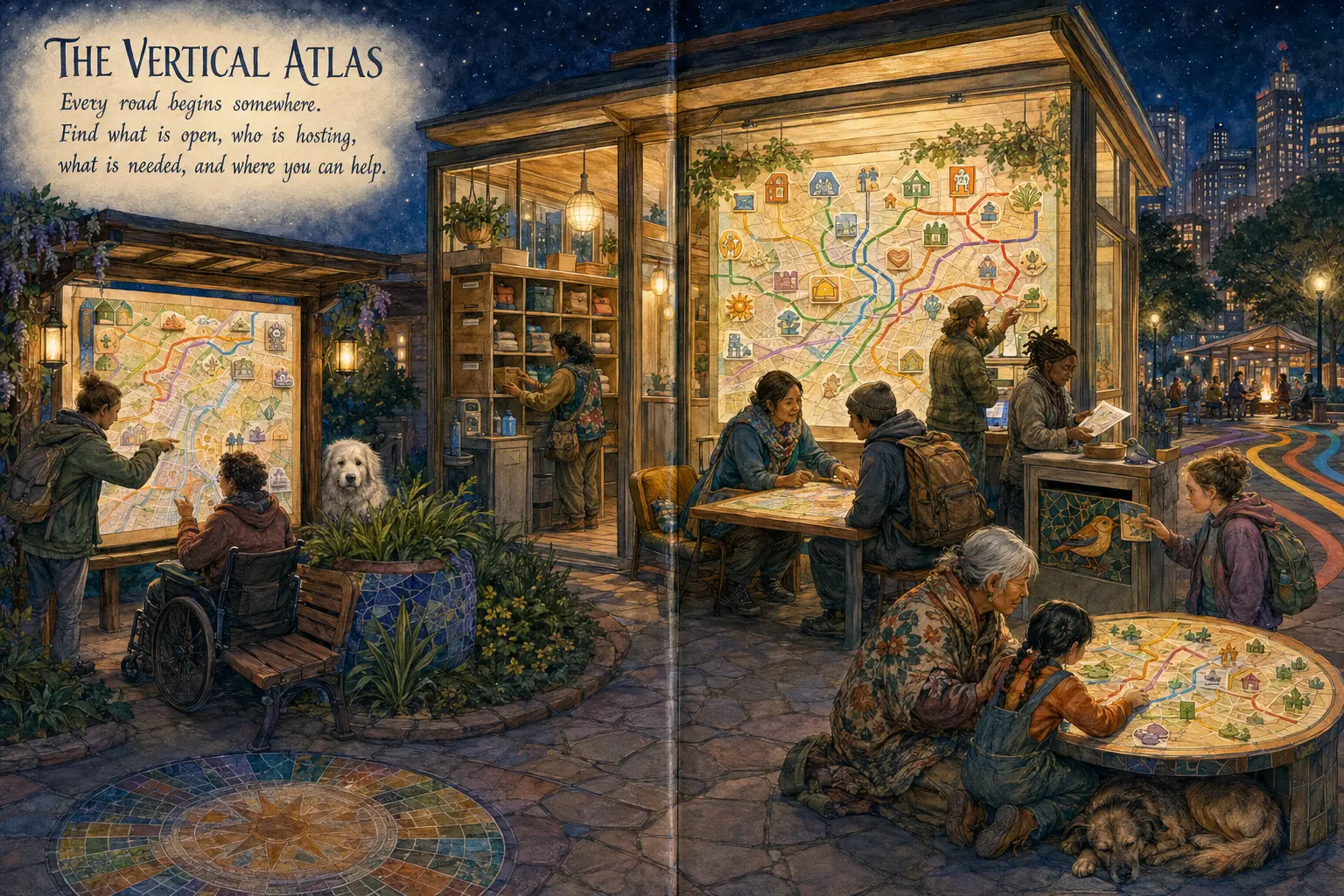
Cooperative readiness · role practice · learning
People learn a role by trying it with support, reflection, clear limits, and a way to hand it on.
A bounded learning model for cooperative readiness, shared governance, ecological care, relational infrastructure, and practiced contribution.
Sanctuary + repair
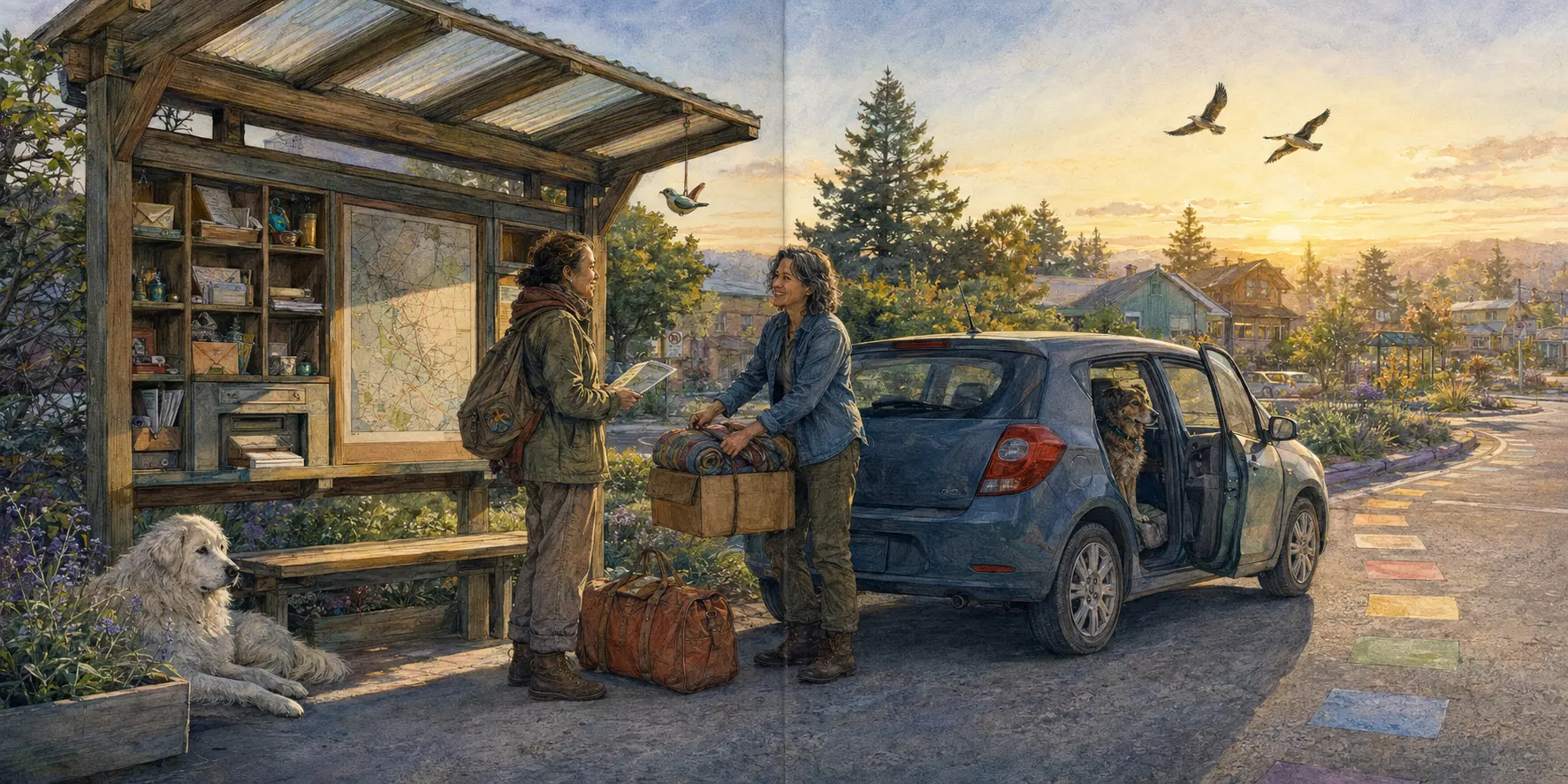
Sanctuary · ecological repair · place-based learning
A safe-enough place to rest, repair, learn, contribute, and find the next real doorway.
A place-based proposition where sanctuary, ecological repair, culture, learning, livelihood, and stewardship can meet without making the site carry more than it can support.
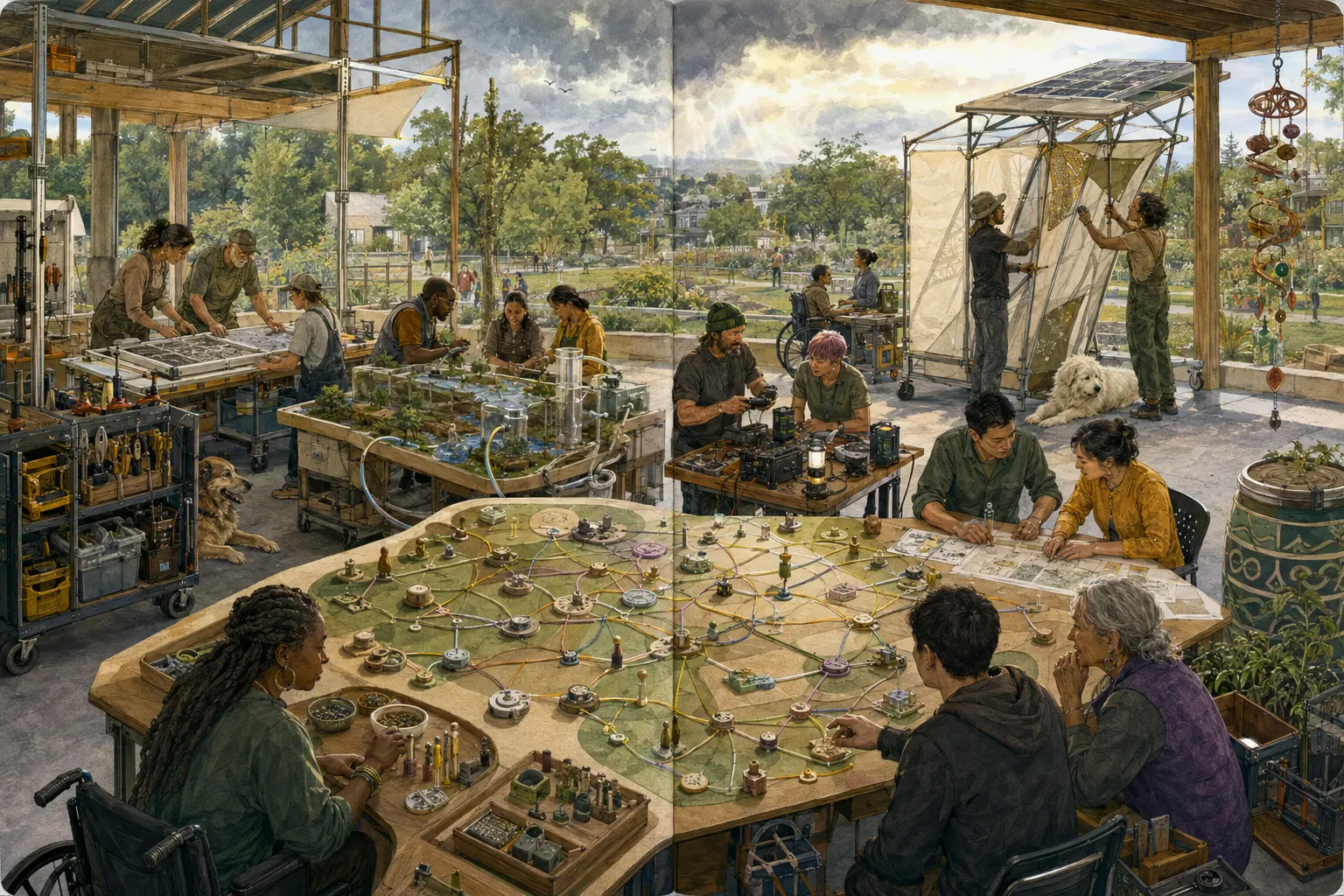
Experiment + return
Applied learning · bounded experiments
Try one small change, notice what happens, repair what needs repair, and bring the learning back.
Short, documented learning laboratories where a community can test one meaningful change without turning possibility into premature scale.
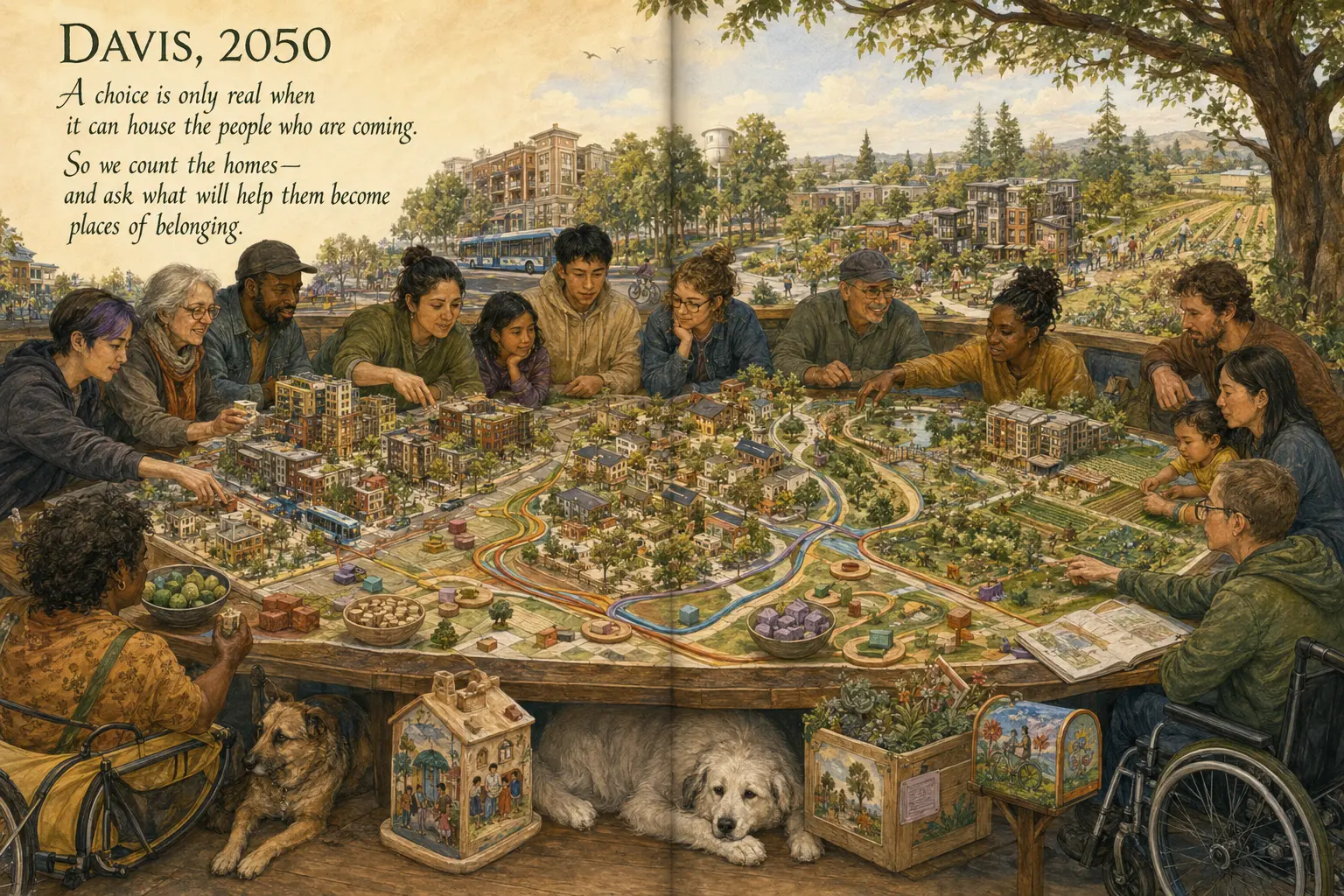
Civic + institutional capacity
Civic inquiry · community science · institutional capacity
Neighbors make a hard public question visible enough to understand, discuss, test, and carry forward together.
A developing practice for turning fragmented public problems into shared inquiry, accountable partnership, and stewardable next steps.
One shared interest pathway
Name what draws you, what you know, what you want to learn, or a resource you may be able to bring. The first response is an orientation and fit conversation—not automatic membership, authority, endorsement, or a promise that a pilot will launch.
Follow the Lantern