Celtic-language resonance · Irish + Scottish Gaelic
Baile: home, town, farm, community.
In Sahar's founding interpretation, a place is also something people teach, build, maintain, and learn to inhabit together.
People build belonging through music, movement, rest, culture, care, and honest relationship.
BaileBuild self. Build home. A human and relational development stream building outward from inside.
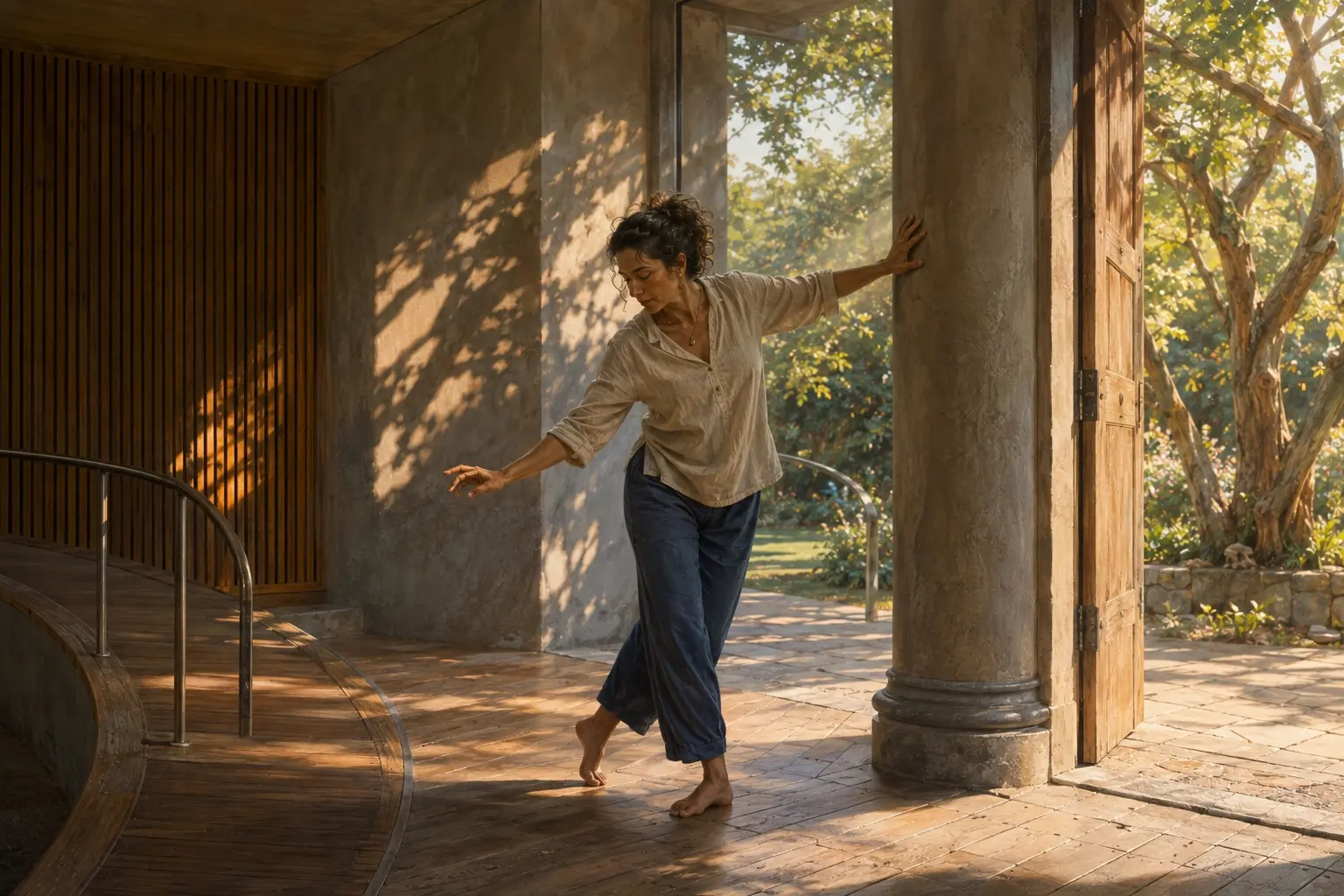
Working premise
Baile treats music, movement, and cultural expression as forms of intelligence rather than decoration around the ‘real’ work. Music becomes a practice of me-making and coordination: a felt structure for exploring lineage, translation, embodiment, presence, power, identity, and belonging. In dialogue with Qicology and Möbius, Baile asks how creative practice can help people remain distinct while learning to move together—without erasing difference, access needs, or the right not to perform.
Baile · name and origin
Baile was chosen to hold place-making and movement together: how people learn a home, build a community, and practice belonging in more than one language.
Celtic-language resonance · Irish + Scottish Gaelic
In Sahar's founding interpretation, a place is also something people teach, build, maintain, and learn to inhabit together.
Spanish
Rhythm, movement, listening, improvisation, rest, and return make relationship visible—and let distinct people coordinate without becoming the same.
This page names the founder's creative etymology without presenting it as a literal one-word translation: Gaelic dictionaries commonly gloss baile as home, town, village, farm, or settlement; “teach/build” is how this framework interprets the social work of making that place.
Let an idea become a symbol, a practice, a place, or a dance—and notice what its movement changes.
A living conceptual language
Idea Webs begins from a present reality: Indigenous, diasporic, Western, and Eastern histories and heritages are interconnected and interdependent. None is singular. None is a one-size-fits-all container for people.
Living peoples, place, continuity, sovereignty, and specific knowledge.
Movement, memory, displacement, exchange, adaptation, and return.
Plural histories, institutions, technologies, critiques, and ways of knowing.
Plural histories, practices, philosophies, technologies, and ways of knowing.
Who can enter, contribute, change, remain distinct, and return.
How one move changes relationships across time, place, and scale.
Möbius organizes along conceptual frames. It helps people trace connections, consequences, translations, and returns without claiming that every lineage means the same thing or belongs to everyone.
IDEA WEBS began as generative acronym-play. Founder-recalled vocabulary includes innate, diasporic, Indigenous, West, East, belonging, and systems. A later learning-tool use mapped IDEA as Inquiry, Design, Execution, and Analysis. The exact letter-by-letter history is still being verified, so dated versions stay distinct instead of being compressed into one false certainty.
The B/S pairing has also carried several productive readings:
The facilitator archive keeps each expansion with a source and version label. The public site keeps the enduring proposition visible while the language continues to be verified and developed.
Baile · five-direction movement score
Not every feeling needs to become a personal confession. A shared elemental prompt can give a group rhythm, direction, and permission to practice expression without pretending everything is positive.
A facilitator can call an element and direction while participants freestyle, echo one another, or move in synchrony. The score makes coordination available without requiring conformity, intensity, touch, autobiography, or cheerfulness.
Weight · beat · boundary
Lower the center, feel the floor, pulse, heel, stamp within the room’s impact limits, hold weight, and practice solidity. Earth can carry fatigue, resolve, grief, pleasure, refusal, or simple steadiness—it is not required to look peaceful.
Lift · speed · connection
Reach, turn, flick, travel, breathe, redirect, and let attention move quickly between people and space. Air can feel curious, scattered, playful, alert, or restless; uplift does not mean compulsory happiness.
Heat · force · declaration
Stomp, shake, twerk, sweat, strike the air, take space, or use voice—including a yell where the setting allows. Fire practices anger, joy, desire, power, and assertion without directing aggression at another person.
Immersion · slowness · nurture
Undulate, fold, soften, pause, rock, recover, and follow a slower internal rhythm. Water makes room for tenderness, privacy, saturation, sorrow, care, and rest without demanding disclosure.
Space · transition · integration
Notice what wants to combine, change, echo, become still, or remain distinct. Ether lets the group synchronize without becoming identical and gives the score a deliberate close rather than leaving everybody emotionally flung into the parking lot.
How the score stays real
This Earth–Air–Fire–Water–Ether movement score is borrowed with permission from a practice Sahar learned through dance training. At the teacher's request, the teacher and training organization remain anonymous. The Baile framing is Sahar's interpretation—not an official presentation of that practice, a one-to-one restatement of Five-Element Ecological Stewardship's Water–Wood–Fire–Earth–Metal composition, or a clinical treatment.
Developing Baile method · structure, access + agency
For people who are under-resourced, structure may be essential and protective: a dependable time, an accessible route, a clear right, a known person responsible, and somewhere safe to return.
The same structure can become inaccessible, carceral, or painfully inadequate when it is imposed without consent, material support, appeal, or a workable exit. Baile therefore does not confuse freedom with the absence of structure.
Nested without ranking. Comprehensive does not have to mean coercive. Instead of asking who sits above whom, the map asks where choice, control, negotiation, authority, and accountability actually sit.
Body · breath · pace · consent
What can I choose, refuse, change, or pause right now?
Floor · tools · sound · light · rest · exit
What makes participation materially possible?
Partners · rhythm · proximity · care
What must be communicated and negotiated together?
Access · resources · rules · safety · repair
Who is responsible, and what happens when support fails?
Policy · labor · land · watershed · funding
Where does power sit, and how can it be questioned or changed?
Radial—not a ladder of human worth
The map is inspired by permaculture zoning: proximity and frequency matter, but outer zones are not worth less than inner ones. Here that spatial logic is adapted to agency, access, and public accountability.
Homeitat uses the same lens at civic scale—body, room, site, neighborhood, institution, and ecology. Baile makes the field felt; Homeitat makes it tangible enough to build, question, and renegotiate.
See the Homeitat method →This radial structure-and-agency model is part of Sahar's developing Baile–Homeitat synthesis. It is distinct from the permission-shared five-direction movement score above.
Music as Möbius · sonic accompaniment + whole-person learning
A body may follow a sound, resist it, echo it, rest inside it, ignore it, or ask for it to change. That response is part of the lesson—not a failure to keep the beat.
Baile invites musicians, composers, music theorists, instrument builders, DJs, sound artists, acousticians, music educators, disability-culture practitioners, inclusive educators, and appropriately trained facilitators to help develop this work.
Notice room tone, silence, pulse, resonance, breath, distance, and what the body is already doing before adding sound.
Study rhythm, interval, harmony, form, acoustics, genre, and tools such as the circle of fifths—without treating notation as the only musical intelligence.
Try voice, instruments, recordings, found objects, vibration, or a simple beat. Participation can be skilled, beginner, experimental, or receptive.
Let the body follow, resist, echo, rest inside, or ask to change the sound through stillness, gesture, steps, or full-body motion.
Ask what supported orientation, expression, coordination, pleasure, or rest—and what distracted, overwhelmed, excluded, or hurt.
Change tempo, volume, texture, instrumentation, cue mode, spacing, or silence; then listen again. The learning returns altered, not finished.
The access score
Music and movement may support learning, expression, connection, or regulation for some people; they do not guarantee regulation and are not presented here as clinical treatment.
Open collaborator invitation
A first collaboration could be one listening lab, theory table, sound walk, accessible jam, movement score, or small performance with clear lineage, scope, recording rights, access planning, and compensation or honoraria when funding allows.
Propose a Baile music collaborationStrengths, play, development, individuality, family and cultural context, and a caring equitable learning community inform the design. Learning from early-childhood education does not mean infantilizing adults.
Engagement, representation, action, expression, navigation, and movement need more than one route. Access is part of the score, not an accommodation stapled onto the finale.
Predictability, consent, peer support, cultural responsiveness, trust, and real choice shape the container. “Trauma-informed” is a design responsibility, not a claim to be therapy.
Disabled and neurodivergent participants and practitioners are knowledge holders. Their feedback should change the instruments, room, timing, cues, paths, and definition of participation.
A lovingly unofficial department
Whole-person practice needs person-scaled tools. In Baile shorthand: DAP needs DAT.
If the tool does not fit the person, redesign the tool—or choose another one. This proposed Baile desk would match instruments, amplification, acoustic conditions, seating, lighting, haptic cues, recording equipment, paths, rest, and communication methods to the actual people and place. “Appropriate” means situated, maintainable, consent-based, and useful—not merely novel.
The name also nods to California's former Office of Appropriate Technology. Baile's playful “Department” is not a government agency, institutional successor, or claim of affiliation.
Music as Möbius and the proposed Department of Appropriate Technology are parts of Sahar's developing Baile synthesis. Musical, cultural, educational, disability, somatic, and therapeutic lineages retain their own authorship, standards, permissions, and scopes of practice.
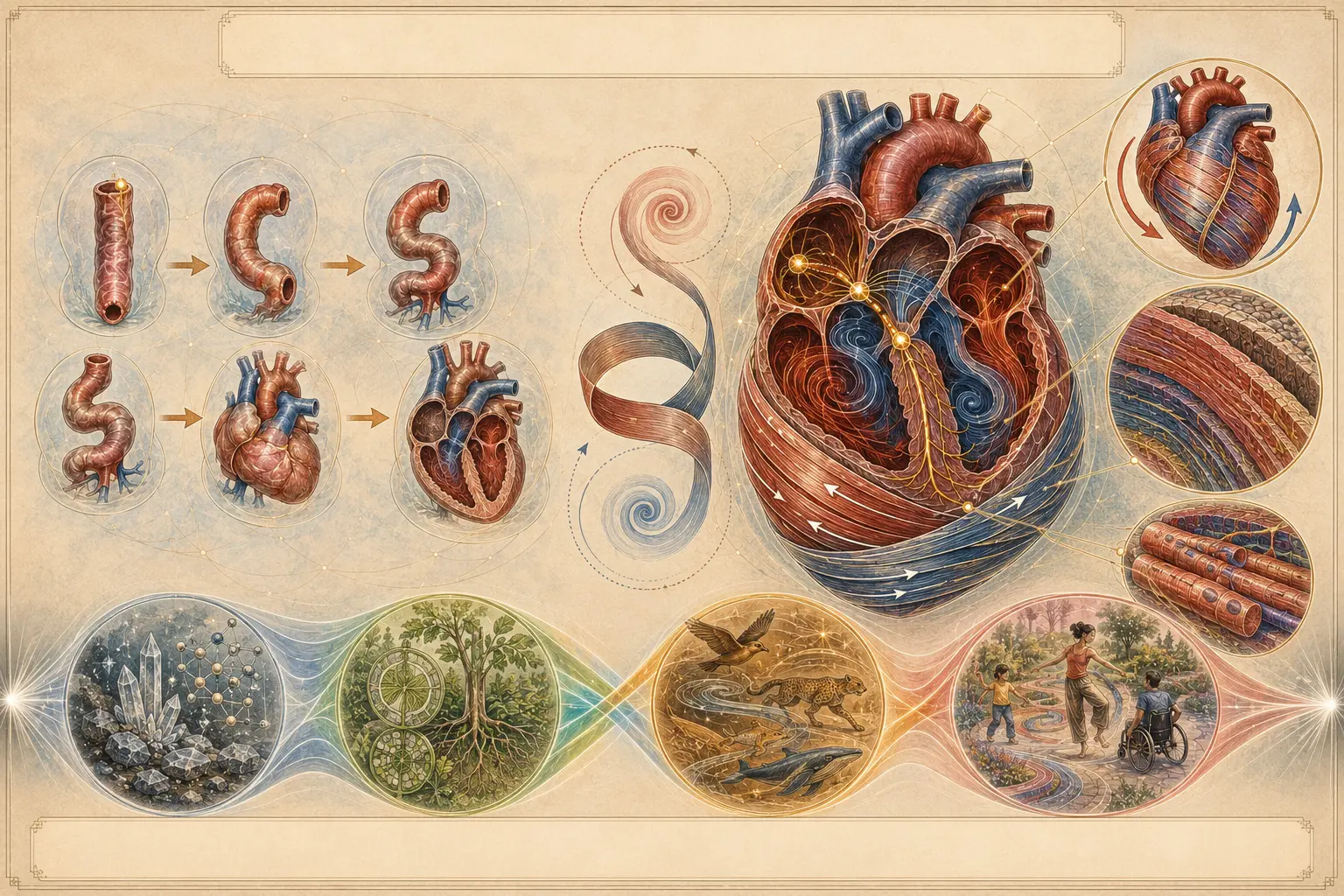
New teaching gallery · science, metaphor, movement
The Embodied Systems Atlas gathers the new mineral, plant, animal, tensegrity, heart, and lunisolar studies into one readable sequence. Each plate identifies what is observed, what is a simplified model, and where Sahar is making a poetic or spiritual connection.
The through-line is pedagogical and accessible: ground, paths, ramps, thresholds, sound, shade, shelter, and room to turn are part of how a body learns—not accommodations added after the lesson.
Open the full atlasDifferent visual doorways
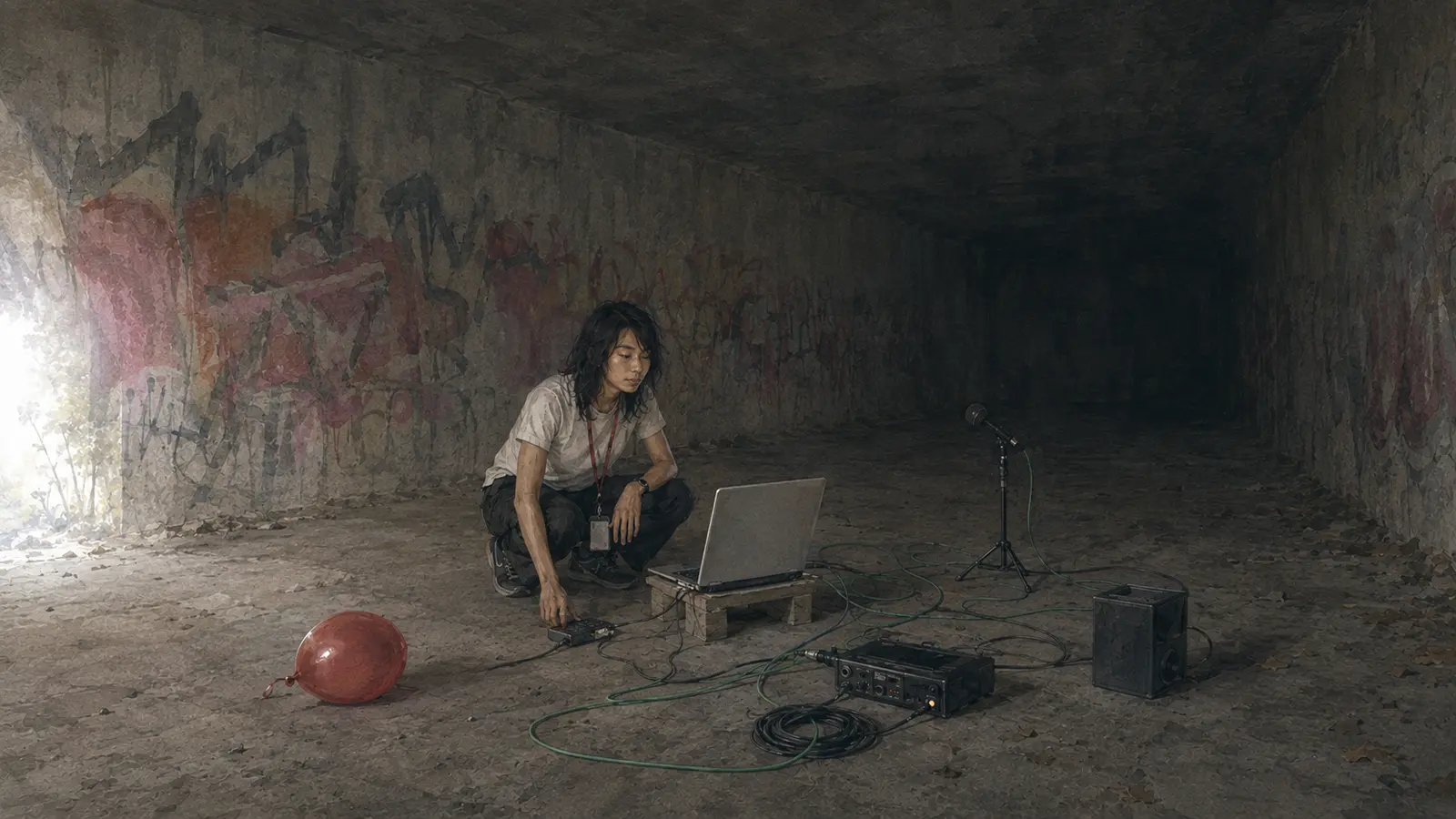
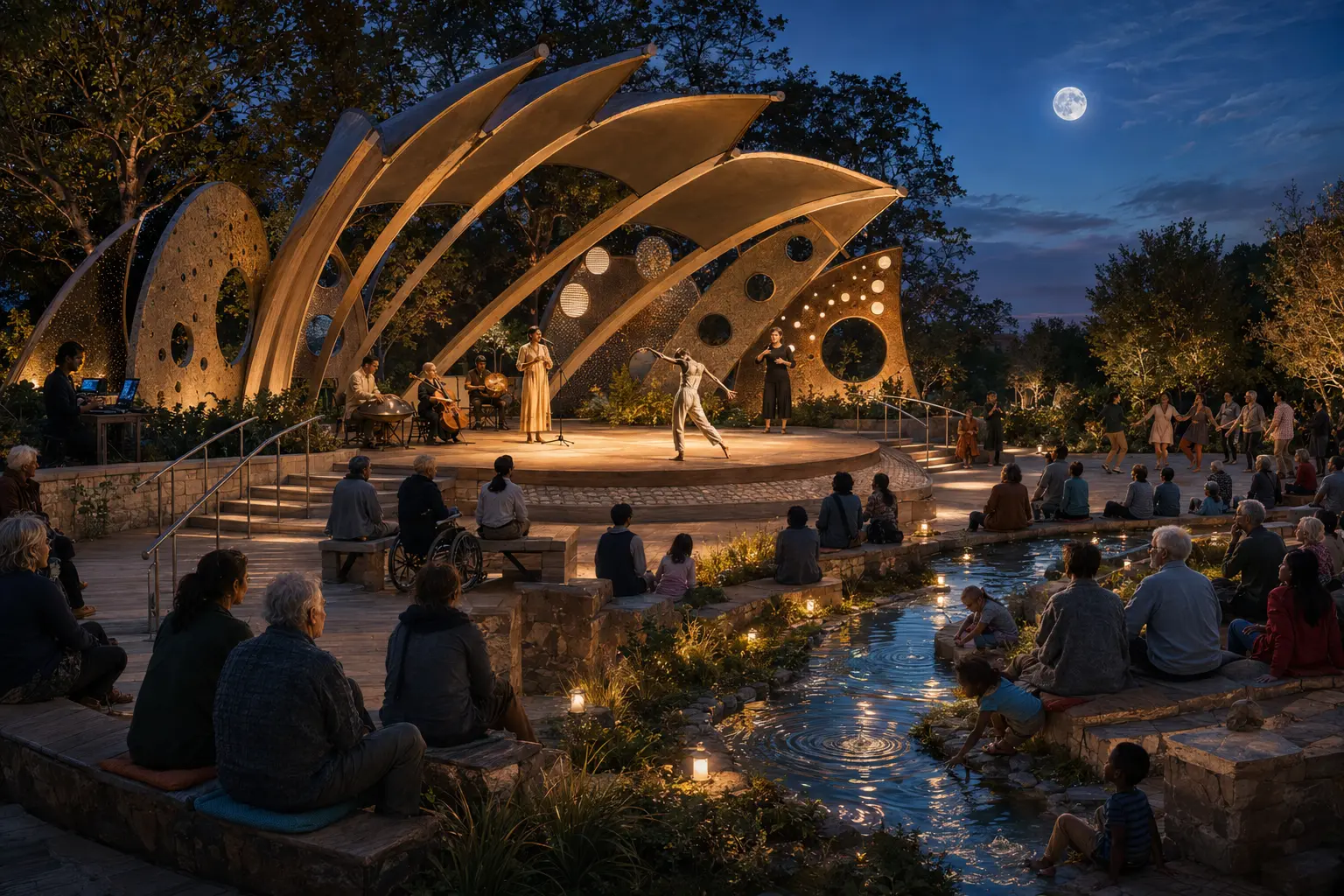
Each image holds a different scale, mood, or practice. Together they keep the project from collapsing into one scene.
Evidence in hand
A named project can orient development without pretending that a complete program, host, cohort, site, or institution already exists.
Practice rooms
These are working areas for learning, review, collaboration, or a future bounded pilot—not departments with unlimited scope or standing authority.
Use listening, rhythm, pacing, rest, expression, and bounded embodied practice to explore how people feel, interpret, improvise, and create themselves in relation.
Treat songs and genres as idea webs: felt cultural forces carrying story, ancestry, power, place, and exchange. Name where forms come from, who carries them, what permissions matter, and how credit and benefit return.
Design multiple modes of participation, protect privacy and refusal, and avoid making visibility or physical performance the price of belonging.
Develop workshops, gatherings, installations, learning prompts, or celebrations only when the container, hosts, resources, and care practices are ready.
Current invitations
Claim and care boundary
Baile is a developing program form, not a currently scheduled class series or a claim of authority over the traditions it may encounter. Participation must be consent-based, accessible in more than one mode, and clear about lineage, teaching rights, documentation, and public use.