Mineral
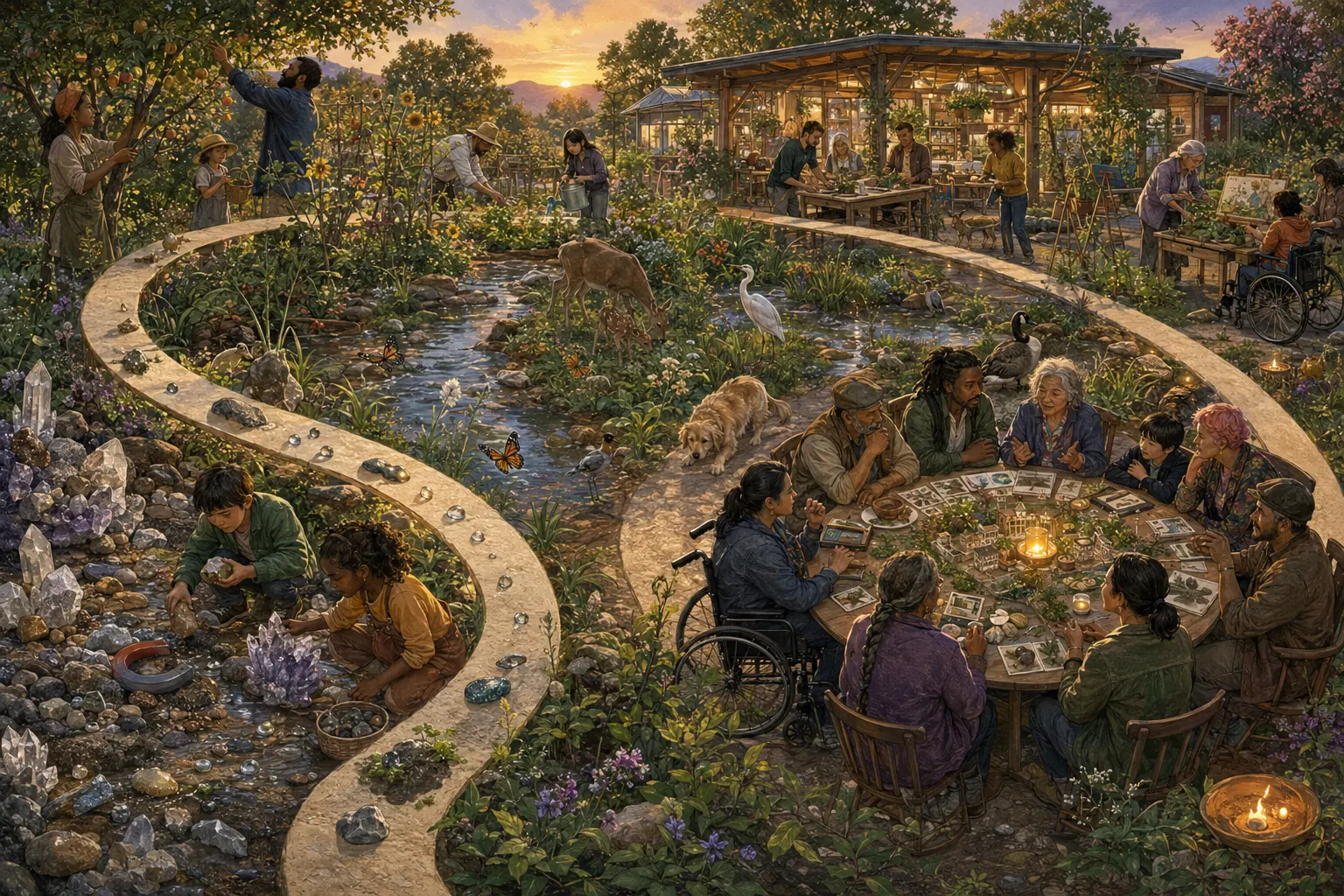
AttractMatter gathers, holds, and forms relationship.
Water flows. Wood grows. Fire warms and reveals. Earth holds. Metal gives shape and boundary.
Five-Element StewardshipAn original framework for reading water, soil, light, circulation, living communities, labor, materials, maintenance, relationship, and restoration potential.
Working premise
Five-Element Ecological Stewardship uses earthly compositional energies to help people observe how living environments move, nourish, exchange, rest, strain, and transform.
Different visual doorways
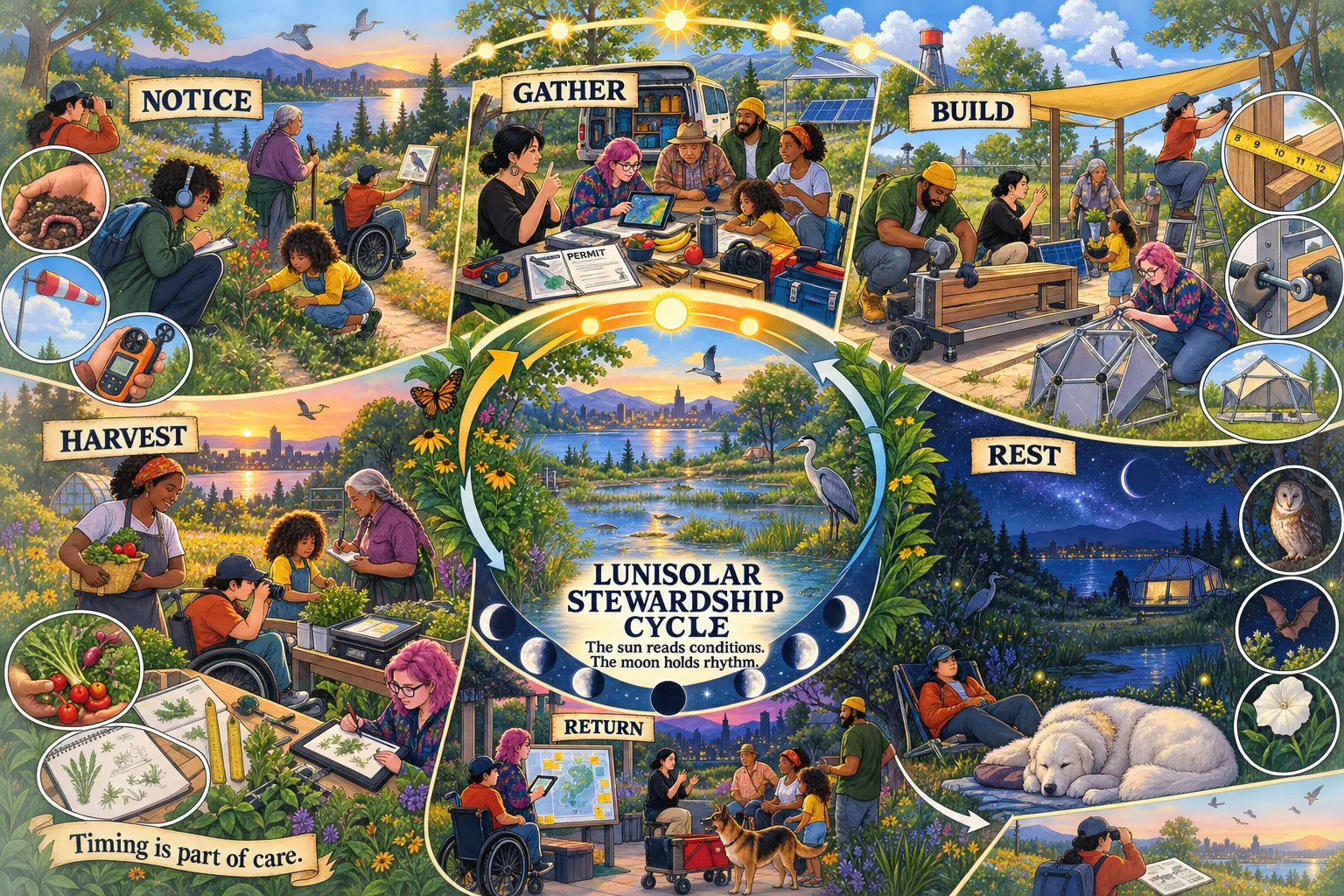
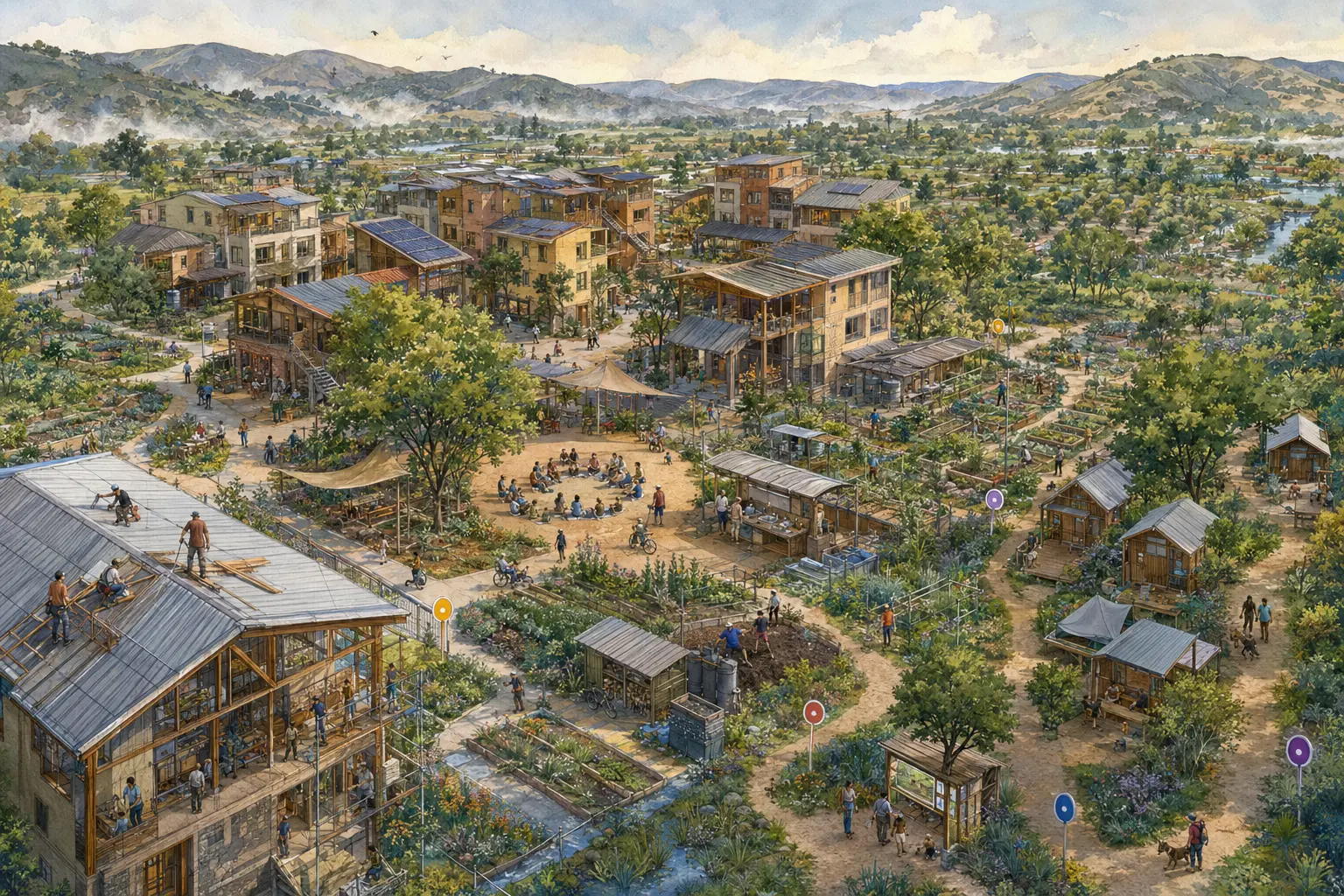
Each image holds a different scale, mood, or practice. Together they keep the project from collapsing into one scene.
Mineral · Vegetable · Animal · Human
Matter gathers, holds, and forms relationship.
Life reaches, nourishes, adapts, and regenerates.
Living beings perceive, move, feel, relate, and choose among signals.
Rational and spiritual agency create responsibility: consult democratically, seek truth, serve unity, and abandon prejudice.
This is a philosophical and educational lens for relationship and responsibility—not a ladder of human worth, a racial hierarchy, or a substitute for biological science.
Evidence in hand
A named project can orient development without pretending that a complete program, host, cohort, site, or institution already exists.
Practice rooms
These are working areas for learning, review, collaboration, or a future bounded pilot—not departments with unlimited scope or standing authority.
Read conditions and relationships before selecting interventions.
Connect material, ecological, social, labor, and maintenance patterns.
Choose bounded care, restoration, learning, and handoff practices.
Return evidence to the next season without treating one audit as permanent truth.
Current invitations
Claim and care boundary
The framework supports ecological observation and stewardship decisions; it does not replace regulated technical assessment, diagnosis, engineering, clinical judgment, or site-specific professional review.