Story and archive
Recover memory, lineage, local accounts, missing records, and the stories that shape what a place believes is possible.
People study a place, make art, share skills, and design a room they can actually use together.
AACDIArt, Architecture & Cooperative Design Initiative. Create culture. Create community. Design-build stewardship, culture, and community labs.
Working premise
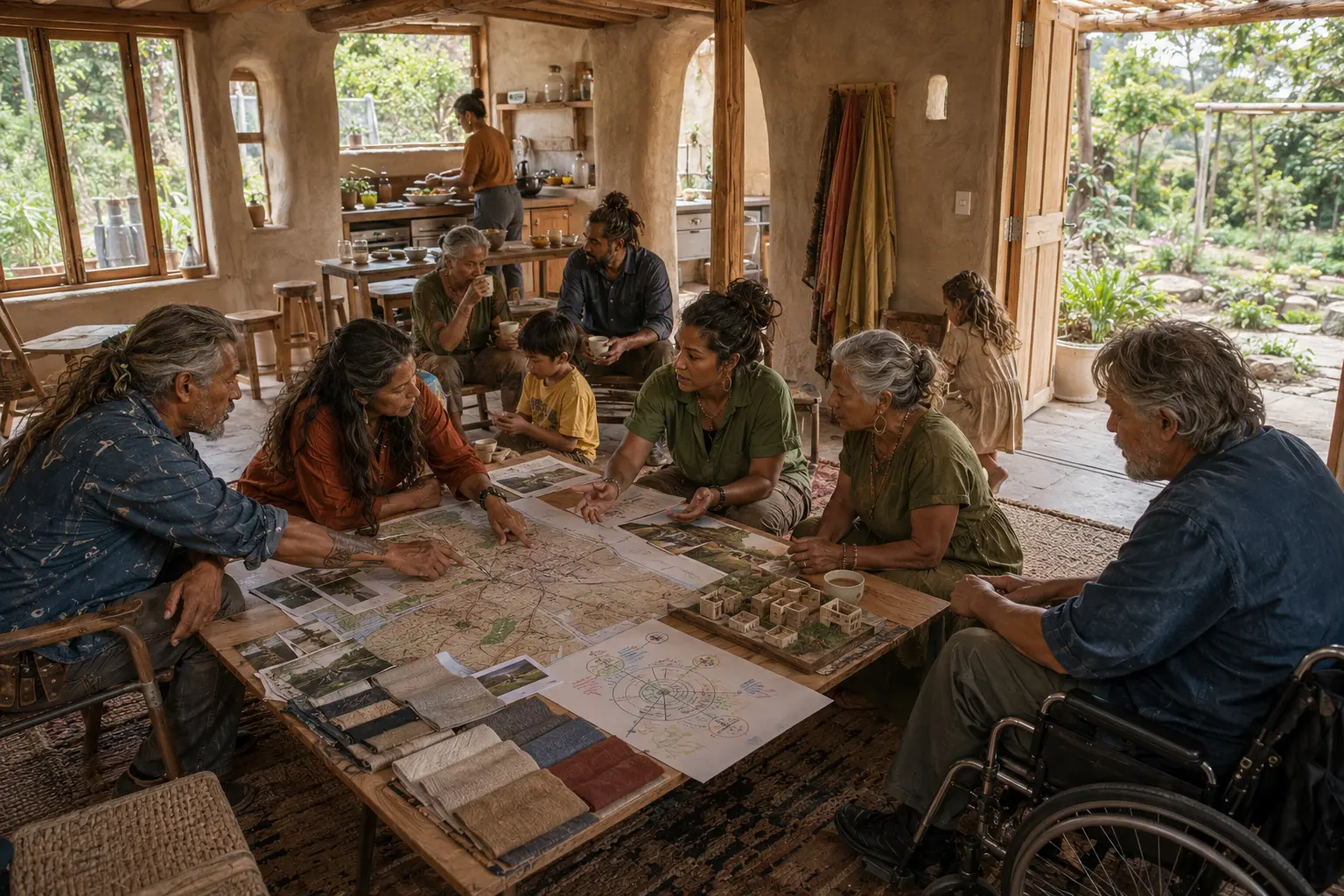
Art, Architecture & Cooperative Design Initiative is AACDI’s public-facing name. It begins from a three-part doctrine: Universal need. Specific lineage. Local translation. The original name—Anarcho-Anachronistic Community Design Initiative—remains part of the project’s origin story and punk mythology, not its professional headline.
Different visual doorways
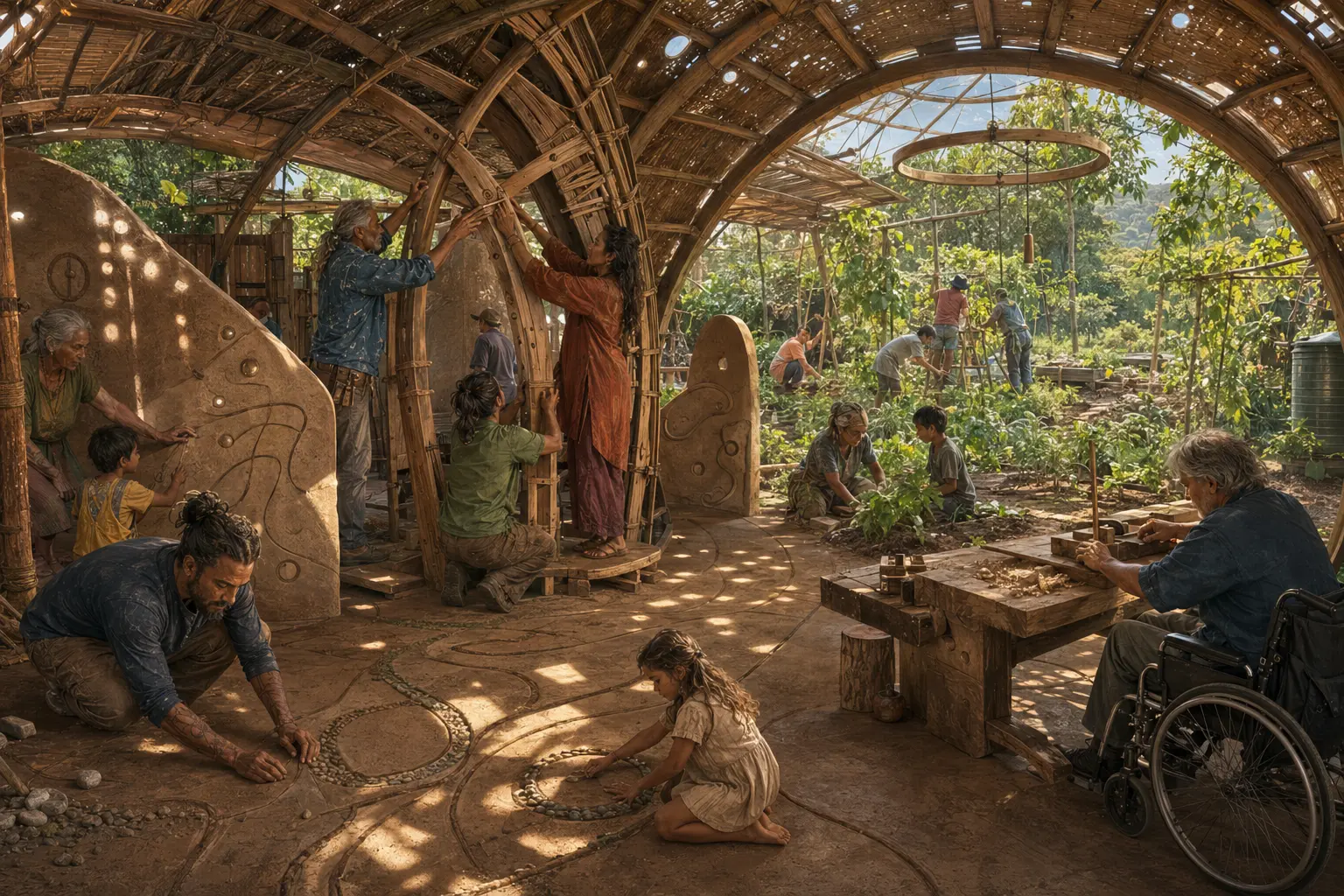
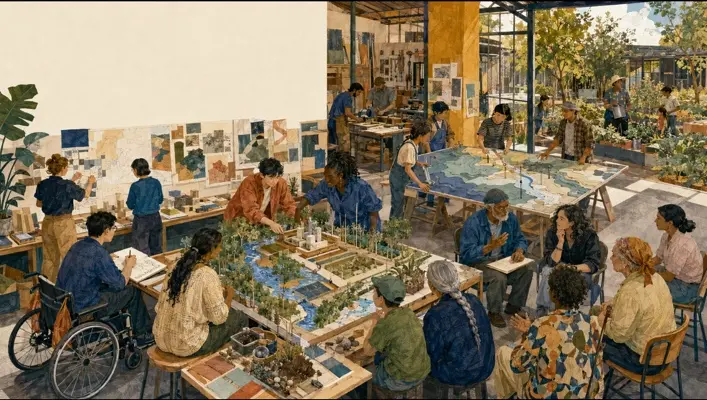
Each image holds a different scale, mood, or practice. Together they keep the project from collapsing into one scene.
Restoration Commons · AACDI’s role
AACDI would shape the public-facing room around a host-authorized restoration program—not decide ecological treatments. The work is accessible orientation, shared design, cultural interpretation, and a threshold where people can understand how to enter, contribute, rest, and return.
Explain the place, its histories, the ecological purpose, who holds authority, what training applies, and which seated, sensory, mapping, craft, or remote roles are available.
Make the day board, permit path, maps, check-in, multilingual wayfinding, accessibility requests, badges, tool instructions, and help contacts legible without letting the kiosk invent authority.
Co-design shade, water, seating, tool storage, wash-up, repair, teaching, and—only where separately permitted—short-stay infrastructure using natural and place-responsive materials.
Credit participants, document what changed, preserve local knowledge with consent, invite review, and turn each completed task into better orientation for the next person.
The access-and-labor boundary
AACDI cannot grant land access, ecological approval, or overnight permission. Those remain with the actual landholder, agency, regulator, or authorized host. Its job is to make the human agreement visible, usable, revisable, and hard to quietly exploit.
Evidence in hand
A named project can orient development without pretending that a complete program, host, cohort, site, or institution already exists.
Practice rooms
These are working areas for learning, review, collaboration, or a future bounded pilot—not departments with unlimited scope or standing authority.
Recover memory, lineage, local accounts, missing records, and the stories that shape what a place believes is possible.
Use images, language, movement, communications, and public interpretation to make relationships legible without demanding a single identity.
Connect architecture, repair, trades, tools, material knowledge, accessibility, maintenance, hands-on public making, and Respite Architecture: hospitable thresholds designed for pause, orientation, care, and return.
Articulate how resources, labor, access, and authority circulate while preserving reverent space for rest, difference, memory, and emergence.
Current invitations
Claim and care boundary
AACDI does not claim cultural authority it has not earned, reproduce sacred or community-held knowledge without permission, or create shadow governance. Any test is opt-in, limited in duration and scope, host-authorized, and explicit about labor, credit, information, decision rights, access, and review.