Distributed access
Where can someone actually enter, borrow, reach, learn, or reconnect?
A picture-first route through the work, services, story, and ways to participate—followed by fourteen illustrated doors into the wider ecology.
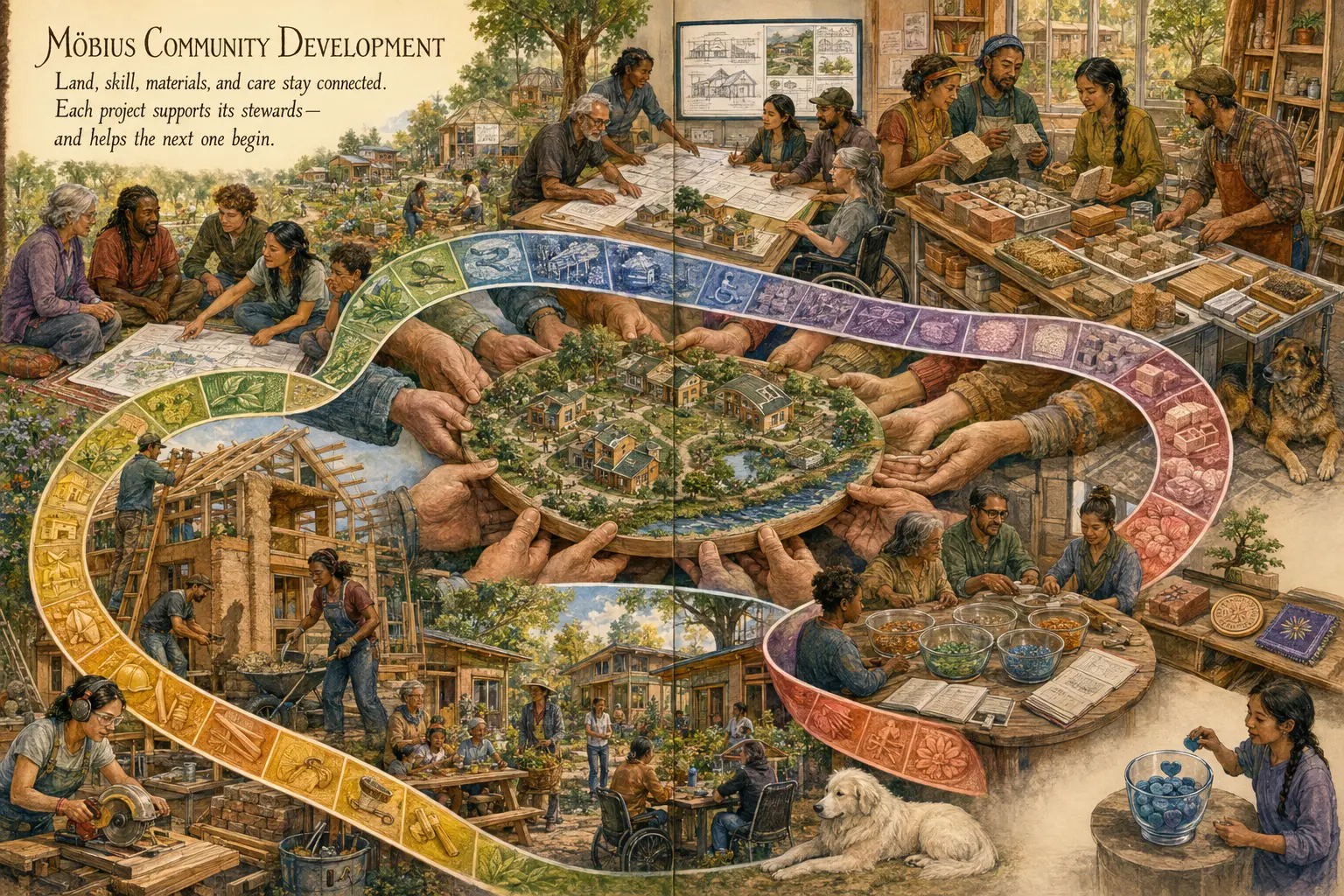
One route · two ways to name it
What is published here
Framework language and imagery already cleared for this public edition.
What is not included
Private correspondence, unapproved likenesses, named endorsements, or accompaniment to another author’s specific work.
How to read the art
Every image is labeled as concept art or documented practice. Concept art shows a possibility—not proof that a site or program exists.
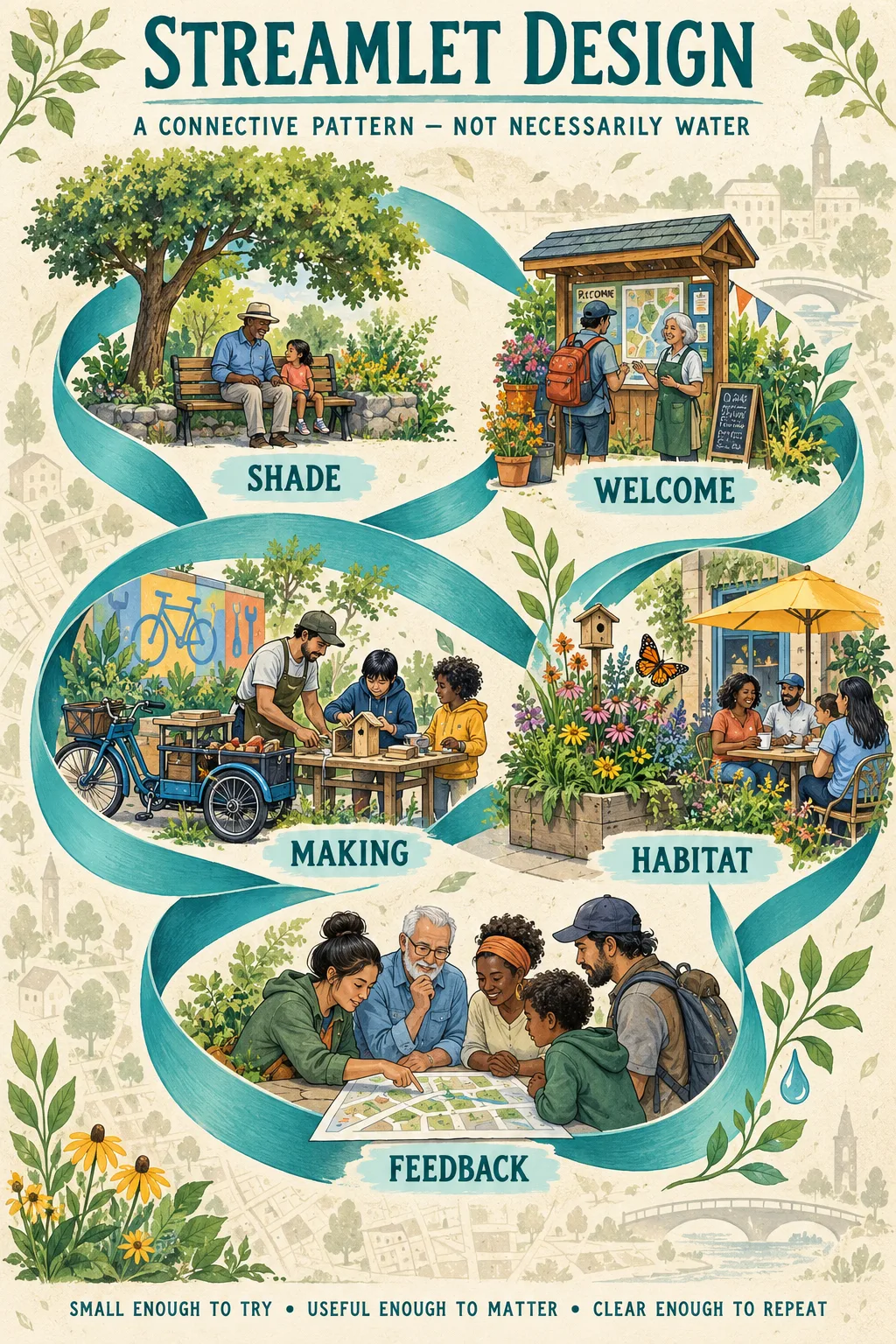
Meet the Access Crew · illustrated companion in development
The acronyms are characters only after their jobs make sense. Each one holds a question that can help a shared place become easier to enter, use, support, and improve.
Where can someone actually enter, borrow, reach, learn, or reconnect?
What keeps the opening safe, maintained, accompanied, and usable over time?
How does a person arrive without already knowing the system?
How does a request reach the right place—and how does an answer come back?
What fits this person, group, place, moment, and level of responsibility?
Do the material, physical, digital, and procedural supports actually work?
Whose story, knowledge, permission, craft, or perspective belongs at the design table?
House of Workshop is the place-form behind HOW; Hospitality, Orientation, and Welcome is its operating function. DAT means Department of Appropriate Technology: the function that tests whether tools and infrastructure fit the people and place.
Main-site compass · four quick doors
Bloomscroll is the illustrated edition of the Vision Walk; Bloomscrolling is the optional picture-first way to move through it. Each door has a real destination, plain language, and a return path. Motion is decorative, and the same information remains in text.
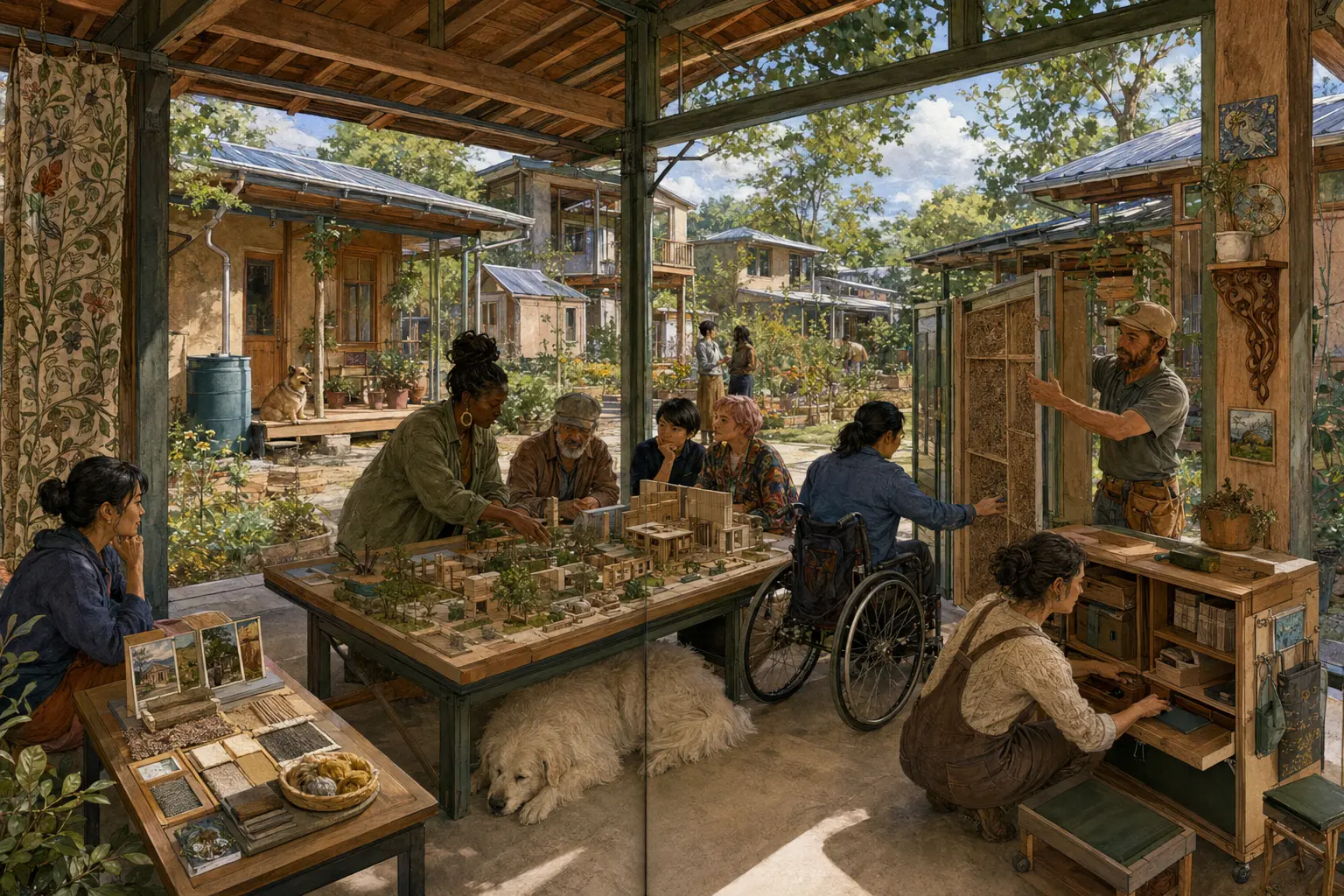
Move the pieces. Ask who is missing.
Storybook voice
Make the room or neighborhood small enough to touch. Try a choice. Notice what happens. Change it together.
Homeitat uses cards, characters, barriers, supports, maps, role-play, dioramas, and room-scale bioregional layers to make civic systems observable and revisable before a bounded real-world test.
Learning returns to the commons.
Storybook voice
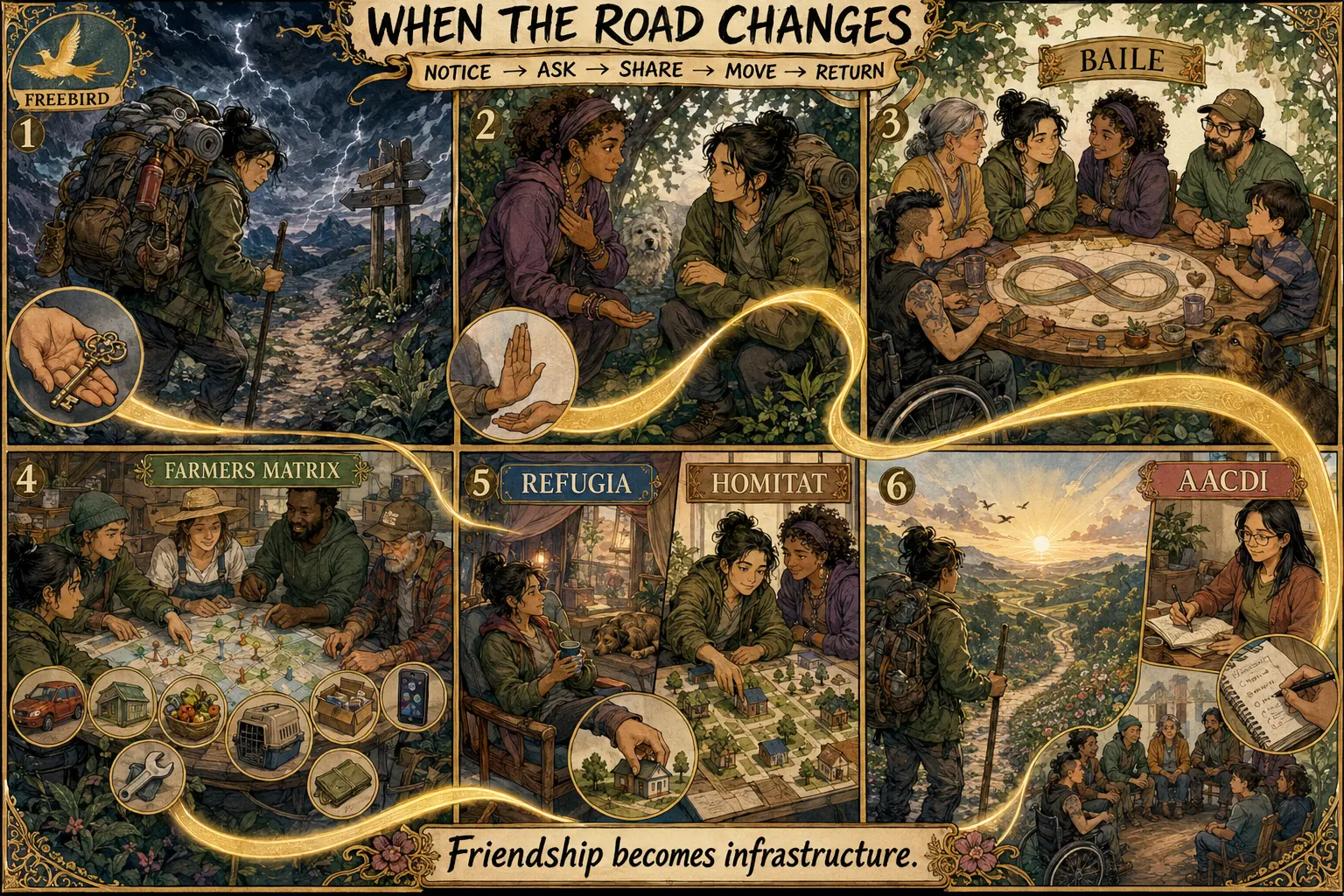
A person practices, contributes, teaches, and grows. A project observes, designs, builds, harvests, and begins again wiser.
People move through Möbius: Explore to Learn to Practice to Contribute to Stewardship and possible co-ownership. Projects move through Oiko Ways with scope, permissions, evidence, review, and return.
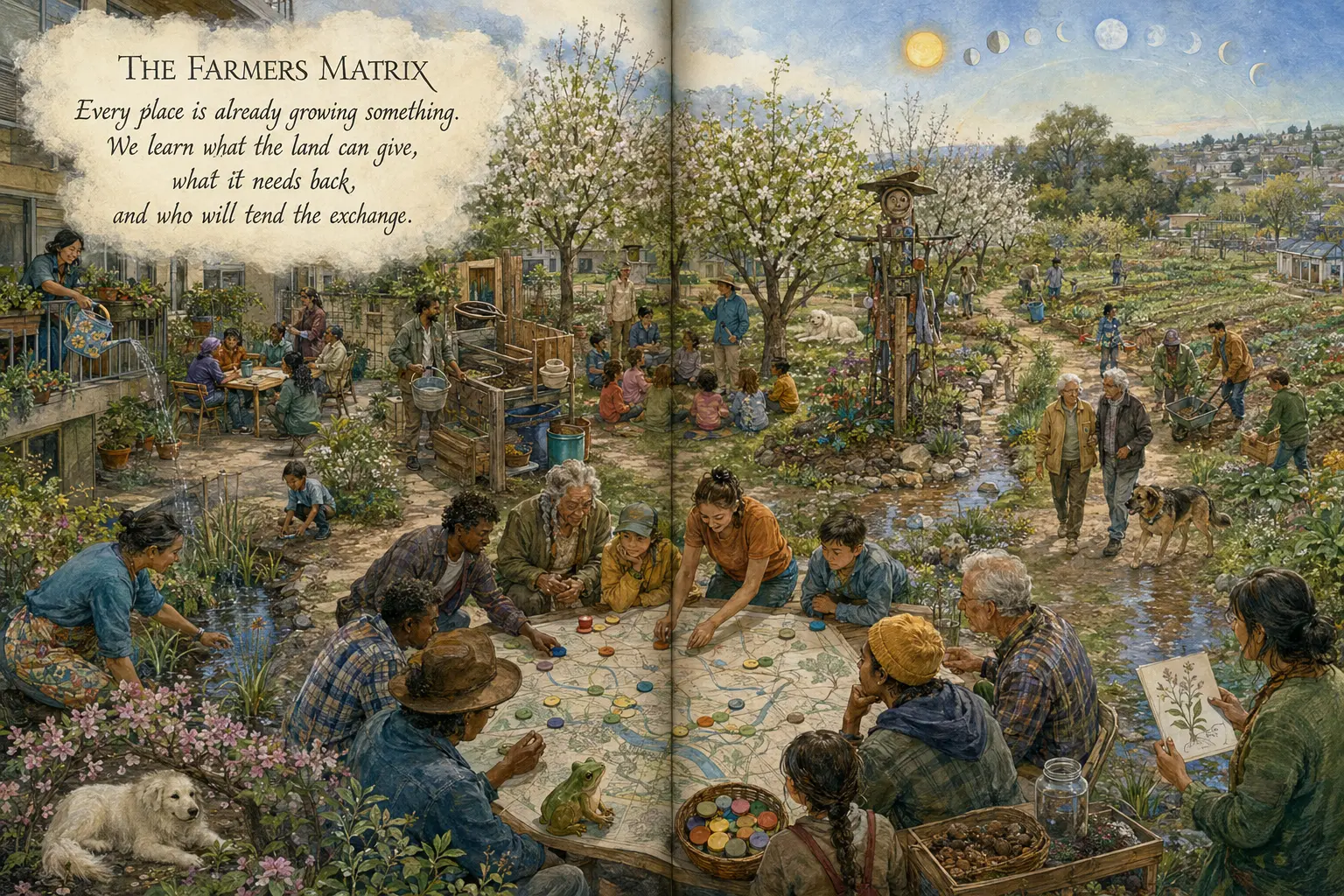
Listen before planting the plan.
Storybook voice
Notice the soil, water, shade, plants, animals, people, tools, hidden labor, and knowledge already here. Then grow what the place can truly hold.
Farmers Matrix connects ecological observation, food and habitat, propagation, tools, labor, learning, distribution, maintenance, and fair return.
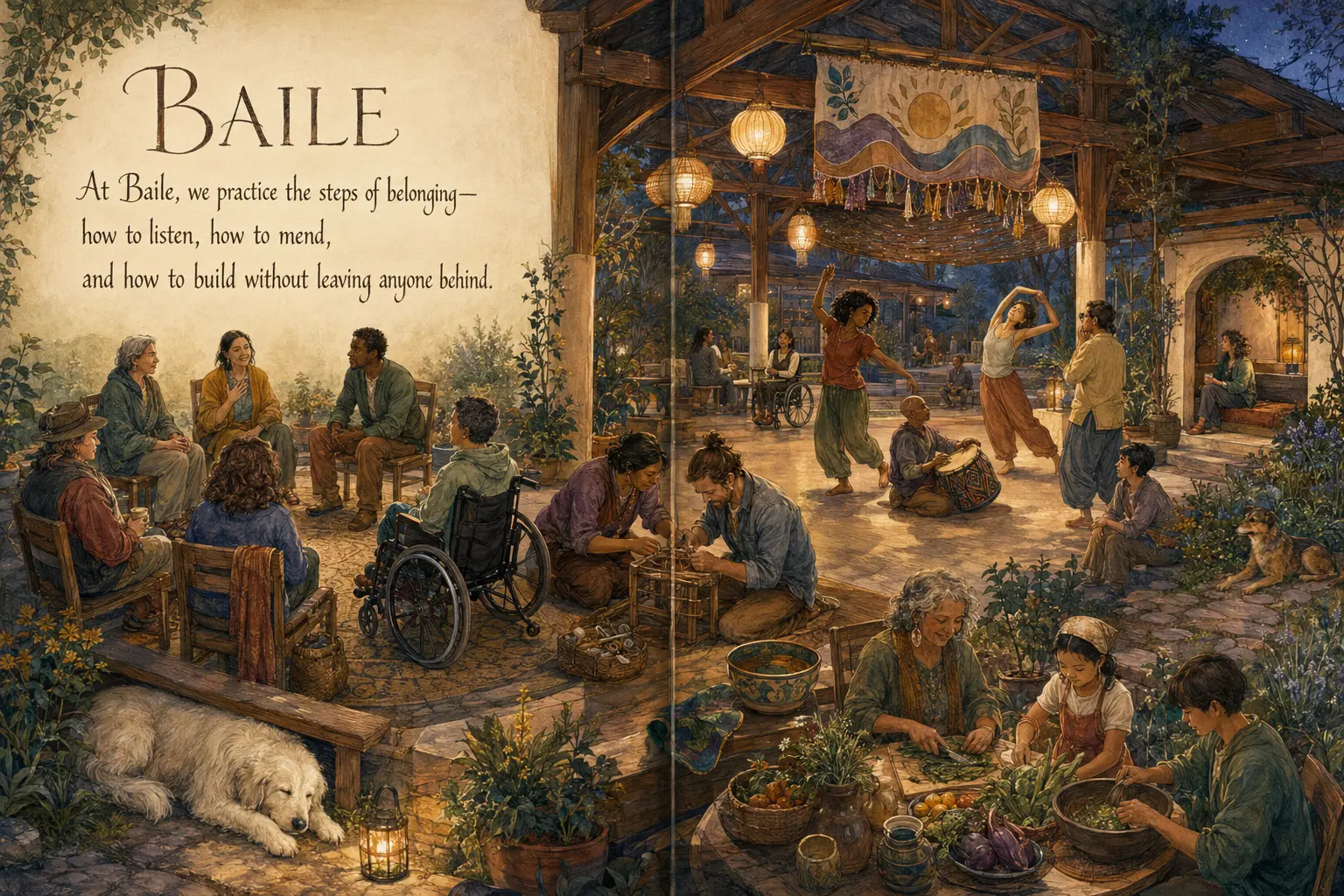
Move. Rest. Listen. Make room.
Storybook voice
Some people dance. Some listen. Some garden, draw, rest, cook, watch, speak, or stay quiet. Nobody has to perform belonging.
Baile treats music, movement, culture, consent, pacing, rest, lineage, and accessible participation as forms of human and relational intelligence.
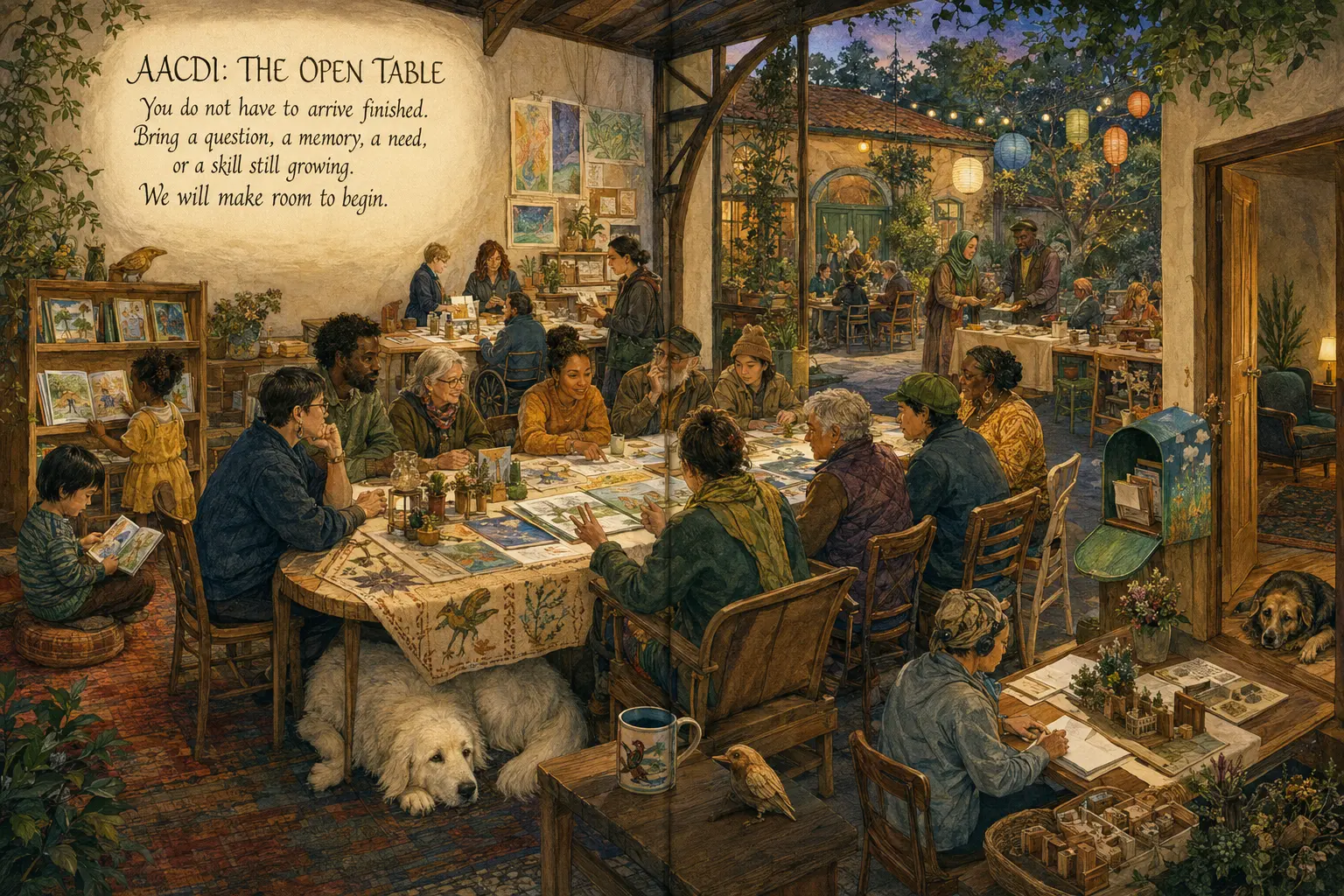
Create culture. Create community.
Storybook voice
Bring the map, the old story, the broken tool, the drawing, the meal, the accessibility question, and the part nobody has decided yet.
AACDI combines story and archive, art and symbol, craft and built form, fair-share practice, and protected open space within bounded, host-authorized design-build inquiry.
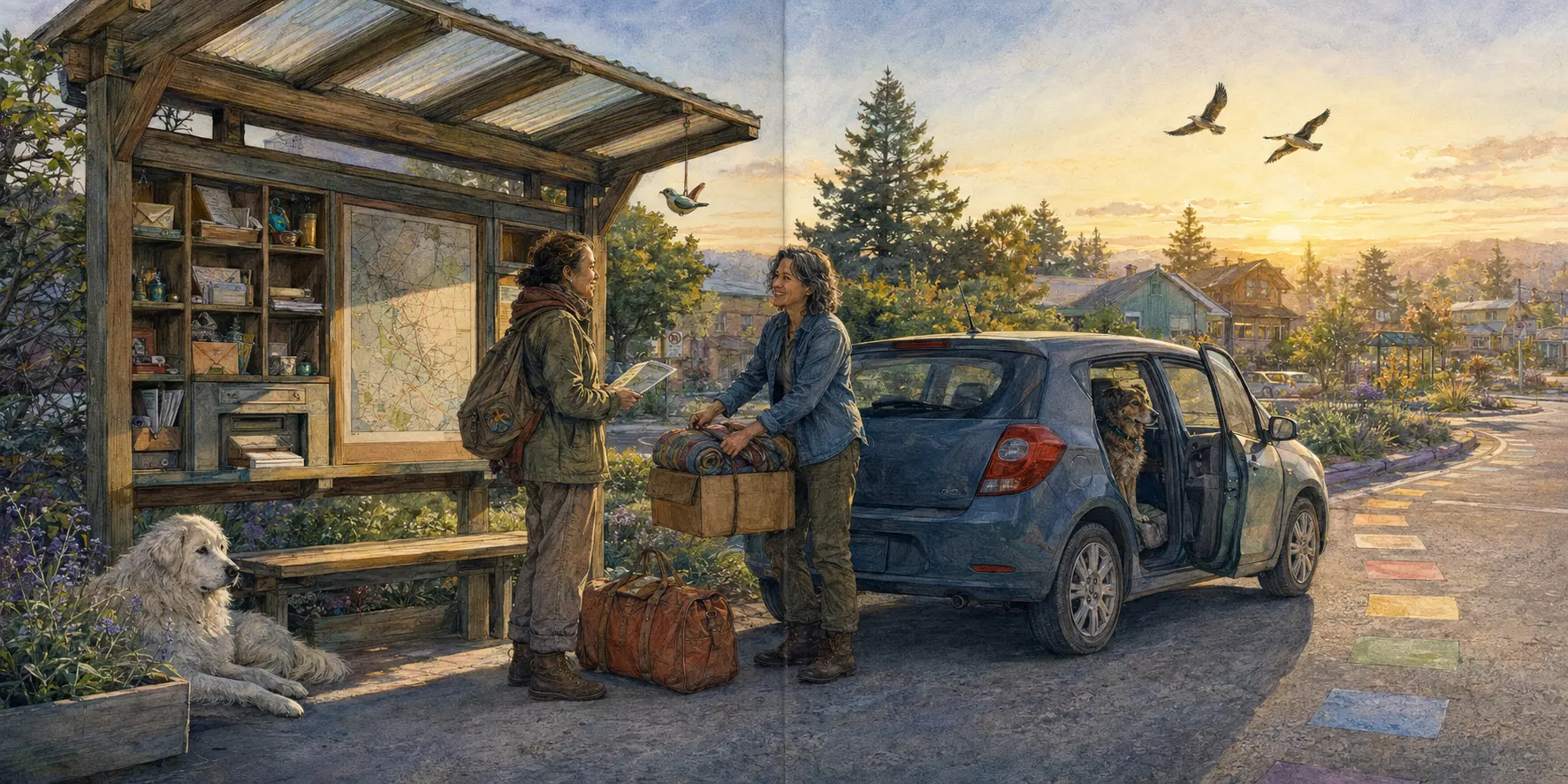
A doorway should lead somewhere real.
Storybook voice
A person can pause without disappearing. A familiar face, a safe-enough place, a repaired tool, and a real next contact can reconnect the road.
Refugia joins sanctuary, ecological repair, learning, livelihood, orientation, and return without claiming a host site or replacing professional crisis services.
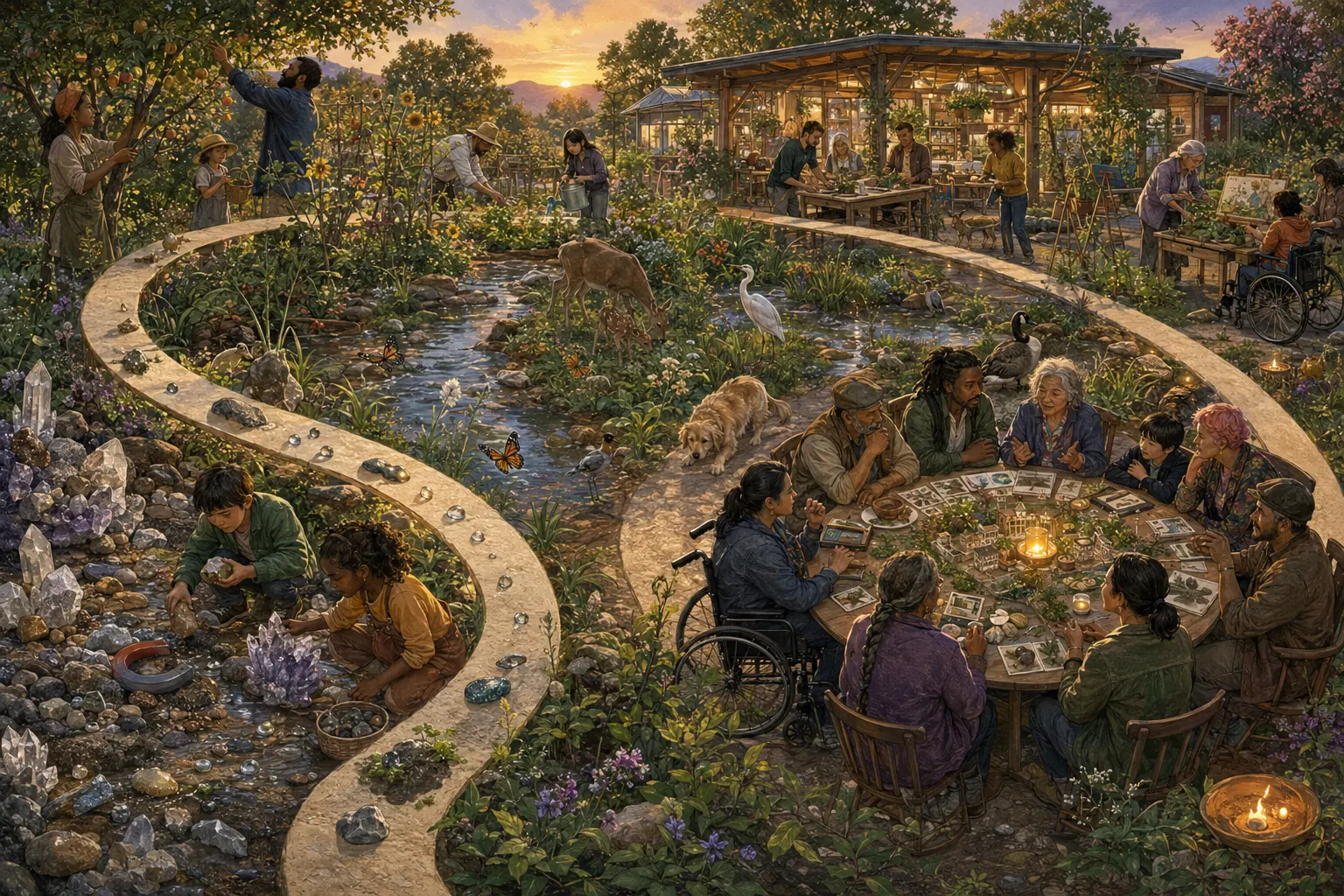
Capacity grows. Worth is inherent.
Storybook voice
Matter gathers. Plants grow. Animals sense and move. Human beings can seek truth, choose, consult, serve unity, and unlearn prejudice.
Mineral, Vegetable, Animal, and Human name expanding capacities for an educational inquiry. The frame rejects racial hierarchy, dehumanization, and any claim that a person's worth depends on ability.
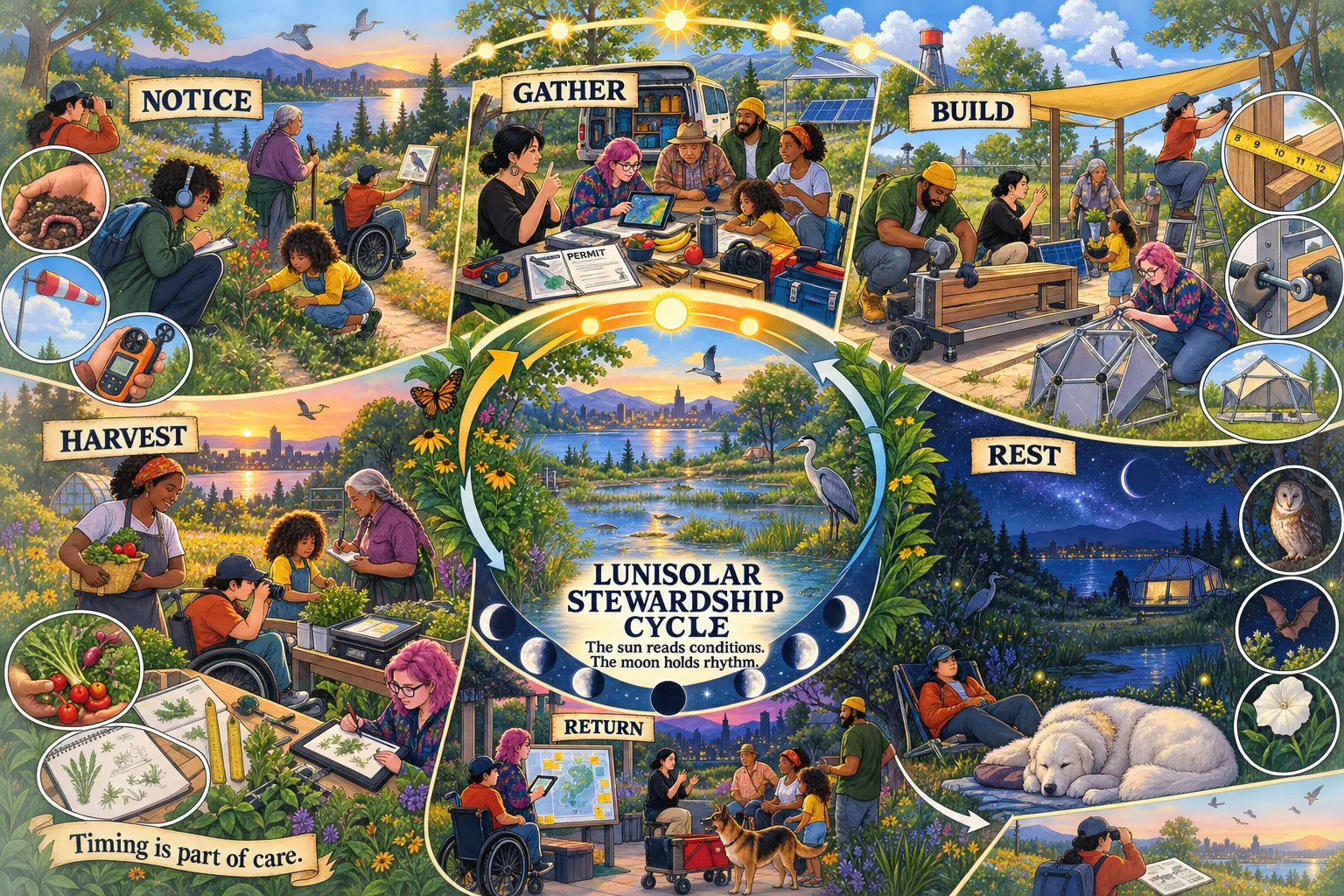
Notice. Gather. Build. Harvest. Rest. Return.
Storybook voice
Water flows. Wood grows. Fire warms and reveals. Earth holds. Metal gives shape. The moon reminds the work to reflect and return.
Five Element stewardship reads material and relational conditions. Lunisolar practice balances outward action with restoration, memory, integration, and seasonal timing.
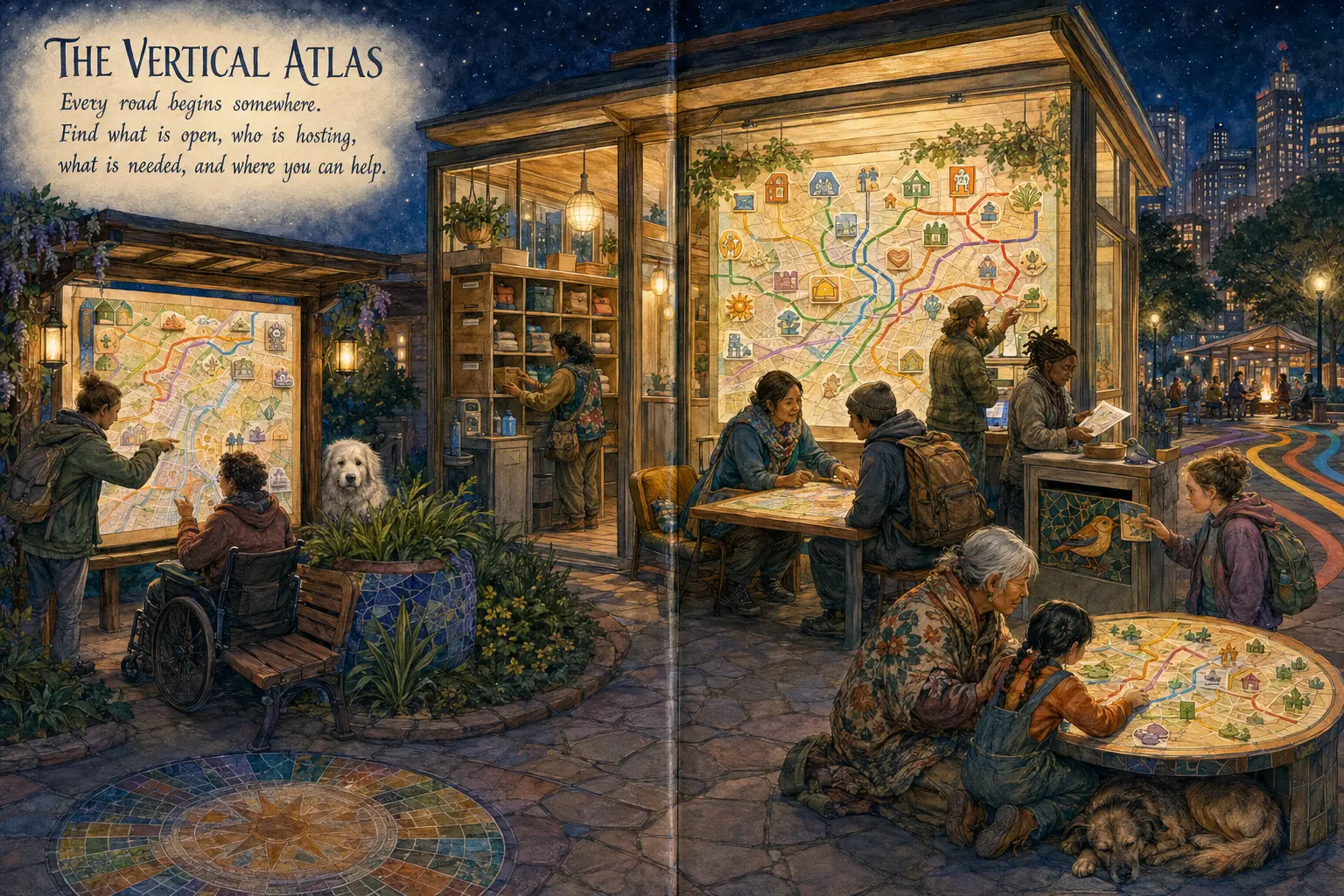
Find one honest next doorway.
Storybook voice
A map is useful when it can tell you where you are, what is open now, who can help, and what happens next.
The Vertical Atlas is an orientation and opportunity record for routes, roles, supports, timing, limits, and return paths across a complex ecology.
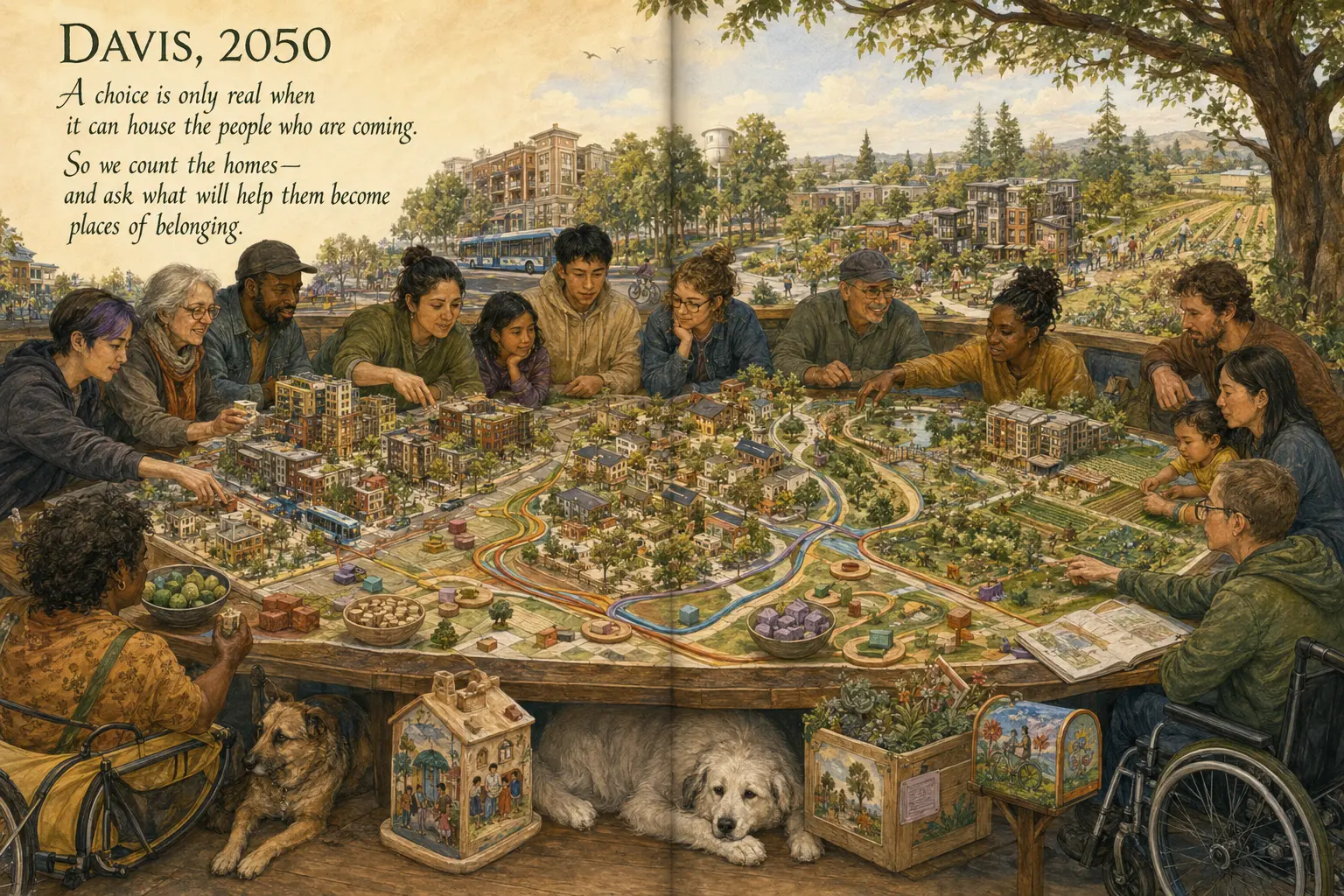
Keep the report. Add the table.
Storybook voice
The thick report stays. Beside it: a model, picture cards, quiet corners, food, questions, and a clear explanation of where public feedback goes.
Civic whimsy is not decorative cheerfulness. It is the disciplined practice of making public systems approachable, imaginable, embodied, participatory, and accountable without erasing conflict or technical depth.
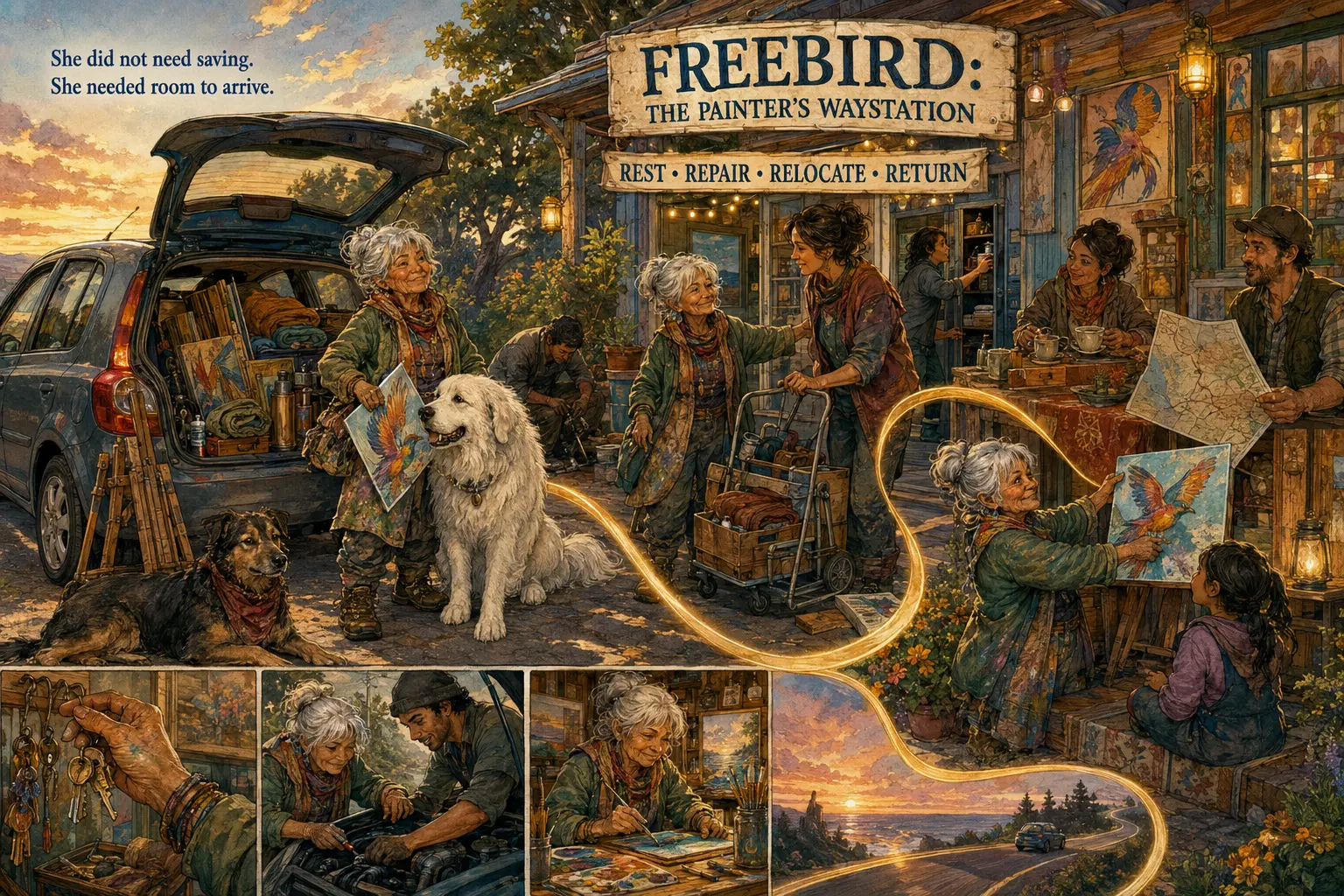
Make. Mend. Teach. Exchange.
Storybook voice
A painting, repaired chair, seedling, zine, meal, lesson, or tool can carry skill and beauty from one person to another.
Swallowtail connects art, craft, botanical practice, cooperative trades, public teaching, and possible enterprise pathways while keeping labor, safety, ownership, and compensation explicit.
Care needs a memory and a handoff.
Storybook voice
Care lasts longer when people can find the notes, share the tools, name the limits, repair the rupture, and know who carries the next part.
Braid Commons is the coordination layer: roles, agreements, records, decision paths, resources, review, reciprocity, boundaries, and transfer among distinct people and projects.
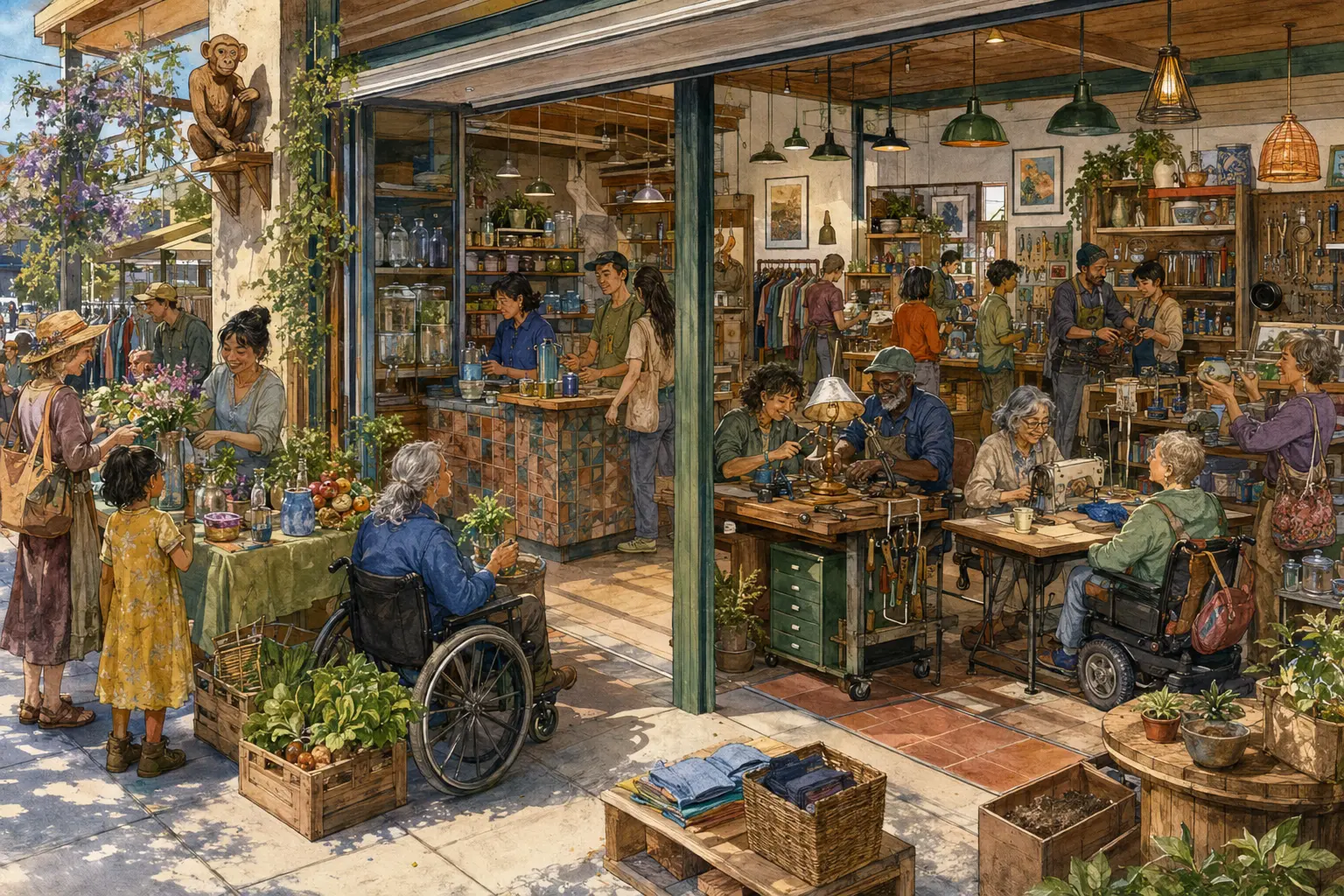
Make. Share. Repair. Return value.
Storybook voice
A plant, repaired lamp, jar, print, tool, lesson, or cup of tea can carry livelihood, knowledge, and relationship through the neighborhood.
The Co-op Shop and Monkey Mart are small enterprise and exchange ideas connecting maker agreements, fair pricing, repair, local goods, stewardship, public learning, inventory, and accountable return of benefit.
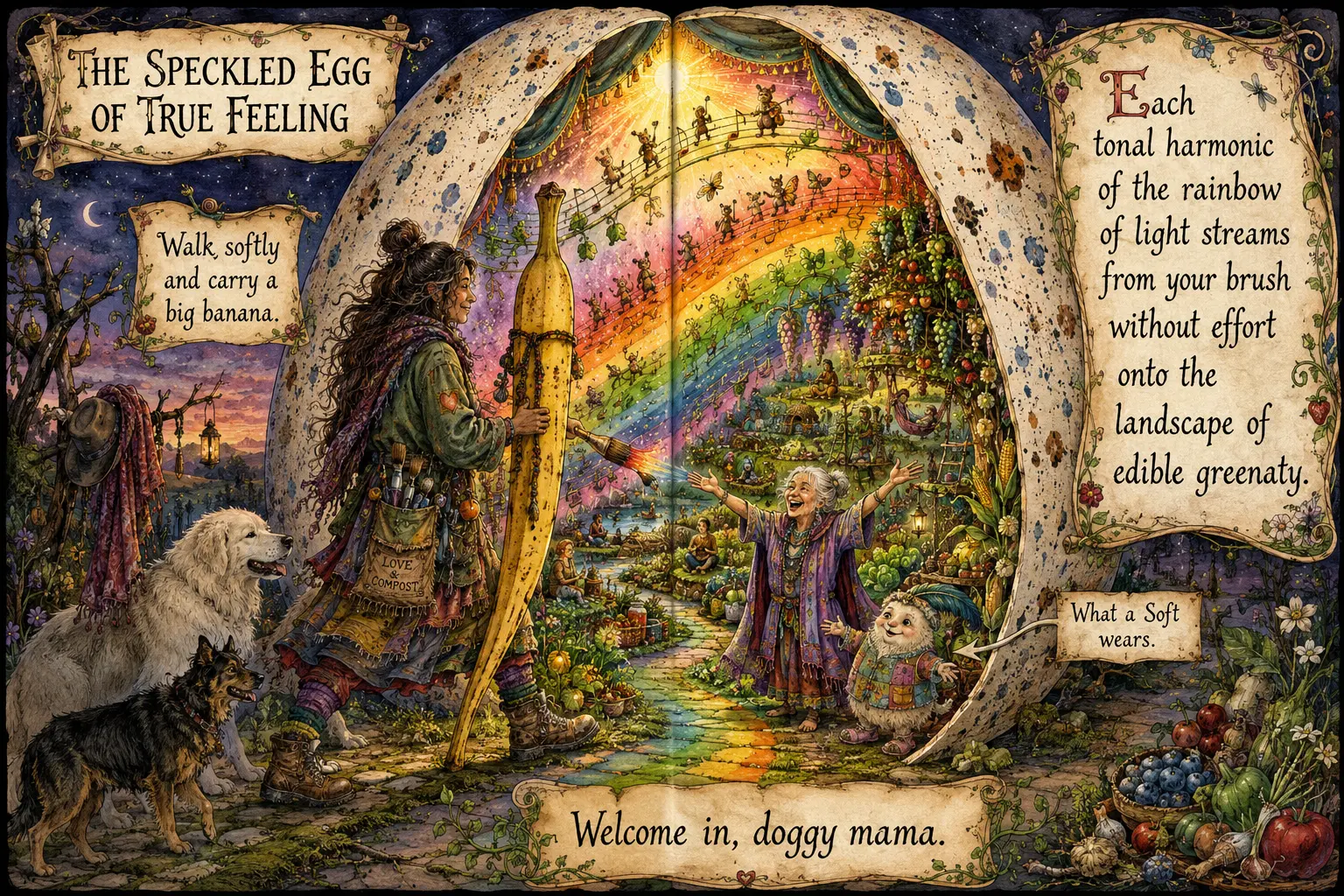
Belonging does not ask us to become identical.
Storybook voice
Each person carries something still becoming. A just community does not crack everyone into the same shape; it grows conditions where distinct lives can contribute without prejudice.
The human-garden metaphor joins inherent worth, latent capacity, unity in diversity, accessible education, democratic consultation, spiritual agency, and material conditions that let people participate without erasure.
An accessibility promise
The story layer welcomes. The technical layer remains available. Neither mode is treated as more intelligent, serious, or legitimate than the other.
Read one spread, follow one image, or bring one question. Understanding the whole system is not an entry requirement.
Use story, plain language, technical detail, movement, drawing, objects, quiet reflection, or conversation.
Concepts, proposals, documented practices, and active programs are labeled differently. A beautiful image is not proof of implementation.
Feedback enters a private response register. A relevant public page, question, gathering, or scoped conversation can follow when there is a real fit.
Your margin of the book
Respond as a visitor, learner, reviewer, host, maker, resource partner, or question-bringer. You can comment on one image, one sentence, one project, or one access need. A response creates a possible return path—not automatic membership, endorsement, or a promise of implementation.