Question
Name the uncertainty or operating problem the trial is meant to illuminate.
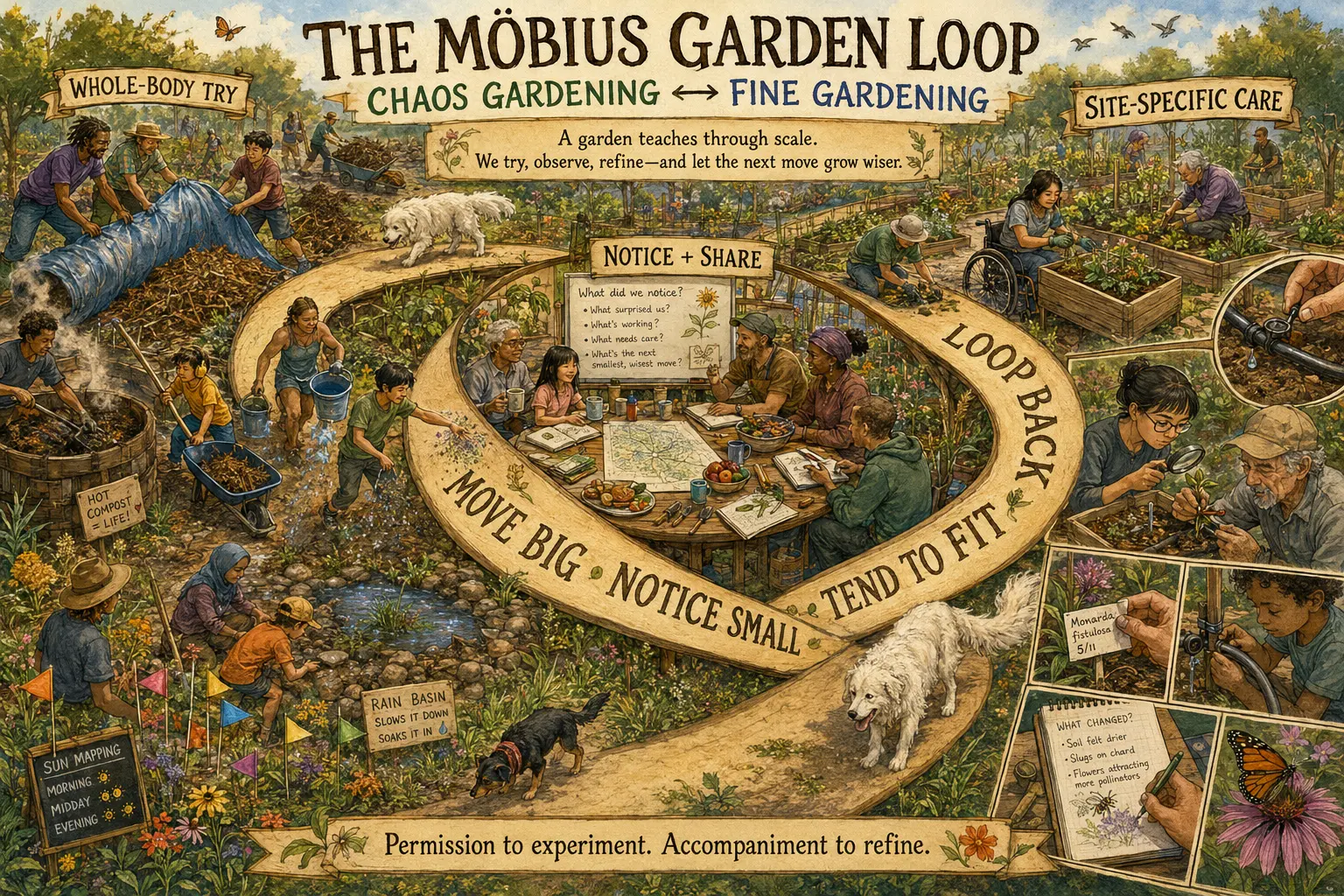
Try one small change, notice what happens, repair what needs repair, and bring the learning back.
Pegasus TrialsShort, documented learning laboratories where a community can test one meaningful change without turning possibility into premature scale.
Working premise
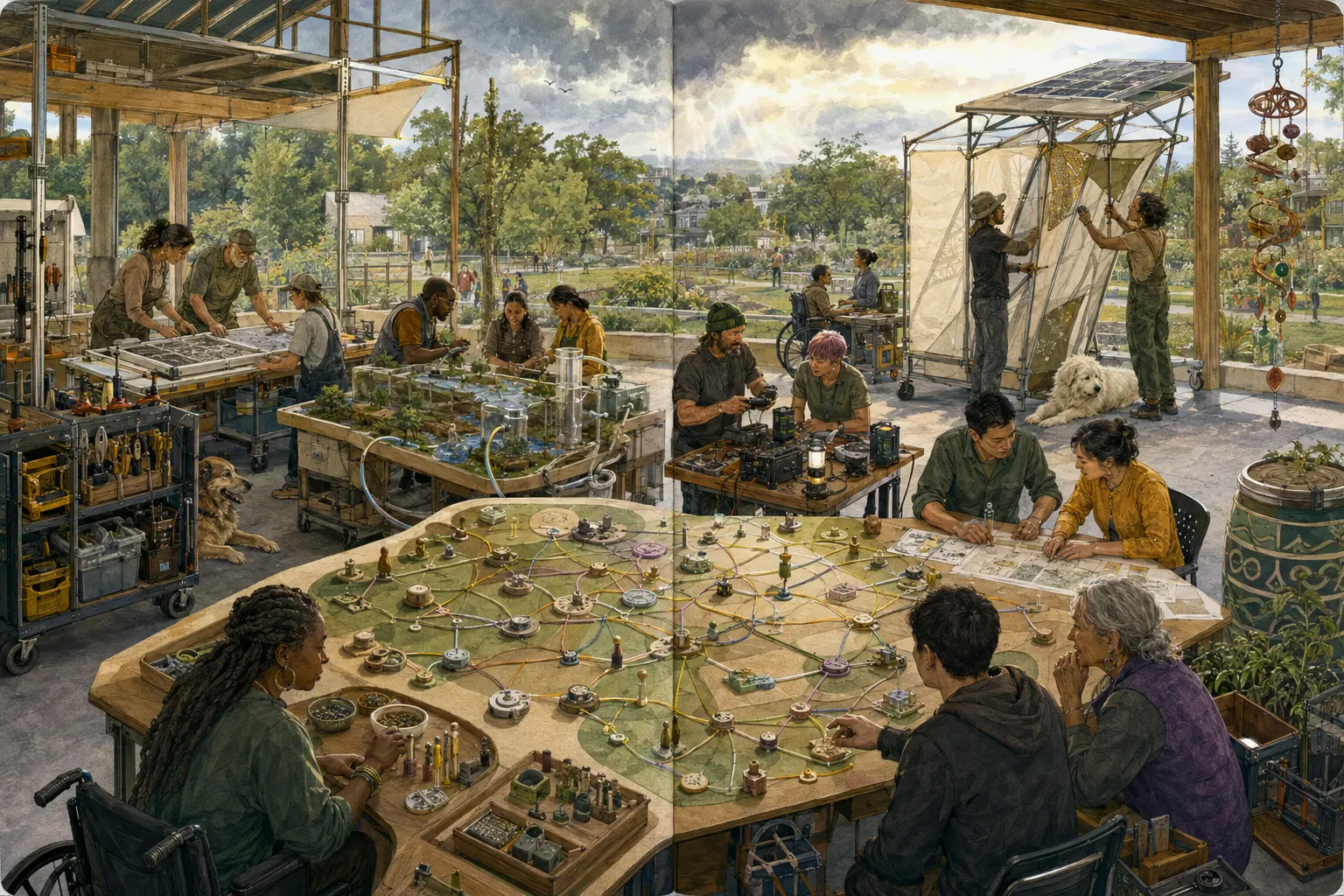
Pegasus Trials provide a voluntary, restorative container for trying, witnessing, learning, repairing, and returning. The aim is not spectacle, punishment, or disruption for its own sake, but a credible bridge between rupture or possibility and evidence that another community could responsibly evaluate.
Different visual doorways
Each image holds a different scale, mood, or practice. Together they keep the project from collapsing into one scene.

Evidence in hand
A named project can orient development without pretending that a complete program, host, cohort, site, or institution already exists.
Practice rooms
These are working areas for learning, review, collaboration, or a future bounded pilot—not departments with unlimited scope or standing authority.
Name the uncertainty or operating problem the trial is meant to illuminate.
Set scope, roles, consent, permissions, resources, risk, and stop conditions.
Name affected relationships, practice accountable change, and use trained accompaniment when restorative-justice expertise is required.
Decide what observation would make the trial informative rather than merely exciting.
Document outcomes, credit labor, repair impacts, and release only what is appropriate.
Current invitations
Claim and care boundary
Pegasus Trials are proposed learning containers, not active public experiments, clinical recovery programs, sentencing alternatives, or substitutes for professional restorative-justice practice. Participation must be voluntary. A trial needs a responsible host, permission path, trained support where required, stop conditions, participant care, evidence plan, and review date before recruitment. The title is a contemporary design metaphor; the Twelve Labors belong to Heracles, not Pegasus.