Sahar Tai-Seale · Working portfolio · Davis, California

Living systems for shared life.

I help people make hard shared work visible, playable, beautiful, and practical.

  • Practice cooperation
  • Build little worlds
  • Care for land
  • Make public choices visible
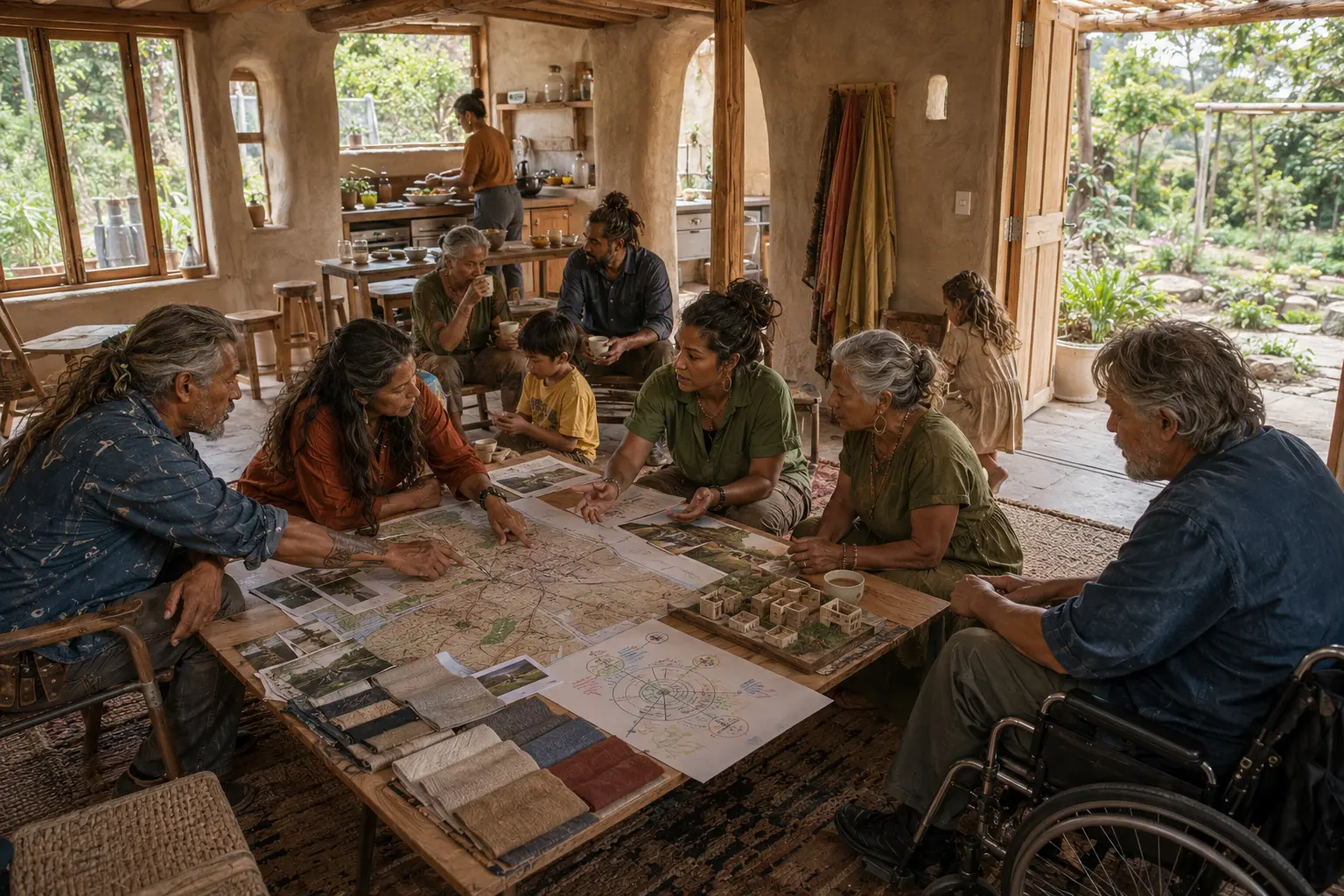
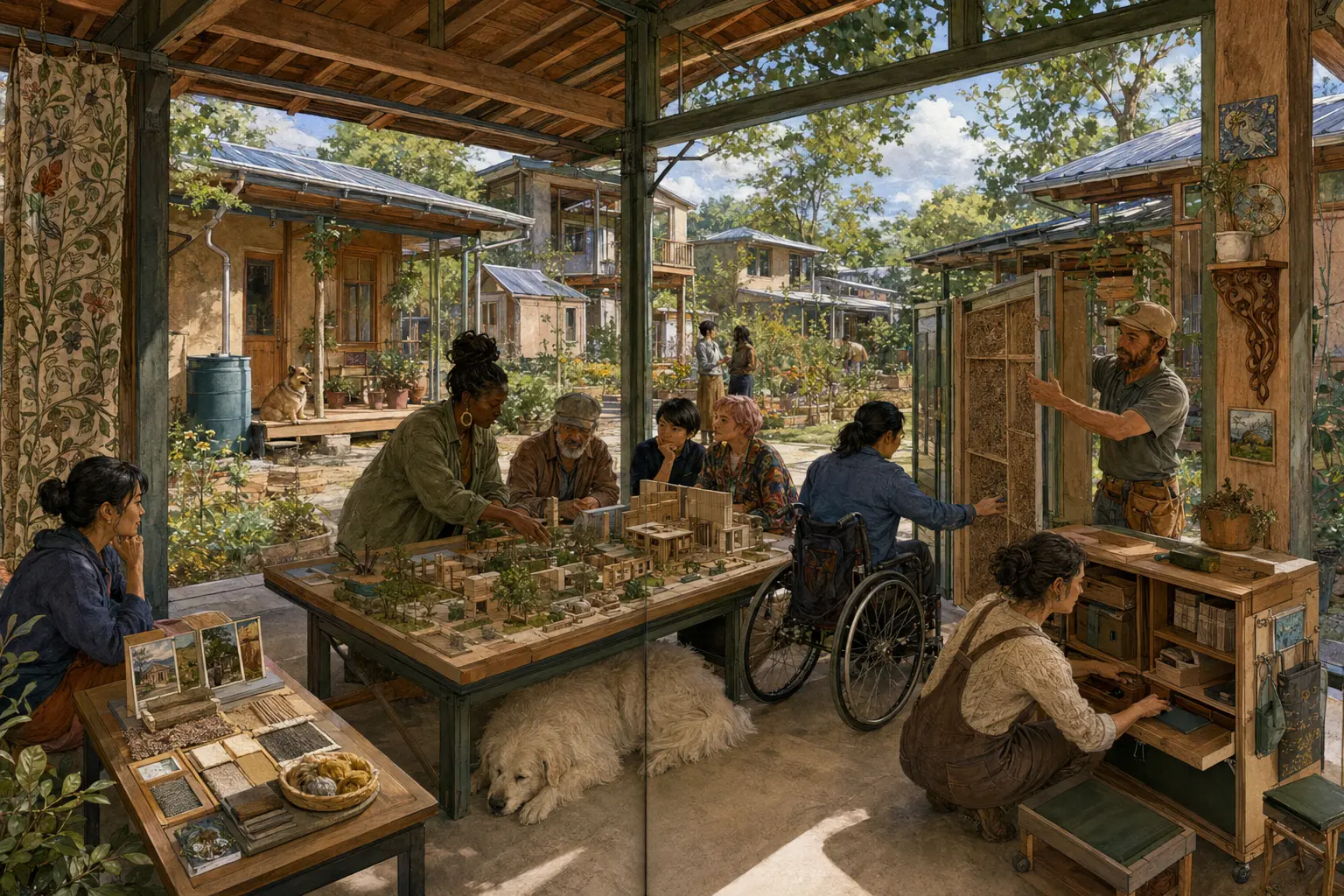
Homeitat · cooperation you can touch
People of different ages and abilities gathered around cards, small buildings, maps, tools, and a tabletop landscape to practice cooperation
BuildNoticePracticeRevise

No vocabulary test required

See what the work is about.

Choose a picture. Each one opens a plain-language door, with technical depth waiting behind it.

Commissioner, activist, person in recovery, traveler, maker, teacher, contractor, lawyer, student, neighbor, child, or curious passerby—anyone in the community is welcome. No special vocabulary is required.

I want to understandI want to participateI have a role or projectI have a question or resource

Living systems change their containers

The work is not a monument to its steward.

This site began as a place to gather work independently developed and stewarded by Sahar Tai-Seale. Sahar understands her role less as the center of the work than as a secretary of research and practice: gathering, recording, connecting, testing, and tending what can be learned and shared. As LIVING, Oiko Ways, and their connected container must change too.

The aim is to make structures for living—relationships, habitats, agreements, tools, learning paths, and forms of stewardship—visible enough to practice, test, revise, and share.

In the spirit of creatively using and responding to change, the public commons is preparing to grow into Möbius Refuge at mobiusrefuge.com. Sahartaiseale.com will remain the home of Sahar's professional practice, authorship record, and selected work.

Intention map · a structure in formation

From one steward's working archive toward shared governance.

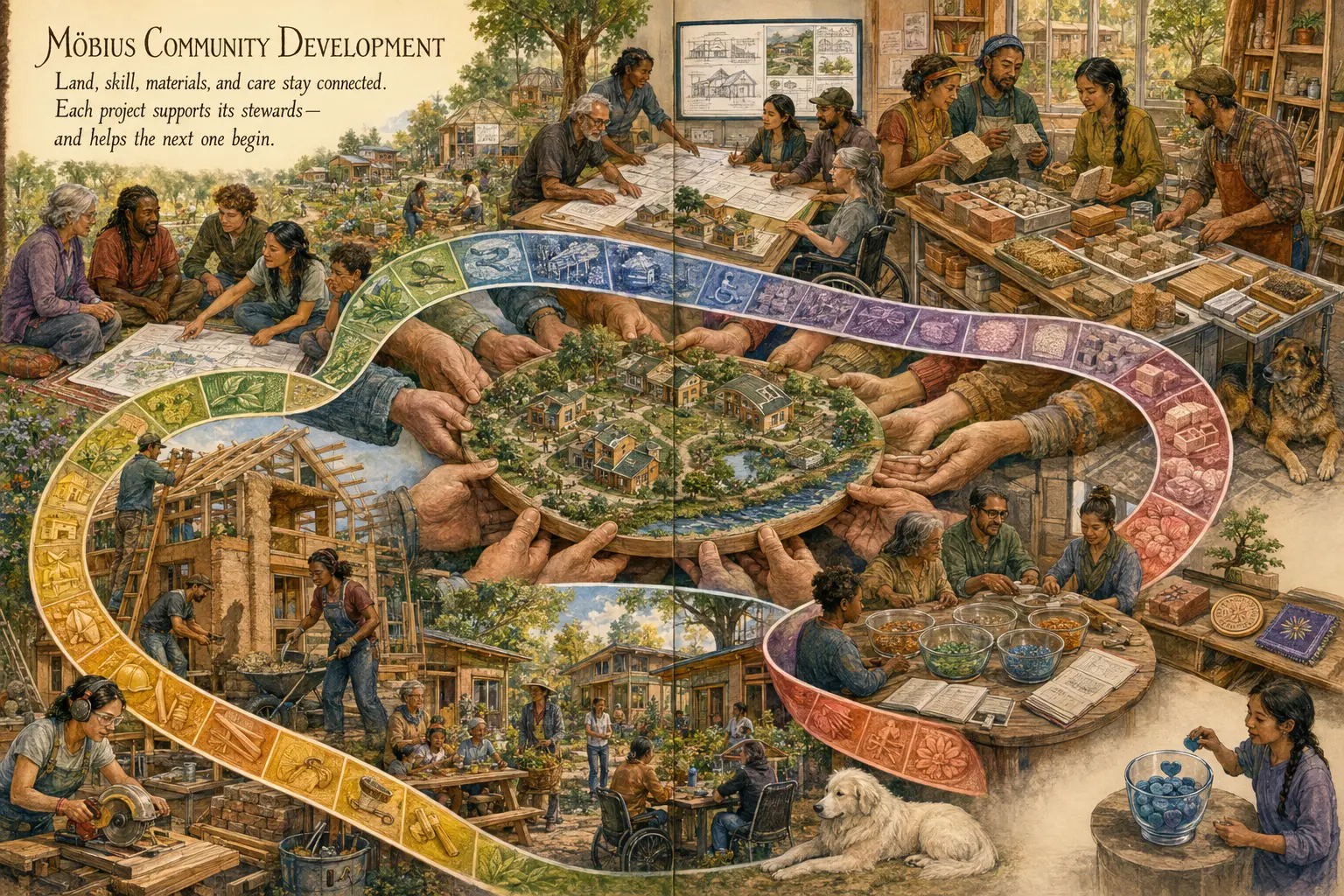
This body of work began at sahartaiseale.com because it needed a place to be gathered, documented, and developed. It is now preparing to grow into Möbius Refuge: a distinct public commons for connected experiments in housing, habitat, cooperative learning, stewardship, art, design, and community practice.

  1. 01

    Began here

    Sahar Tai-Seale gathered the originating research, frameworks, and projects through professional practice, interdisciplinary study, field observation, and community-informed learning.

  2. 02

    Moving outward

    mobiusrefuge.com is intended to become the public home for the wider ecology of LIVING, Oiko Ways, Homeitat, Baile, Farmers Matrix, AACDI, and connected work.

  3. 03

    Building the governance

    The next stage requires collaborators who can help establish real membership, roles, decision rights, agreements, bounded pilots, accountability, and shared stewardship.

  4. 04

    Earning the cooperative form

    If genuine member governance and cooperative practice take root, Möbius Refuge may eventually develop a verified identity at mobiusrefuge.coop and support or partner with community land trusts, housing cooperatives, and other community-held structures.

The invitation is to help shape accountable structures—not to affiliate with Sahar personally. Connection with the work may be professional, practical, critical, creative, place-based, or member-governed.

Bring a perspective, practice, question, site, skill, or seed.
Connect with the forming ecology

One body of work · four readable layers

The system is expansive. Its front door can still be clear.

LIVING names the larger public body of work. Oiko Ways develops it. Lunisolar practice gives it an operating rhythm. Braid Commons gives collaboration a structure.

01

Public body of work

LIVING

The larger public vision connecting people, places, knowledge, materials, and resources for shared survival, belonging, ecological health, and agency.

Explore this layer
02

Developmental framework

Oiko Ways

The developmental and scaling framework that turns values into pathways, agreements, roles, tools, programs, and inhabitable systems.

Explore this layer
03

Operating rhythm

Lunisolar method

A rhythm for balancing visible action and accountable output with observation, integration, recovery, reflection, and repair.

Explore this layer
04

Collaboration infrastructure

Braid Commons

The participation layer that connects people, roles, needs, sites, knowledge, and resources without flattening contribution or authority.

Explore this layer

Living Vision Commons · working public protomap

Walk the vision. Find a way in.

An image-led, move-through-able map of Möbius Refuge, Oiko Ways, projects, tasks, roles, places, skills, and seeds. It is being developed iteratively with collaborators and peers looking in; selected art and contributions will be added over time.

Working public alpha · concept images are labeled · contributions are reviewed before publication

From values language to operational capacity

Coordination is not the paperwork around the work. It is the work.

LIVING connects people, places, knowledge, materials, and resources so that safety, belonging, ecological health, meaningful contribution, and shared agency can become more than aspirations.

The practice focuses on the operating layer around housing, land, learning, and collective life: how people enter, how care is taught, how decisions travel, how labor is recognized, and how learning becomes transferable.

Work in hand

The work is already taking form.

Ideas are not presented as outcomes. Each selected piece names what physically exists, how mature it is, and what kind of review or application would make the next claim credible.

Usable artifactPublic working edition

LIVING · Public Introduction

Reader-facing framework introduction

Evidence in handA complete orientation exists, including the larger body of work, its developmental framework, operating rhythm, and collaboration infrastructure.

Next credibility stepFirst-reader feedback on clarity, sequence, and what requires less explanation.

Working prototypeWorking edition

Inhabitable Agreements tools

Agreement-design materials

Evidence in handUsable structures exist for scope, roles, decision rights, information flow, limits, review, appeal, repair, and exit.

Next credibility stepSpecialist review across governance, facilitation, restorative practice, and legal boundaries.

Active pilotPilot

Lunisolar Stewardship Cycle

Recurring practice and documentation rhythm

Evidence in handSeasonal observation, site walks, task selection, supported action, documentation, rest, and adaptation are in active use.

Next credibility stepA host-authorized case record with a defined evaluation frame.

About Sahar

The work grows from sustained inquiry and practiced responsibility.

Sahar Tai-Seale is a systems and stewardship designer whose work is grounded in years of research, advocacy, and work alongside people bringing lived-experience perspectives to questions of housing instability, displacement, survivor support, and social-service systems. Her practice also spans cooperative housing, ecological stewardship, invisible labor, and the practical difficulty of making shared values inhabitable.

Her cooperative experience includes governance and member systems in a student housing cooperative of approximately ninety members across seven communities, alongside current cooperative systems and landscape-stewardship work in Davis, California.

Additional practice includes survivor-informed research, public ecological learning, facilitation, education, publication, and the design of bounded structures for participation, care, authority, and transfer.

Original body of work

Five-Element Ecological Stewardship

The Five Elements are used as earthly compositional energies for observing matter, movement, growth, exchange, nourishment, rest, stress, relationship, and transformation within living environments.

The work includes landscape systems, landscape audits, living-being audits, and a practical Landscape Supply interface. Living-being audits are ecological observation tools—not medical or clinical diagnoses.

Explore Five-Element Stewardship
Living landscape joining mineral attraction, plant growth, animal sensation, and diverse human consultation and spiritual reflection
Attract · Grow · Sense · Know + serveHuman capacity carries responsibility: seek truth, consult democratically, serve unity, and abandon prejudice.
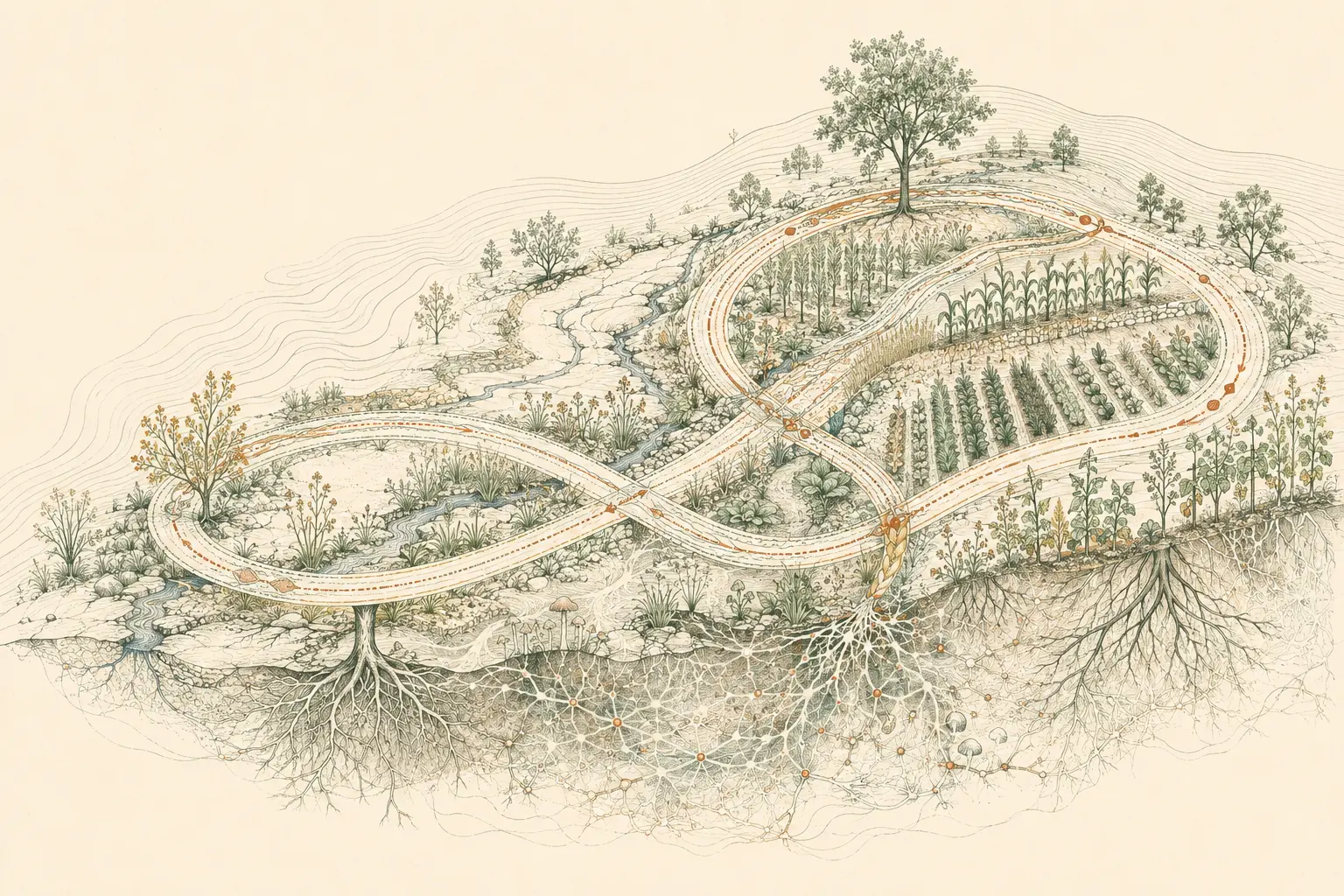
Hand-drawn lanterns leading from a wet earthen threshold into a cultivated spiral garden

Imagining America 2026 · accepted session

Lanterns to the Spiral Garden

Stewardship cycles for restoring collective spirit in the mucky middle.

The 75-minute participatory workshop practices Observe, Design, Build, and Harvest while introducing the Art, Architecture & Cooperative Design Initiative (AACDI) as a portable design-build stewardship and community-lab practice.

A hand-drawn redwood learning path threaded by a restrained rainbow Möbius current

Site 0 · documented prototype · 2016

The original refugia.

Housing, a $15,000 annual stipend, mentorship, responsibility, study, and access to place created the conditions for a tested nature-learning path—and a decade of work that followed.

The World of Nature Learning Path proposed 23 interpretive signs and was developed through approximately 42 iterative walk-throughs with participants ages 10–65. It is now the documented origin case in the Lantern Method Site Atlas.

Homeitat™ · cooperative civic design in development

Build the layer. Practice the place.

A cooperative game and immersive learning environment moving from cards and handmade bioregional models to room-scale civic sculpture, community-authored pieces, permit-linked stewardship roles, and carefully governed real-world pilots.

New Library collection · Möbius project notes

Systems in Motion.

A public working studio for examining cooperative precedents, public policies, spatial concepts, and project possibilities—then asking what relationships would be needed to move from an idea to an accountable test.

Radical enough to matter.

Concrete enough to test.

01In Development

Cooperative precedent · working essay

Mondragon and the Question of Scale

What LIVING can learn from a durable cooperative ecosystem—and what it cannot responsibly claim yet.

Open the study
02Proposed

Spatial concept study

Swallowtail at the Mace–Grasslands Edge

A Minoan-inflected botanical commons, restoration-learning waystation, and cooperative landscape study for the South Davis, Willowbank, and Grasslands edge.

Open the study
03In Development

Project possibility · network concept

Homeitat as a Distributed Learning Landscape

A cooperative civic-design game and immersive bioregional learning environment opening toward skilled making, public requests, stewardship sites, and locally governed development.

Open the study

The Library

A developed body of work—not one oversized explanation.

The Library organizes books, field guides, workbooks, governance frameworks, stewardship systems, interface concepts, facilitation structures, templates, visual frameworks, and implementation examples by how they are used.

01

Frameworks

Books and guides that establish LIVING, Oiko Ways, lunisolar practice, the Five Pillars, and the larger institutional architecture.

02

Practice tools

Field guides, workbooks, audit instruments, room models, governance templates, role systems, and facilitation structures.

03

Applications

Pilot briefs, implementation examples, visual frameworks, program catalogues, field notes, and site-partnership materials.

Practice and pilots

Active work, named accurately.

Clear status is part of trustworthy systems design. Development sites, implementation pilots, and proposals are presented separately so possibility never masquerades as completion.

01
Active

Cooperative housing systems

Resident orientation, governance documentation, role design, shared-space stewardship, participatory education, and conflict-accountability structures inside an evolving cooperative housing environment.

02
Pilot

Lunisolar stewardship practice

Participatory site walks, seasonal observation, task pathways, ecological indicators, shared learning, and documented follow-through.

03
In Development

Five-Element Ecological Stewardship

An original framework joining ecological observation, landscape systems, living-being audits, stewardship tools, and a future supply interface.

Consulting

Bring one live operating problem—or one promising seed.

Möbius Sidecar Services help organizations test bounded, community-based pilots beside business as usual. Other engagements can begin with an organizational review, shared-space system, agreement, publication, or a bounded question about capacity, patterns, boundaries, and readiness.