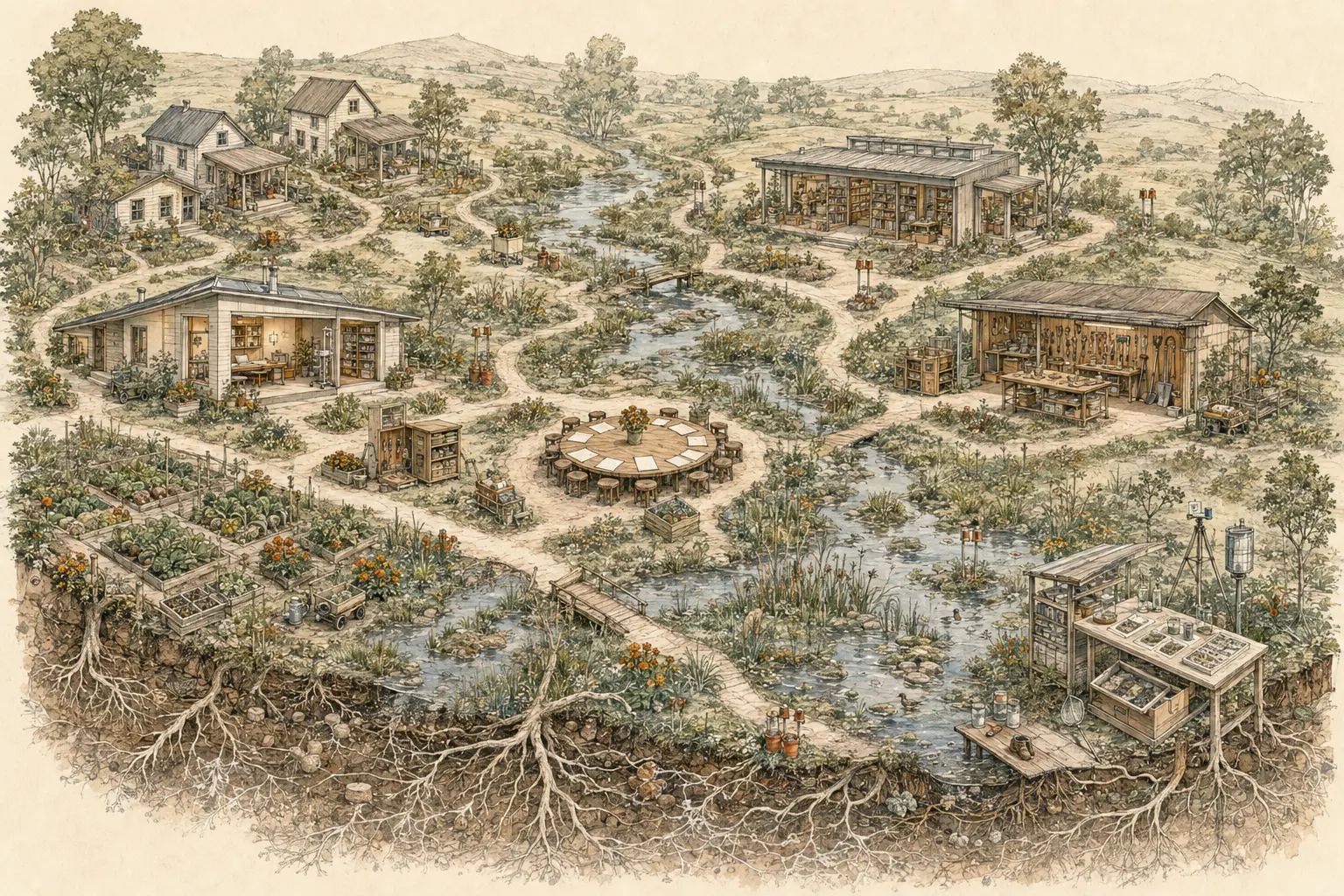
Working questions
What this approach does—and does not—promise.
These answers establish public operating boundaries for future news responses, policy inquiries, partnerships, and field notes.
01Does this framework advocate for particular political outcomes?
It carries commitments to ecological viability, dignity, access, reciprocity, transparency, meaningful participation, and accountable stewardship. It does not use those commitments to preload one answer to every ballot measure, public plan, or institutional dispute.
02What does it mean to hold the middle ground?
The middle is an operational meeting ground—not a demand for centrist compromise. Community knowledge, lived experience, professional expertise, public authority, and material evidence can encounter one another without being flattened into false sameness.
03Can community or citizen science replace public agencies?
No. It can extend observation, reveal overlooked patterns, improve public learning, and make institutional gaps visible. It cannot substitute for regulated environmental review, clinical judgment, public accountability, or adequately funded professional work.
04How can resources circulate equitably?
Institutions and sponsors can fund stipends, tools, training, accessibility, translation, data stewardship, facilitation, professional review, and bounded pilots. Participants should leave with compensation, skills, access, authorship, relationships, and locally useful capacity—not merely provide free data.
05Who owns the observations and data?
That must be decided before collection begins. A responsible agreement names consent, privacy, custody, access, permitted use, attribution, validation, publication, correction, withdrawal, and long-term stewardship.
06What can enter the civic-inquiry register?
News pieces, ballot measures, proposed developments, public plans, institutional cuts, regulatory changes, research findings, and recurring local conflicts can enter as prompts. Entry does not make something an endorsed position or an active pilot.