Observed relationship
A material, biological, anatomical, or environmental pattern that can be studied and checked against evidence.
Mineral holds. Vegetable grows. Animal senses and moves. Human beings can reflect, choose, care, build, and make room for one another. This atlas turns those capacities into movement and design prompts without confusing poetry for anatomy—or complexity for human worth.
How to read the pictures
Every chapter names what is being observed, what is being simplified, and where Sahar is making an interpretive connection. Cultural and spiritual sources are credited; medical claims stay outside the frame.
A material, biological, anatomical, or environmental pattern that can be studied and checked against evidence.
A deliberately simplified picture used to notice force, growth, movement, timing, or relationship—not a complete scientific diagram.
A philosophical or poetic connection offered for movement, reflection, and design. It remains an invitation, not a universal fact or inherited doctrine.
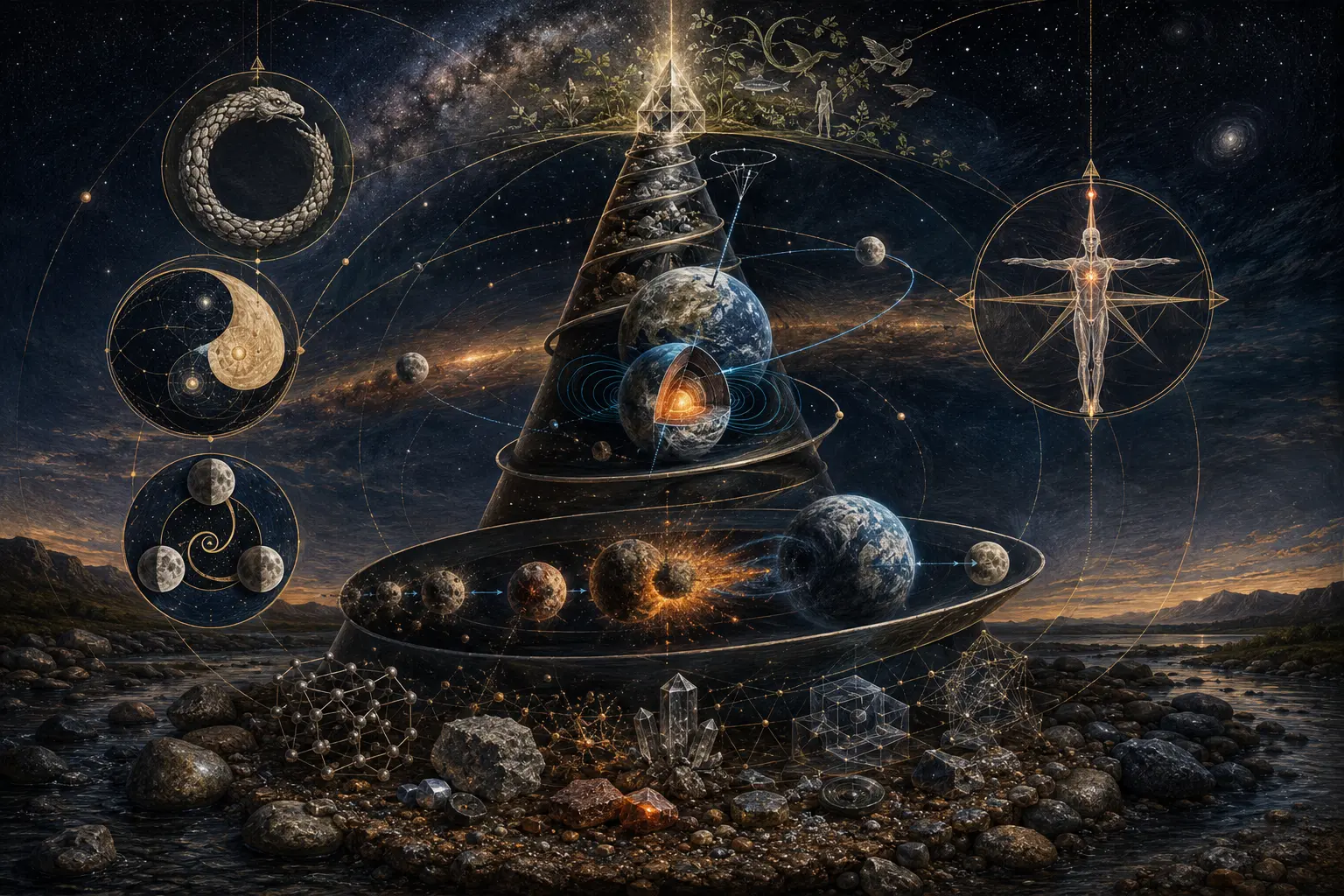
01 · Mineral · attraction + cohesion
The first movement prompt is gathering: feel weight, contact, gravity, structure, and the quiet forces that let a form remain long enough to become a place.
The Earth–Moon scene carries Sahar's philosophical image of cohesion as a first discernible pattern of care. NASA's giant-impact account is the scientific reference; “love,” ouroboros, yin–yang, and the spiral are interpretive lenses—not astronomical mechanisms.
02 · Vegetable · growth + circulation
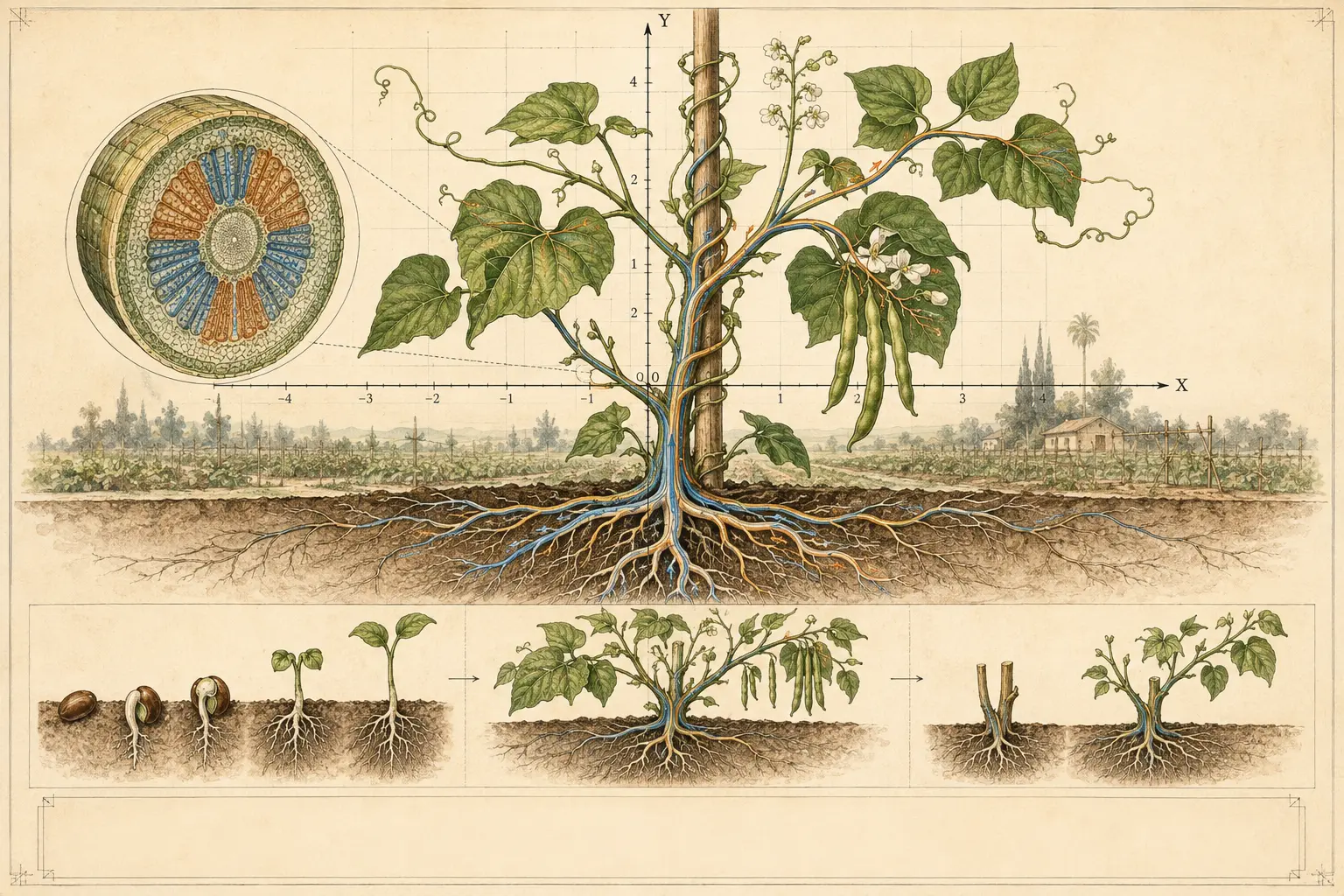
Plant study gives the body an x/y vocabulary: depth and height, center and branching, stored energy and new reach.
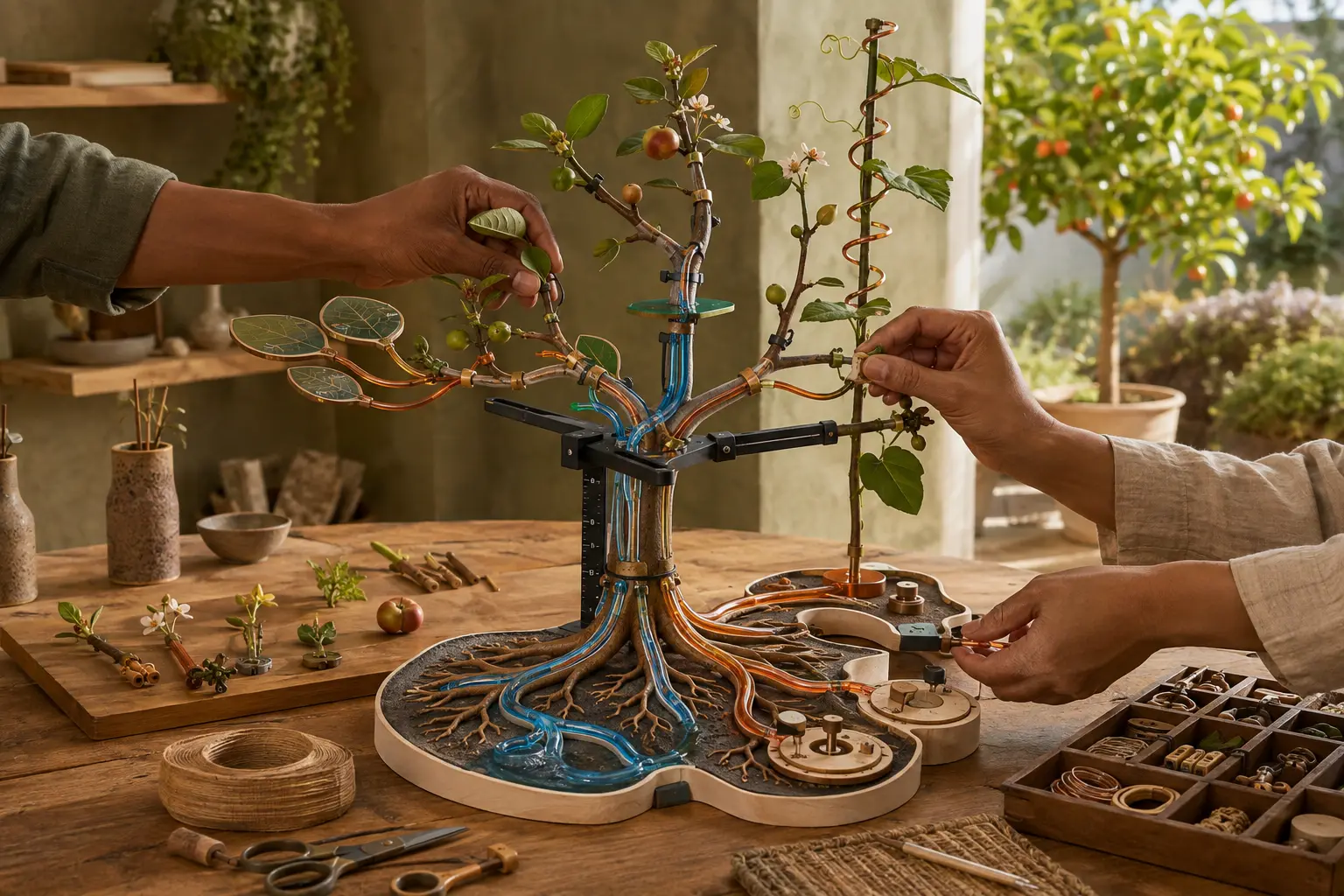
Xylem and phloem inspire the phrase “glowing and flowing,” but they remain distinct tissues with distinct transport roles. The handmade model is intentionally tactile and stylized—not a textbook specimen or a claim that plants and people circulate in identical ways.
03 · Animal · sensation + movement
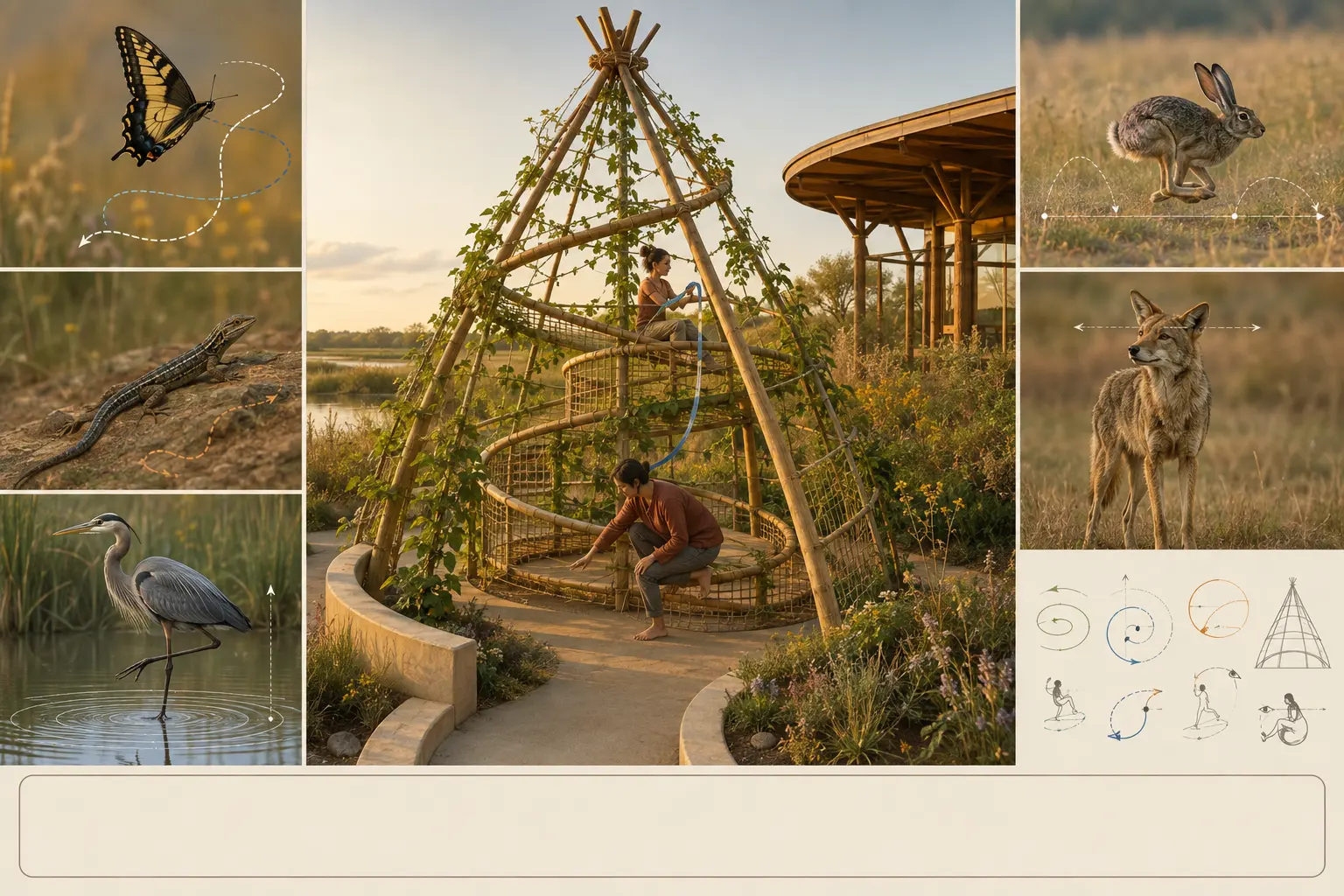
Stoop like a heron. Bound like a rabbit. Coil, pause, listen, shake, or travel low—without pretending to possess an animal or become its spokesperson.
Animals are teachers of attention, emotional tone, boundaries, sensitivity, stamina, play, and regulated communication. The practice is imaginative and relational: an animal may become a spirit-of-emotion messenger in personal reflection, while literal communication and biological claims remain outside the promise.
04 · Tensegrity · integrity in relationship
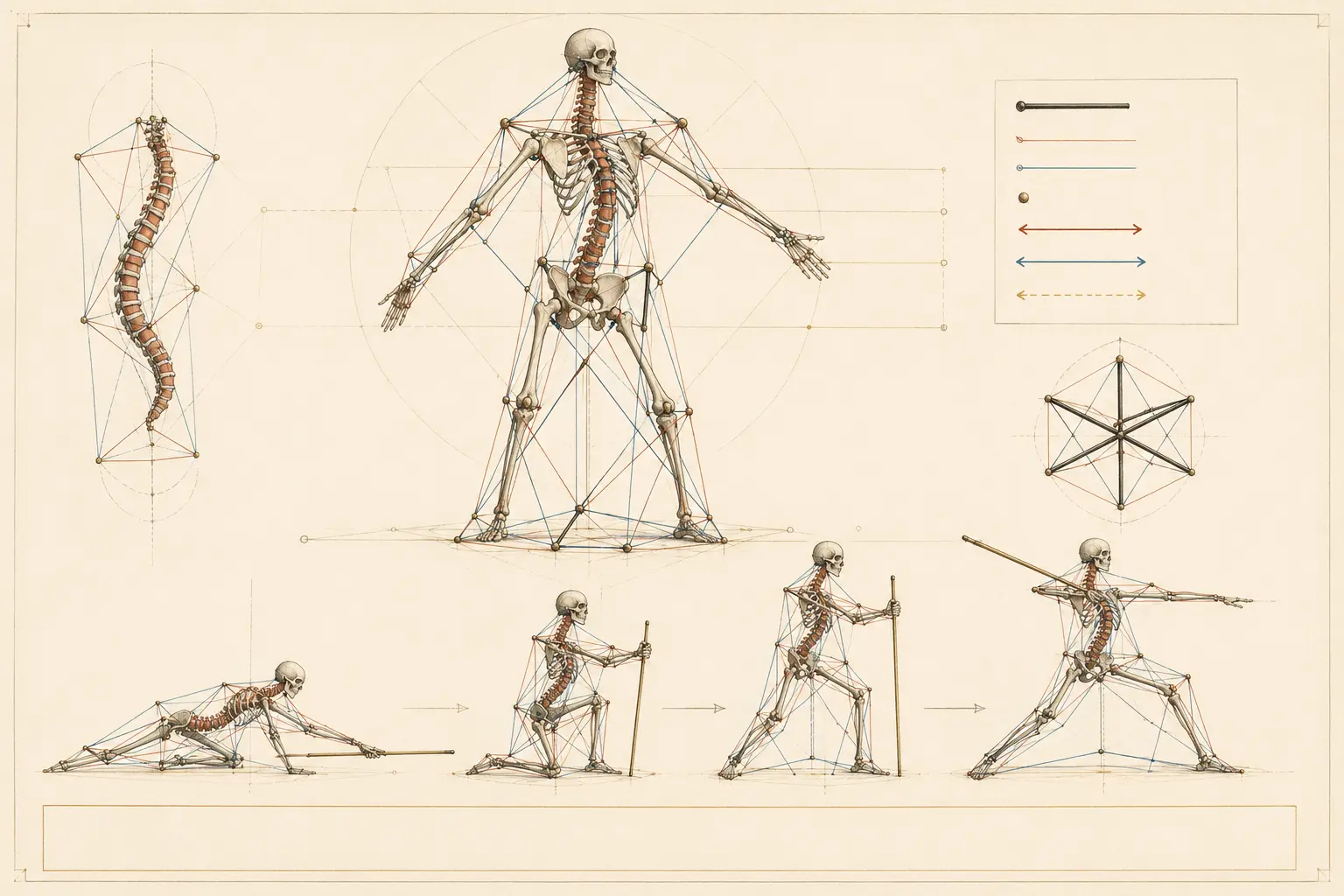
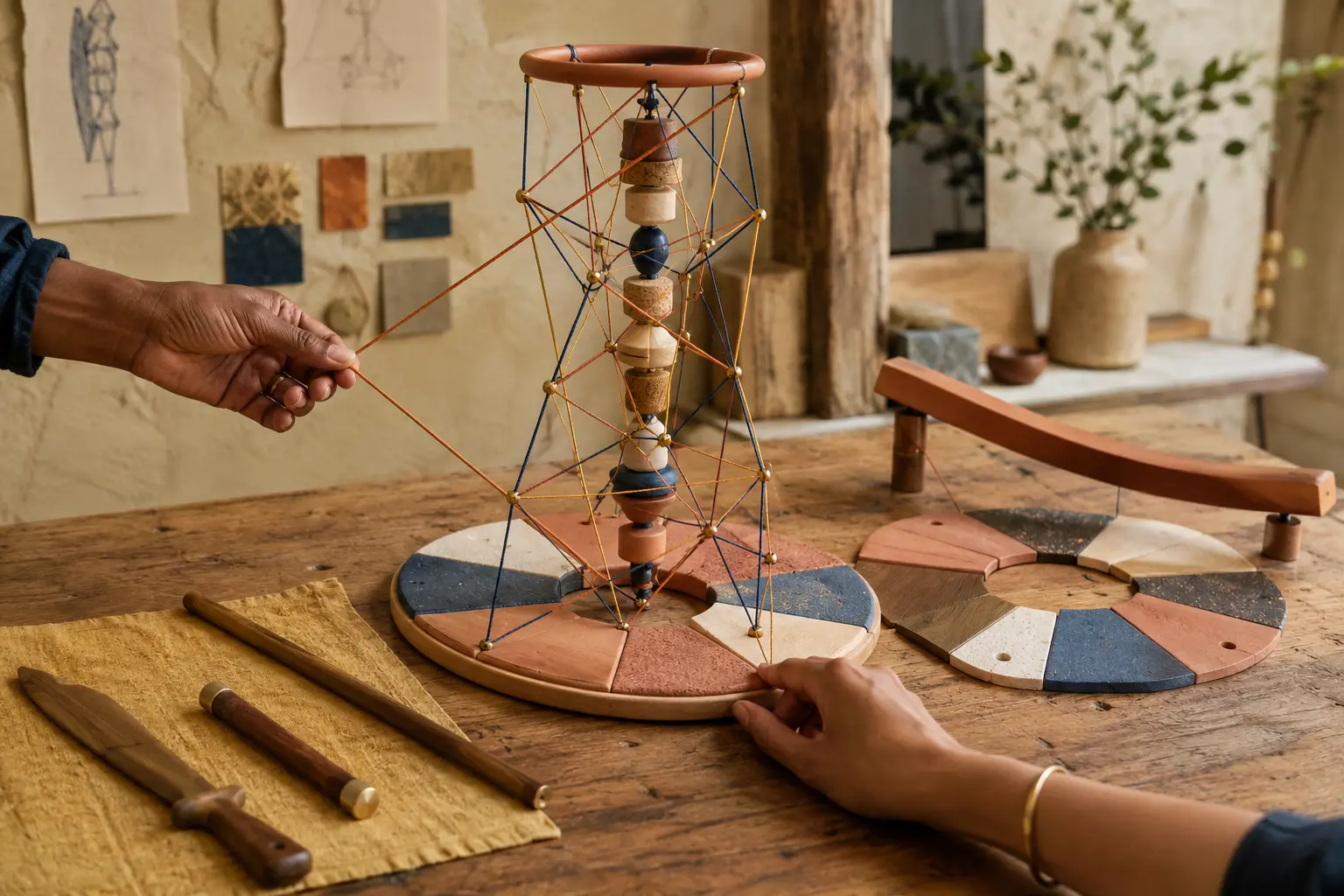
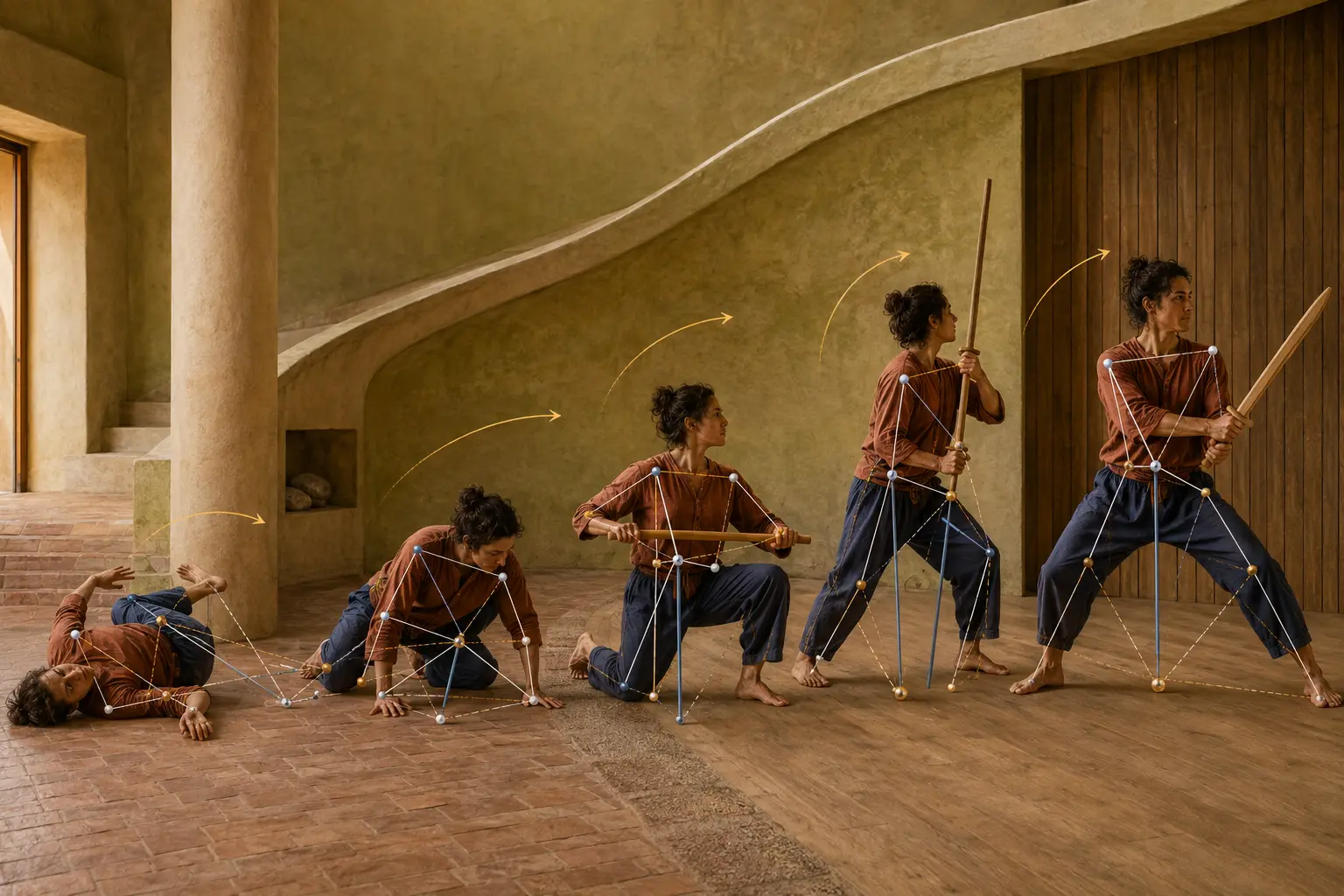
Tabletop, meso, and room-sized models ask the same question: what lets a structure stay coherent while parts move?
Tensegrity is used here as a mechanical teaching model and a movement prompt. Biotensegrity remains debated and incomplete; this is not a diagnostic theory, a treatment, or proof that a spine is literally a cord-and-stick sculpture.
Scale practice
Fine: a tabletop model, seedling, or perennial shrub.
Meso: a small fruit tree, nursery bay, trellis, or one-story landscape room.
Mega: a one- to two-story tree porch, bridge, spiral stair, or movement corridor that must be engineered and made accessible.
05 · Heart · tube, loop, helix, circulation
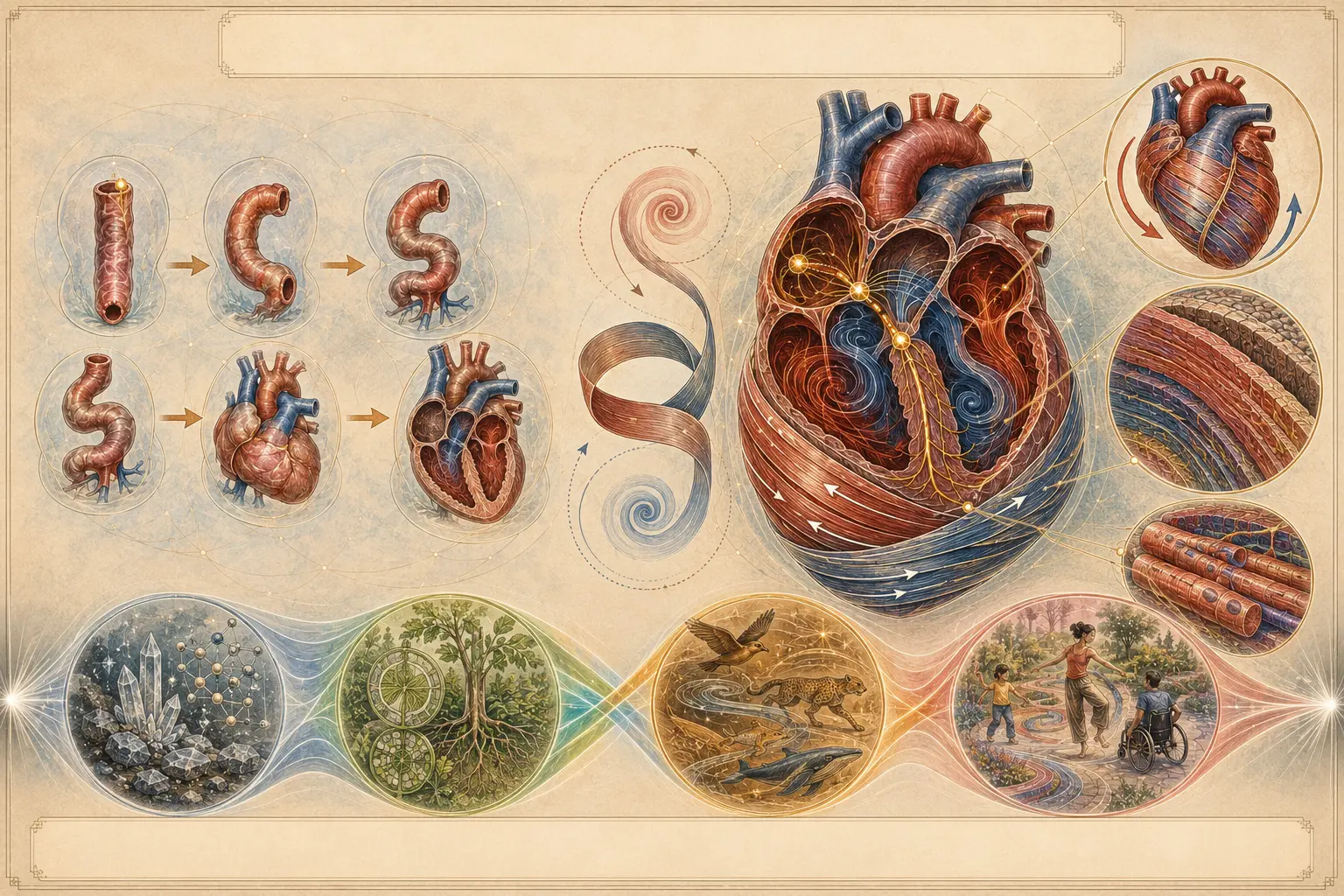
The embryonic heart begins as a tube and loops as it develops; the mature myocardium organizes through complex layered and helical patterns.
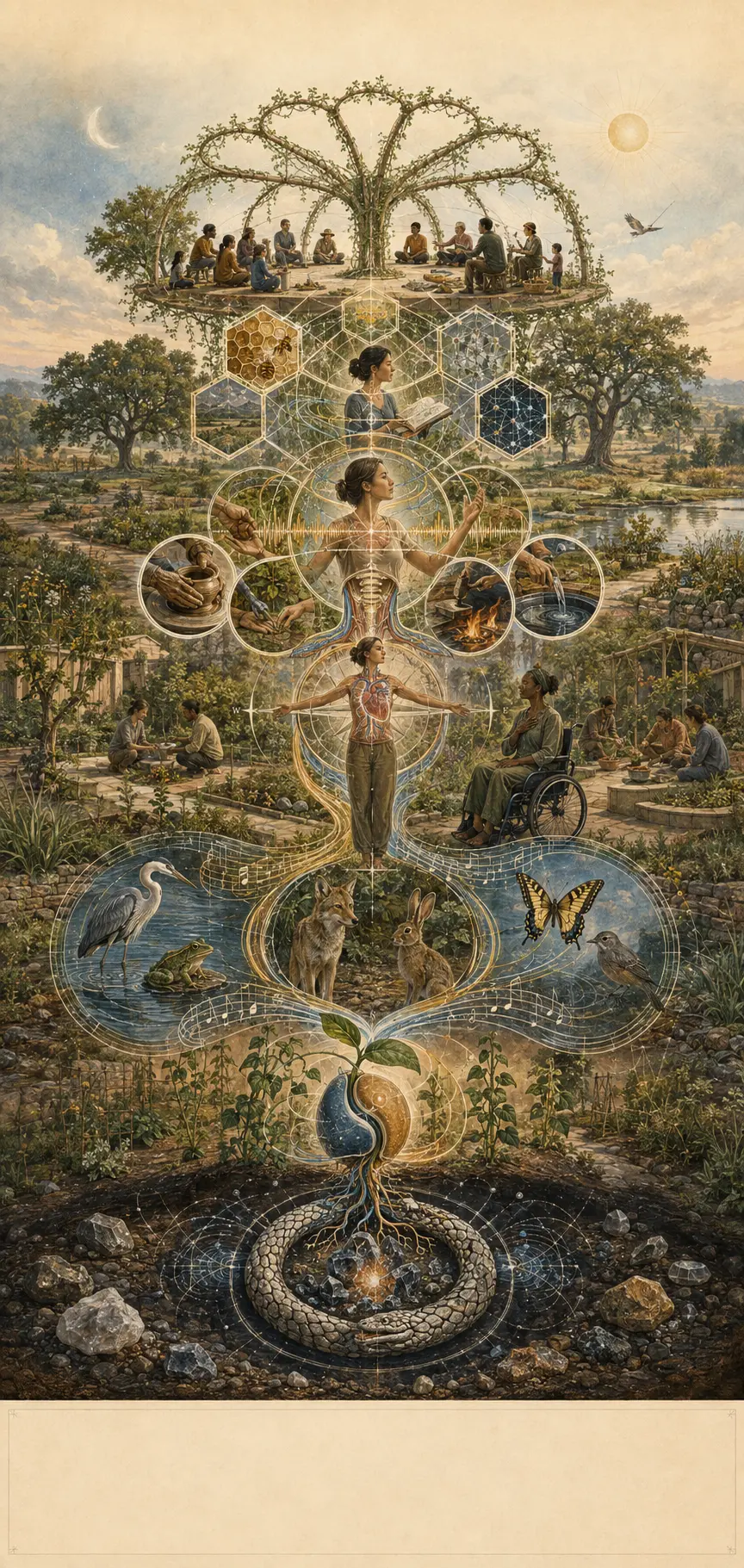
The resemblance is real enough to study and more complex than a single twist. The artwork compares formation and mature fiber architecture while the lower band returns to mineral, vegetable, animal, and human capacities as equal fields of relationship—not a ladder of persons.
Pedagogy + access
Ground, grade, handrails, thresholds, ramps, shade, sound, texture, rest points, shelter, sanitation, and room to turn all affect what a body can learn. Accessible landscapes are not a charitable add-on to a finished idea; they are part of how children, wheelchair users, elders, solitary dancers, and groups develop whole-body knowledge.
The design principle is simple: offer more than one valid route through the same relationship.
06 + 07 · Shadow, time, integration
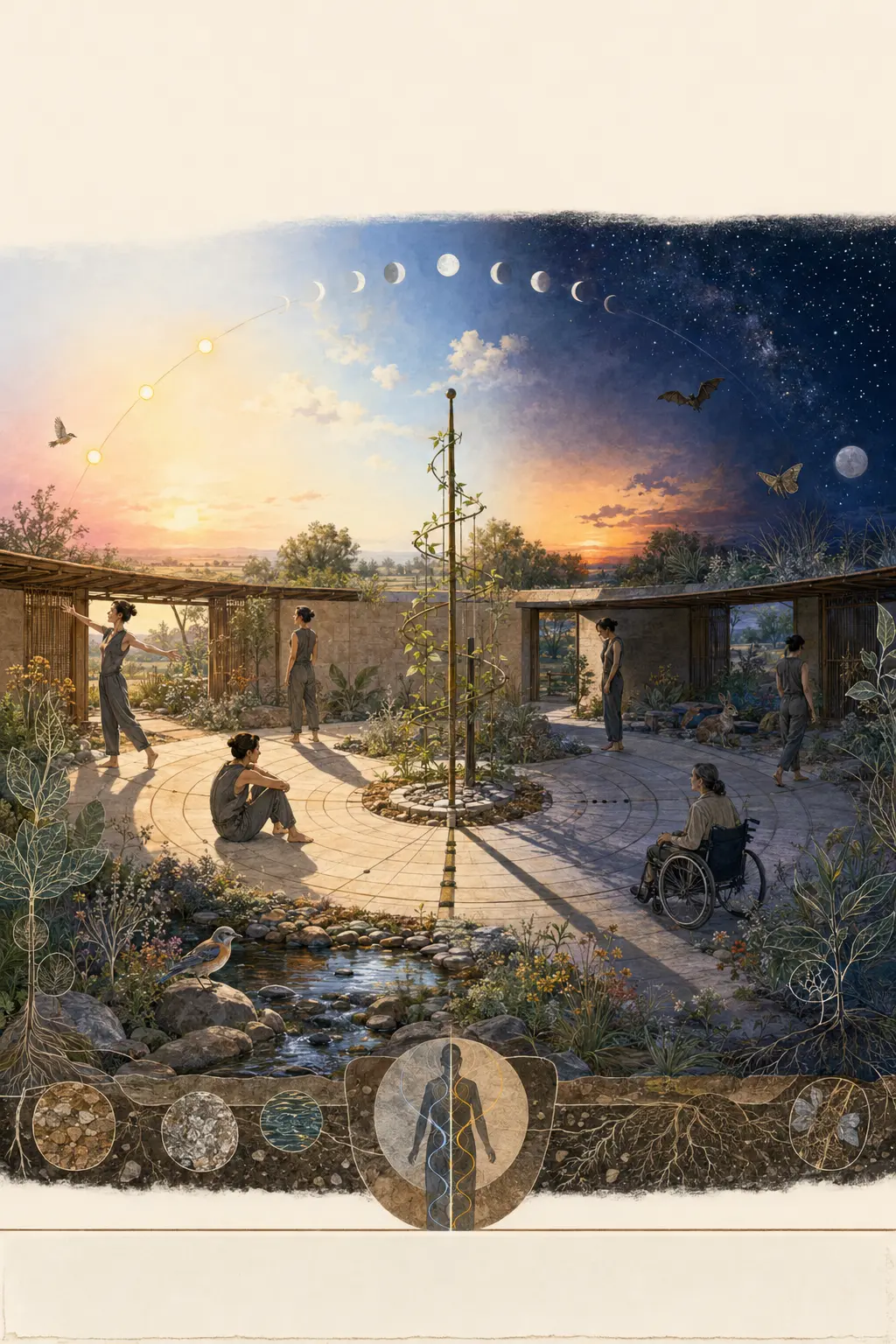
Day and night make variation visible without forcing discomfort into a positive story.
The lunisolar poster is a score for pacing, projection, restraint, curiosity, and return. It does not diagnose left- and right-brain processing. The Vertical Atlas beside it stacks capacities as learning lenses while insisting that complexity, performance, and independence never determine human worth.
The non-hierarchy boundary
More capacity creates more responsibility. It does not create more entitlement to dignity, land, shelter, voice, care, or life.
Mineral, vegetable, animal, and human are philosophical study realms here—not a racial taxonomy, disability scale, developmental ranking, or substitute for biology. Animal movement does not ask participants to claim Indigenous, spiritual, or therapeutic authority. Five-element dance, yoga, qigong, TCM, somatic, and cultural lineages require specific research, credit, consent, and qualified teaching relationships before a public curriculum uses their names.
Reference shelf · selected starting points
These links support the factual anchors visible in the artwork. They do not validate every metaphor or turn the gallery into medical, botanical, astronomical, spiritual, or movement instruction.
The giant-impact family is the leading scientific account of lunar formation; the exact sequence remains an active research question.
Open source ↗02A plain-language reference for cambium, xylem, phloem, water movement, food transport, and growth.
Open source ↗03A developmental and physiological review describing the emergence of helical myocardial patterns.
Open source ↗04One review of tensegrity-based fascial models; the atlas treats this as a useful but debated mechanical lens, not settled total-body doctrine.
Open source ↗05A philosophical source for attraction, growth, sensation, reflection, equality, and the movement of matter through different forms.
Open source ↗