Rest & welcome
Good food, comfortable seating, gardens, quiet space, and a welcome across different means and stages of life.
Seasonal Commons & Local Refugia
Nature, rest, learning, and making—close to home. A proposal for welcoming places connected through hospitality and shared stewardship, throughout the year.
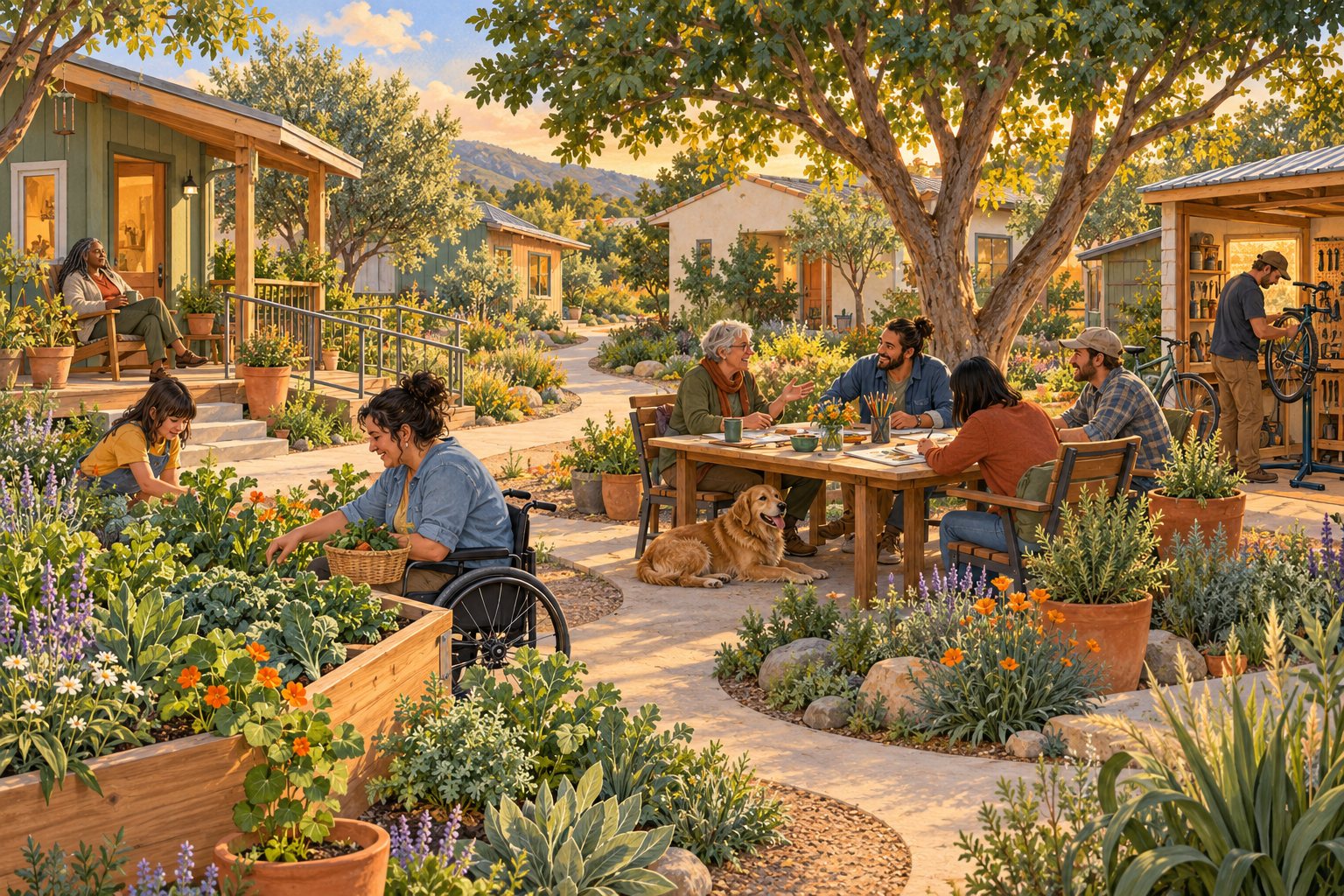
Beautiful places. Ordinary belonging.
A garden courtyard, a shared meal, an afternoon learning a practical skill, or a quiet place to read. A local retreat can offer a change of pace without requiring a distant journey or an expensive holiday.
The longer vision connects cooperative spaces, gardens, studios, community rooms, and appropriately approved retreat properties. Different places can hold different parts of the experience.
Neighbors, artists, gardeners, workers, students, elders, and people experiencing housing insecurity could participate through different routes. Beautiful materials, good food, clean facilities, privacy, and comfort belong in the design.
Rest is a complete reason to come. Receiving essential hospitality should not depend on working, joining research, religious participation, or sharing a personal story.
Good food, comfortable seating, gardens, quiet space, and a welcome across different means and stages of life.
Natural materials, repair, shade, water stewardship, passive heating and cooling, and climate-readiness learning.
Artisan markets, food enterprises, studios, paid ecological work, repair services, and supported business development.
Optional arts, movement, peer connection, restorative practices, and private visits with qualified service partners.
Apprenticeship, community psychology, participatory inquiry, operator training, and real participant influence over shared decisions.
A network that moves with the seasons
A garden might host spring planting and summer shade workshops. A community room could welcome winter meals and quiet afternoons. A studio might hold repair days or a seasonal maker market. An already approved lodging partner could help explore future overnight weekends.
Seasonal and optional lunisolar rhythms can guide learning and care. Each host defines its actual capacity, operating hours, access, and responsibilities. Year-round possibility grows across the network.
Plant, repair, prepare.
Shade, gather, rest.
Harvest, make, share.
Warmth, reflection, renewal.
An illustrative programming rhythm, not an event calendar. Safe parking, ongoing shelter, special-event camping, and lodging each need an appropriate site-specific pathway.
From the vision to a first experience
01 / Hospitality
A shared meal, quiet space, an optional workshop, and provider hours where a partner and private setting are confirmed.
Read the pilot idea02 / Practical learning
A supervised demonstration or small prototype exploring materials, repair, thermal comfort, or ecological care.
Read the pilot idea03 / Enterprise & place care
Artisan offerings and bounded paid work that connect skills, customers, and the care of shared places.
Read the pilot ideaMöbius Refuge has more detail on each idea. These sketches describe possible activities.
The practice behind the welcome
Baile, Farmers Matrix, and AACDI connect people, land, arts, trades, and cooperative practice. Five-Element / Saturn Labs can organize practical inquiry into materials, climate, tools, maintenance, and enterprise.
Community psychology and asset-based community development help shape belonging, agency, mutual support, and shared decisions. Participatory research remains optional and accountable to the people involved.
Use Lanterns to identify a willing steward, host, specialist lead, participant representatives, resources, backup, and a return date. Give participant representatives defined authority and budget for compensation.
Qualified practitioners hold any treatment services. Public gatherings respect residential privacy and housing stability. Building, heating, food, market, and overnight activities need the relevant permissions and operating support.
Observe → Name → Map → Design → Act together → Document → Return
A host would need to account for the people who set up, welcome visitors, and clean up at the end of the day. I’m interested in examples from places that keep visits affordable and pay people for that work.
Build on what people are already doing
Safe Heart’s private-host, volunteer, provider, and City-permission relationships offer a local reference. Paul’s Place already hosts visiting medical and peer-support services. Cooperative practice at SCHA contributes another source of learning. This proposal invites connection with existing work; it does not imply any organization’s endorsement.
Safe Heart program description ↗ · Paul’s Place resource center ↗
Ecological learning, natural building, residential courses, retreat facilities, and democratic community practice. A close reference for connecting the experience to the learning.
Resident-managed villages and cooperative land-trust housing. A reference for shared authority and lasting affordability; participation requirements need an accessibility review before adaptation.
Resident-led neighborhood development and an elected greenhouse advisory body. A reference for sharing actual decisions about land, growing spaces, and resources.
Consented handoffs and follow-up on whether a person received support. A reference for dependable navigation, with privacy and service capacity built in.
Regional food-business training, incubation, and shared commercial-kitchen access. A reference for turning learning into practical enterprise.
Evaluation of shared places that connect people across income and racial differences, strengthen civic life, and improve connection to nature.
These are references for particular practices, not partners or evidence that the full proposal has been tested. Eligibility, governance, access, and operating conditions differ. Sources reviewed October 28–29, 2026.
For a specific site, confirm the jurisdiction, actual activity, duration, operator, access, and approval route. A curriculum does not by itself authorize camping, lodging, construction, or treatment.
A place you already know, an access detail I missed, or a question about one of the sketches would help me revise these ideas.