Love + Baile
Attraction, relationship, unity, rhythm, and collective presence.
The original refugia
A proposed 23-sign interpretive trail, tested through approximately 42 walk-through versions, that connected Bahá’í writings, ecological observation, consultation, and the movement of matter through mineral, vegetable, animal, and human realms.
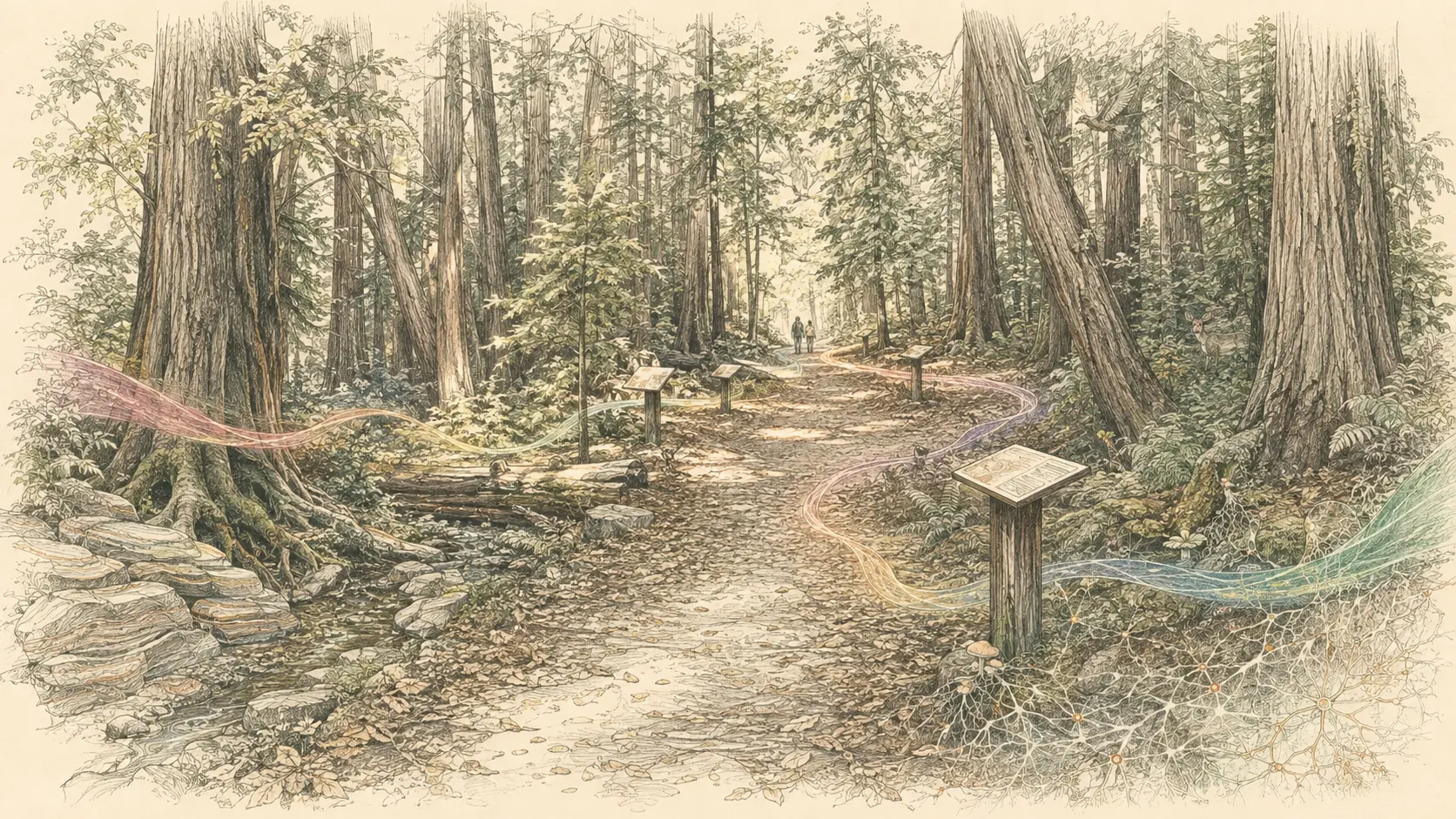
World of Nature · symbol key
The seven colors now travel with seven shapes and written names. The sequence remains readable in grayscale, on signs and cards, and for people who do not distinguish red from green.
The human mark is not a ranking of lives. It names a responsibility to use reflective capacity in service of unity without sameness—through consultation, democratic participation, spiritual or ethical reflection, freedom from prejudice, and practical care.
Attraction, relationship, unity, rhythm, and collective presence.
Matter, attraction, cohesion, composition, and material conditions.
Growth, nourishment, augmentation, seasonality, and transformation.
Sense, movement, affiliation, habitat, care, and material flourishing.
Reflection, reason, consultation, solidarity, service, and responsible action.
Mutual dependence across identities, institutions, ecologies, and public systems.
Inner life, outer conditions, stories, relationships, and possible futures shaping one another.
The enabling ecology
Site 0 is not only the origin of a design language. It is evidence that modest material security, mentorship, meaningful responsibility, study, and permission to contribute can turn individual initiative into public-serving work.
A place to live was provided separately from the approximately $15,000 annual stipend.
The stipend was modest, but housing made it sufficient enough to support sustained study and service.
Ongoing supervision and mentorship helped turn observation, testing, disagreement, and revision into a stronger contribution.
The internship included bookkeeping, registration, phones, email, office work, visitor communication, and conference-center operations—not only volunteer labor.
Sacred writings, ecological learning, anthropology, sustainable agriculture, and spiritual-empowerment questions could be pursued through self-directed research.
The work emerged inside a living 80-acre conference-center landscape supported, at times, by a team of roughly ten people, about half of them volunteers.
Ambition meets the actual field
Sahar arrived wanting to help create orchards and expansive agricultural systems. The real site had approximately 80 acres, a very small operations team, conference-center responsibilities, and limited implementation capacity.
The response was not to pretend that the original scale was immediately possible. Self-directed research moved toward an intervention the existing team, trail, forest, participants, and available materials could actually support: an experiential nature-learning path.
That adaptation—universal need, specific lineage, local translation—is the earliest documented form of what later became the Lantern Method.
A future Site 0 participation ecology · proposed
Site 0 is not a programme only for people experiencing homelessness, a religious-membership pathway, or a single fellowship tier. It is an asset-based community structure in which respite, volunteering, supported learning, stewardship, and employment can coexist across participating properties without demanding the same investment from everyone.
A designated place to stay · orientation · recovery · next-step navigation
A low-demand entry for people seeking temporary stability, safe conditions, rest, connection, and help identifying what they want or need next. Respite does not require religious affiliation, volunteering, programme enrollment, or proof of future productivity.
Housing · light essential stewardship · no cash stipend
A lower-responsibility pathway for people who want shared life, service, study, and stability while helping maintain participating properties. Hours, duties, supervision, privacy, exit, and the boundary between genuine volunteering and paid work remain explicit.
Housing · approximately $15,000/year · named mentorship · greater responsibility
A structured learning-and-service pathway with administrative or programme responsibility, a defined project, a learning plan, regular review, authorship and credit, participant voice, and a realistic route into education or later paid work.
Employment · defined authority · professional scope · accountable operations
A formal position for someone ready and selected to carry sustained responsibility for programmes, properties, administration, coordination, mentorship, or stewardship. Employment is applied for and governed as employment—not treated as the automatic reward for completing another pathway.
A stable place to live is the base condition, not a prize awarded after productivity.
Approximately $1,250 per month when housing is provided separately; a planning target for fundraising, not a current offer.
Community-college access, foundational or remedial classes when useful, sacred or ethical study, and education connected to the person’s goals.
Navigation of disability-access, vocational-rehabilitation, financial-aid, public-benefit, and educational services only where relevant and eligible.
A Möbius-connected project, service, study, or stewardship role shaped around capacity—with scope, mentorship, authorship, compensation, and review made visible.
Philanthropy could underwrite stipends and participation supports while public systems contribute only what their actual rules and funding authorize.
What the original container enabled—and what the next should repair
Housing, income, mentorship, real responsibility, sustained expectations, access to land, and room for study helped Sahar build capacity, transfer to a University of California campus, and cultivate a durable intellectual and professional identity.
Paid status and administrative responsibility sometimes separated Sahar from peers. A future fellowship should include an actual peer cohort, transparent expectations, role boundaries, feedback and appeal, and mentorship that does not make one participant carry an institution alone.
A faith-based host can offer land, hospitality, study, and moral purpose while protecting each participant’s freedom of belief, inquiry, identity, disagreement, and nonparticipation in religious practice.
Faith communities can also support safe-parking, temporary-housing, and stabilization programmes. Property access matters; so do neutral facilitation, participant rights, peer connection, clear records, safe conditions, and a real pathway beyond temporary shelter.
Participant-designed education · proposed
Each participant could develop a Möbius Individual Learning + Contribution Plan: an accessible, participant-owned program of study, practice, rest, and contribution shaped around their interests, capacities, culture, goals, and current season of life. It is inspired by individualized education without claiming to be a legally constituted IEP.
Matter, materials, tools, composition, built environments, and the physical conditions that hold community life.
Cultivation, food systems, plant relationship, seasonal growth, propagation, and ecological care.
Sensation, movement, habitat, interspecies relationship, care, and the lives that share a place.
Identity, embodiment, communication, culture, administration, psychology, history, and collective responsibility.
How identities, institutions, access, labor, power, ecology, and public systems meet in lived experience.
Mapping imagination, stories, relationships, influences, questions, and possible futures that are felt before they are built.
Music, movement, lineage, rhythm, color, imagination, presence, and collective experience as methods of learning and making.
A living rhythm—not a productivity treadmill
Rest→Study→Consultation→Action→Service→Reflection→Rest
The participant is not expected to become their own teacher, case manager, supervisor, and workforce-development office.
A pilot would recruit and compensate enough structure around each plan: mentors, peer facilitators, instructors, accessibility navigators, property stewards, artists, farmers, administrators, and tradespeople. Support is assembled around a person’s chosen direction; a person is not reshaped to fill an institution’s leftover labor.
Community learning · not conversion or compulsory sobriety
The World of Nature Learning Path was designed inside a Bahá’í school and used Bahá’í writings. The 2016 proposal therefore related the project to Bosch’s teaching and deepening mission.
The walk itself invited open observation, inquiry, reflection, consultation, and community relationship; participation did not require becoming Bahá’í. A contemporary Site 0 model makes that freedom explicit: faith-based, secular, educational, cooperative, and civic hosts may contribute property, hospitality, mentorship, knowledge, or resources without requiring conversion, religious conformity, or a single identity.
Site 0 would not require sobriety as a condition of belonging. It would support harm reduction, informed choice, voluntary participation, practical safety, and access to recovery support when someone wants it. Safety-sensitive activities—such as driving, operating equipment, hazardous trades, or caring for others—may require present-moment fitness and role-specific agreements without turning recovery into a moral test.
The shared obligation is practical and proportional: respect the place, the people, the agreements, and the responsibilities of the pathway one has actually chosen. Participation and disclosure remain voluntary, with meaningful options to pause, leave, use separate spaces, or request support.
Federated cooperative governance · proposed
Möbius is imagined as a federated cooperative framework—not a conventional franchise or a single branded form copied from place to place.
Through documented democratic and consensus-based processes, a local cooperative could rename, redesign, reorganize, or eventually operate its local expression independently. Its members could adapt roles, study paths, aesthetics, and programs to their culture, ecology, property, and agreements.
Local autonomy does not automatically erase the shared commitments that make the structure trustworthy: voluntary participation, freedom of belief, noncoercive support, honest distinctions between volunteering and employment, participant voice, attribution, safety, accountability, appeal, repair, and democratic stewardship.
Those commitments are not frozen forever. They may change when documented experience, dissent, consultation, permissions, and review demonstrate a better structure. Local decisions and contributions remain locally credited; adaptation does not rewrite the origin of the framework.
Boundaries make greater freedom possible. When harm occurs, accountability, safety, distance, restitution, and repair remain available. Forgiveness may emerge, but it is never compulsory, never scheduled for someone else, and never used to erase consequences or override a person’s boundaries.
The rainbow learning path
The original sequence followed a single cell-element through material existence and asked walkers to experience ecological and spiritual relationship through movement, observation, reflection, and conversation.
Existence begins in relationship, attraction, and the force that holds diverse elements together.
Matter, composition, attraction, and cohesion become the first visible field of study.
Growth, cellular relationship, transformation, and the power of augmentation enter the path.
Sense perception, affiliation, movement, fellowship, and material flourishing become visible.
Reflection, intellectual investigation, spiritual capacity, solidarity, and responsible action come forward.
Mineral, vegetable, animal, and human realities are read as mutually dependent rather than isolated kingdoms.
Inner life and outer environment continually shape one another; lasting change requires attention to both.
Three depths of entry
Move briskly through the path by reading headings and receiving the broad sequence.
Walk individually, pause with selected signs, observe the forest, and follow personal questions.
Move as a couple or group, allowing discussion, reflection, and consultation to deepen the encounter.
Iterative review + user testing
The proposal records a participatory process rather than a finished design imposed at the end. Approximately 42 versions were tested and revised.
Paper signs and quotations were placed along the trail in changing arrangements.
Visitors, neighbors, activists, families, session participants, staff, and volunteers ages 10–65 experienced the path.
A silent note-taker accompanied participants while preserving as much uninterrupted encounter as possible.
Participants used notebooks for questions and comments; conversations and reactions were documented.
Content, arrangement, placement, and layout were adjusted after each walk-through and reviewed with a supervisor and mentor.
Original field record
These stills come from the surviving 2016 walk-through video. They document testing, not a completed or presently installed project.
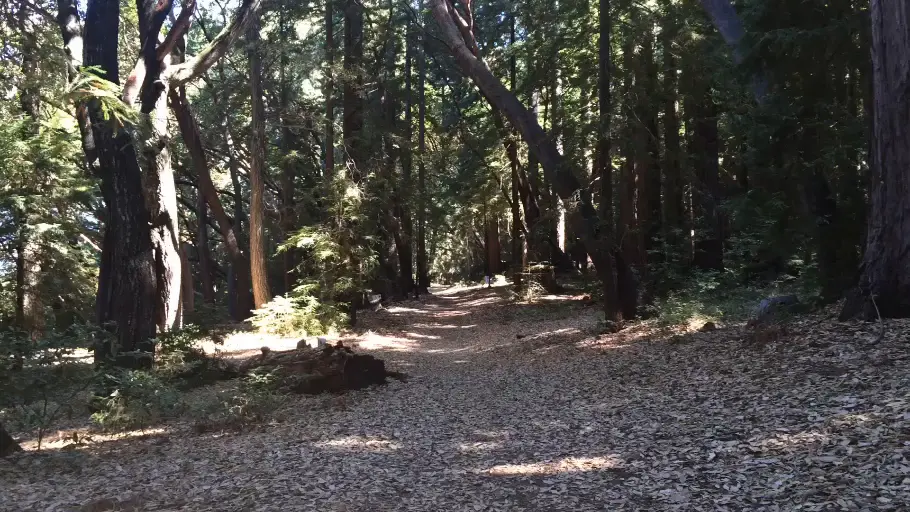
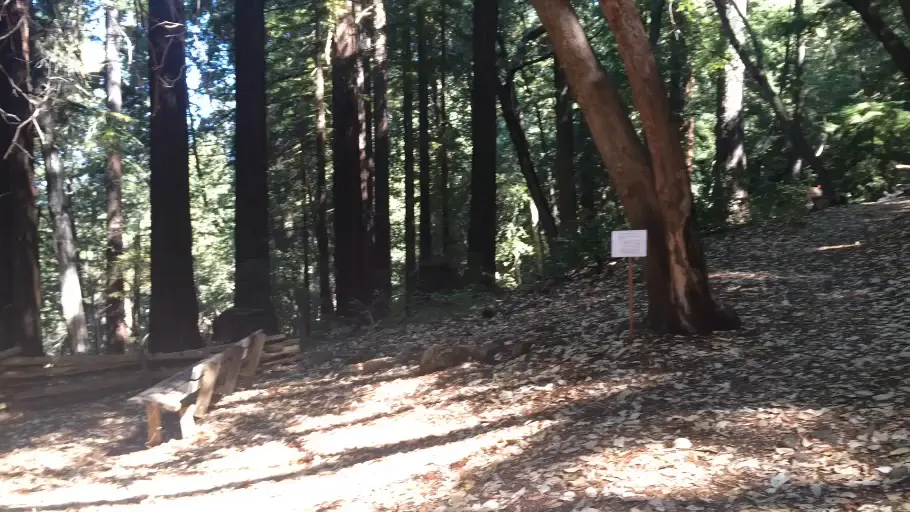
What a contemporary refresh changes
The intellectual sequence, spiritual and ecological inquiry, multiple depths of entry, site-specific pacing, testing discipline, reflective questions, and relationship between inner life and environment.
Accessible typography, concise reading layers, original licensed illustration, local ecology, weather-ready materials, optional audio and multilingual access, and the rainbow Möbius current connecting each realm.
The complete 23-sign sequence, facilitation logic, private notes, participant records, replicable instruments, and source files remain private or available only through a defined collaboration and permissions process.
From Site 0 to the Lantern Method
Site reading, layered participation, embodied movement, ecological education, spiritual empowerment, consultation, testing, adaptation, refuge, and locally useful contribution are already present here.
The World of Nature Learning Path became a foundation for Sahar’s degree path and later work across Möbius, Oiko Ways, Refugia, Five-Element Ecological Stewardship, cooperative learning, public systems, and liminal-space design.
Explore the Site AtlasStatus + institutional boundary
The World of Nature Learning Path was conceived, researched, prototyped, tested, and submitted by Sahar Tai-Seale to the Bosch Bahá’í Center of Learning in 2016. This page does not claim that the full installation was completed, that it remains on site, or that Bosch or any Bahá’í institution endorses the later Lantern Method or Möbius framework.